

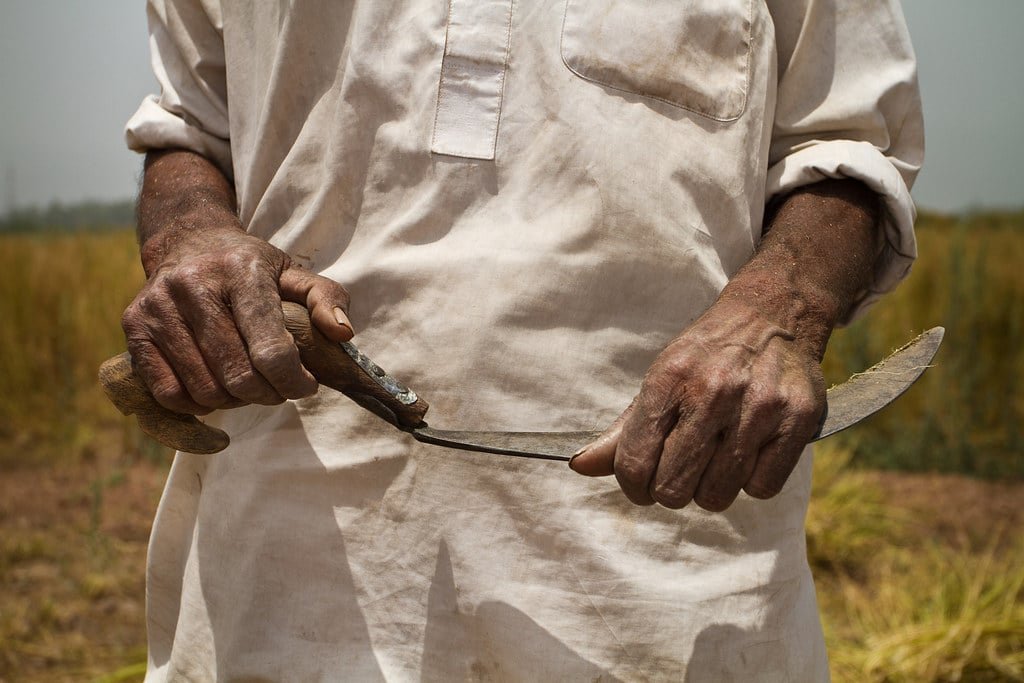

ISLAMABAD, Nov 25 (Wealth Pakistan): Pakistan’s agriculture sector now accounts for 35.1 percent of total employment in 2024-25, indicating a shift in the country’s labour force composition, according to the latest findings of the Labour Force Survey.
Agriculture’s changing role in employment
The Pakistan Bureau of Statistics has released the 37th round of the Labour Force Survey. It documents detailed employment distribution across agriculture, industry and services, along with long-term changes in the labour market structure.
According to the Labour Force Survey 2024-25 document available with Wealth Pakistan, employment in agriculture, forestry and fishing fell from 37.4 percent in 2020-21 to 35.1 percent in 2024-25 under the 13th International Conference of Labour Statisticians framework.
The survey notes that agriculture remains the single largest source of employment, though its share has declined compared to previous rounds. It presents two measurement approaches. Under the 13th ICLS, own-use subsistence agriculture producers are included, while under the 19th ICLS they are excluded. Based on the 19th ICLS definition, agriculture’s employment share stands at 33.1 percent.
Comparison with industry and services
In contrast, the industry and services sectors hold a larger combined employment share. Under the 13th ICLS definition, industry accounts for 24.9 percent and services for 39.9 percent of total employment. Under the 19th ICLS approach, industry’s share rises to 25.7 percent and services stand at 41.2 percent.
These findings show that services continue to expand, led by wholesale and retail trade, community and personal services, transport and manufacturing. Together, these sectors play major roles in absorbing labour as agriculture’s share falls.
Gender-based sectoral patterns
The Labour Force Survey presents a detailed gender breakdown. Under the 19th ICLS definition, 61.4 percent of all employed women work in agriculture, compared to 24.5 percent of employed men. For men, the single largest share of employment is in wholesale and retail trade at 20.1 percent.
This shows that employment patterns differ sharply by gender, with women overwhelmingly concentrated in agriculture and men more evenly distributed across the three major sectors.
Shifts within industry and services
The survey also records changes within the industry and services sectors. Manufacturing employment stands at 14.8 percent under the 19th ICLS framework and 14.4 percent under the 13th ICLS definition, a slight decrease from 14.9 percent in 2020-21.
Construction employment increased marginally from 9.5 percent to 9.6 percent under the older definition and stands at 9.9 percent under the updated one. Wholesale and retail trade rose from 14.4 percent to 15.5 percent under the 13th ICLS definition. Transport, storage and communication increased from 6.2 percent to 6.4 percent. Community, social and personal services rose from 16.0 percent to 17.4 percent.
Occupational and educational distribution
The survey includes occupational categories such as managerial, professional, clerical, service-related, agricultural, craft-related, machine operation and basic labour roles. These categories align closely with sectoral employment patterns.
Education levels of workers also vary widely. Workers are distributed across all levels, including no schooling, primary, middle, matric, intermediate and degree qualifications.
Survey design and coverage
The Labour Force Survey uses a stratified two-stage sample design covering both rural and urban areas. Data was collected from 53,974 households across 3,796 primary sampling units, including 2,320 rural units and 1,476 urban units. Fieldwork was carried out through four quarters from July 2024 to June 2025 to capture seasonal variation.
The survey uses the 2023 census as its population base and applies an annual growth adjustment of 2.075 percent.
Key finding
The decline in agriculture’s employment share is accompanied by a gradual rise in non-agricultural employment. While agriculture remains central for rural livelihoods and continues to engage a large portion of the female workforce, the national labour force is shifting toward other sectors. The 2024-25 survey provides an updated statistical picture of Pakistan’s changing employment structure.