

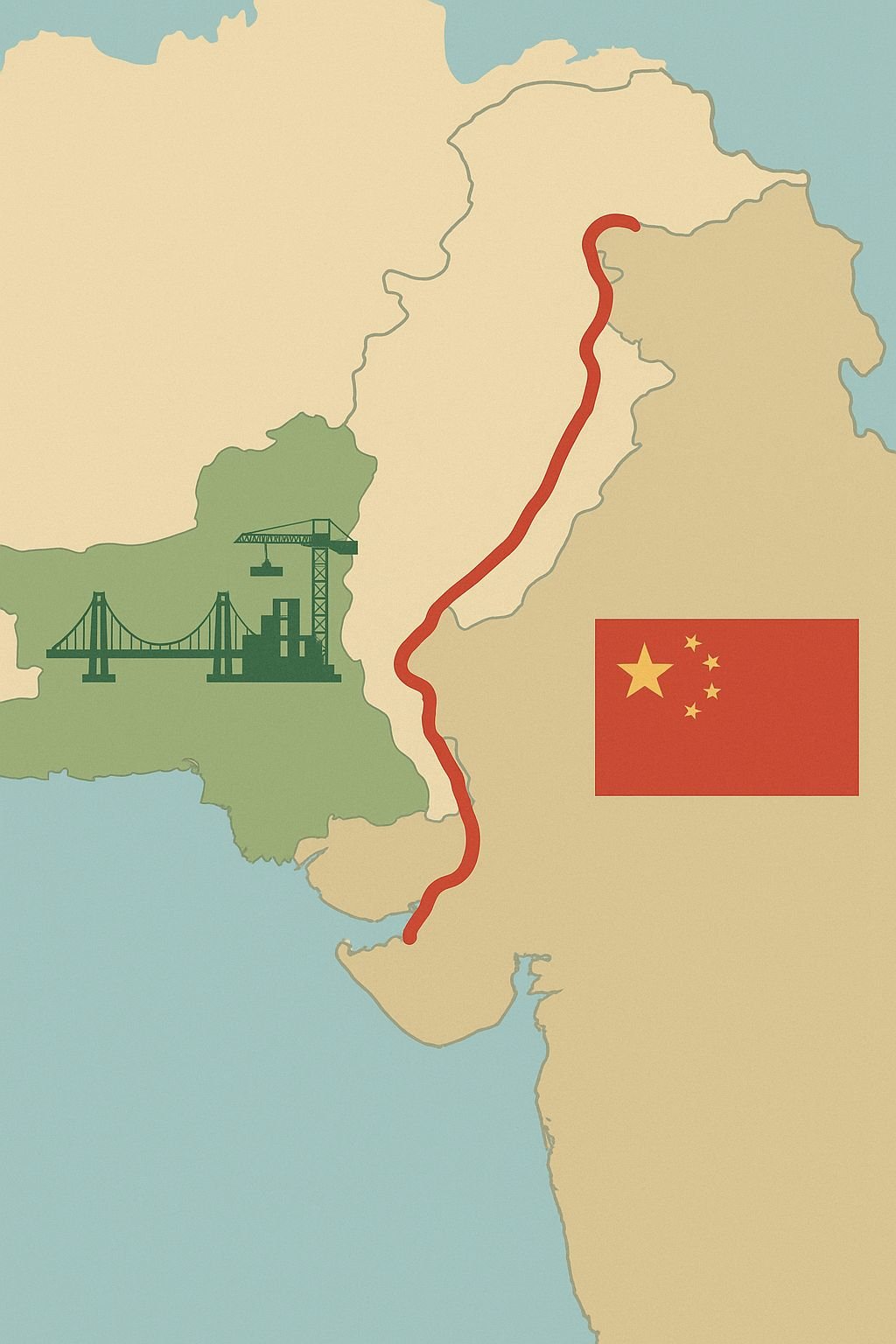

China’s upcoming Five-Year Plan for 2026–2030 places a strong focus on development and security. It aims to build resilient infrastructure, secure supply chains, and stronger regional connectivity. For Pakistan, this direction reinforces the importance of CPEC in China’s long-term strategy and creates new opportunities to improve logistics, trade, and digital links in South and Central Asia.
China’s evolving development model
In an interview with Wealth Pakistan, Dr Hassan Daud Butt, former Project Director CPEC and Senior Advisor at the China Study Center and Energy China Pakistan, said that China continues to rely on the Belt and Road Initiative for global outreach. CPEC, he noted, remains a central part of China’s plan to connect with major markets through fast and cost-efficient routes.
He explained that China’s current model goes beyond roads and power projects. The new focus is on integrated systems that connect logistics, technology, and innovation. He added that Pakistan should treat this shift as a chance to reposition itself and support technology-based and innovation-driven connectivity.
Gwadar Port’s future potential
Gwadar Port is moving from a deep-sea port to a wider economic hub. Dr Butt said Pakistan must overcome structural and administrative challenges to unlock its full potential.
He highlighted that targeted Chinese investment in automated cargo handling, warehousing, and cold-storage systems can improve efficiency. With better processes and upgraded infrastructure, Gwadar can offer a cost-effective and time-saving transit route. This approach can attract both regional and global logistics companies. He said that a coordinated and technology-driven model will help Gwadar emerge as a key gateway for trade across South Asia, Central Asia, and the Middle East.
Industrial relocation and investment potential
Dr Butt noted that Pakistan can benefit from industries that China is gradually shifting abroad. These include textiles, electronics, light engineering, and consumer manufacturing. Lower labour and land costs give Pakistan an advantage. He said Pakistan can attract these industries by improving ease of doing business and reviving investment frameworks that worked well in 2013.
He added that Pakistan has recently improved coordination through the Special Investment Facilitation Council. This has helped speed up decisions and build investor confidence. However, he stressed the need for regular reforms. These include strengthening vocational training, improving NAVTTC programs, and supporting research in universities for emerging industries.
Need for consistent institutional reforms
Dr Butt said Pakistan should focus on measurable reforms. To benefit from China’s evolving connectivity plans, Pakistan must ensure that policy goals turn into practical industrial progress. With timely reforms, he said, Pakistan can convert China’s next phase of innovation-based connectivity into a strong source of national growth.
China’s wider trade and connectivity drive
China plans to expand regional and bilateral trade agreements. It will also widen its network of high-standard free trade zones. In trade, China aims to increase intermediate goods, expand green trade, improve cross-border services regulation, and open more space for digital trade.
Aligning CPEC with Pakistan’s national priorities
In a conversation with Wealth Pakistan, Jamshed Ahmed, Investment and Industrial Specialist at CPEC, Ministry of Planning, Development and Special Initiatives, said both countries are aligning CPEC with Pakistan’s economic transformation plan, URAAN Pakistan.
He said the second phase of CPEC focuses on five corridors: Growth, Innovation, Green, Livelihood, and Opening-Up/Regional Connectivity. The connectivity corridor supports stronger regional trade links and matches China’s 2026–2030 strategy. Both sides are working to ensure that CPEC stays aligned with shared strategic priorities.
Strengthening regional links and SEZ development
Jamshed Ahmed said Pakistan is improving multimodal transport systems across rail, road, sea, and air. This effort aims to enhance trade with landlocked Central Asian states. Shorter and more efficient routes will help all regional partners.
He added that both countries have started joint development of Special Economic Zones. Rashakai SEZ, developed by a Chinese enterprise, is a key example. Pakistan and China now plan to expand this cooperation and develop more model zones. These zones, he said, will help Pakistan adopt successful development practices in other regions as well.