

Home Blog

HEC to launch blockchain-based degree attestation system in June

0

By Abdul Ghani

ISLAMABAD, March 12 (Wealth Pakistan): The Higher Education Commission (HEC) plans to launch the first phase of a blockchain-based degree attestation system by June 2026. The initiative aims to simplify the attestation process and make it more secure and accessible online.

According to documents available with Wealth Pakistan, the HEC wants to use advanced technology to improve transparency, efficiency, and service delivery in the degree attestation and equivalence processes.

The new system is currently under development. It will introduce a secure blockchain framework that connects academic records of universities and Higher Education Institutions (HEIs) on a centralized digital platform.

Through this platform, applicants will no longer need to visit universities in person for verification and attestation. Instead, the process will shift to a fully digital workflow.

Universities and HEIs will receive dedicated dashboards. These dashboards will allow institutions to verify and validate applicants’ academic records securely. After the universities complete verification, the system will automatically forward the cases to the HEC for further processing.

Once the HEC verifies and attests the degrees, the system will store students’ academic records as tamper-proof digital credentials on the blockchain. Students will then be able to access their verified academic records online.

These digital credentials can be shared securely with employers, universities, or other relevant authorities. As a result, organizations will be able to verify academic qualifications quickly and reliably.

Officials believe the blockchain framework will reduce fraud and document forgery. In addition, it will shorten verification times and improve trust in academic credentials. The system will also ensure data integrity and protect records from unauthorized changes.

The HEC expects to roll out the first phase of the blockchain-enabled degree attestation system by June 30, 2026. The initiative represents a major step toward digitizing Pakistan’s higher education credential system and improving public access to academic verification services.
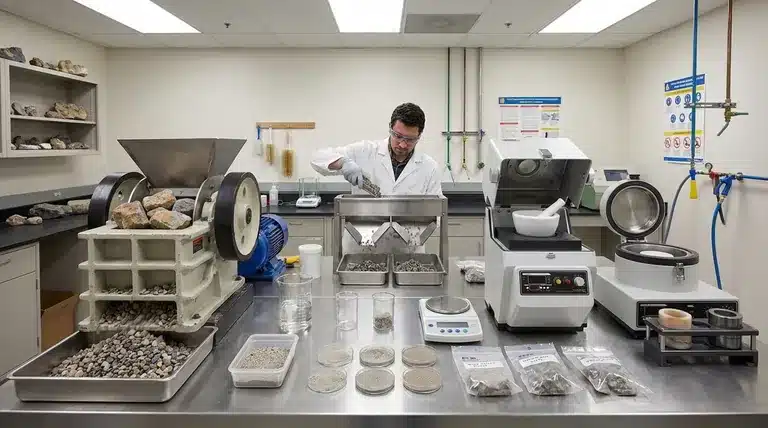
Rs979m Mineral Resource Centre planned at PCSIR Peshawar

0

By Abdul Ghani
ISLAMABAD, March 11 (Wealth Pakistan): The Ministry of Science and Technology (MoST) has proposed establishing a modern Mineral Resource Centre at PCSIR Laboratories Peshawar to promote value addition and boost mineral exports, according to official documents available with Wealth Pakistan.

The project, titled “Establishment of Minerals Resource Centre, Analytical Laboratory and Minerals Detection Facility at PCSIR Labs, Peshawar for Product Design, Development and Value Addition to Enhance Export,” has been included in the proposed Public Sector Development Programme (PSDP) 2026-27 under the category of new schemes.

The project has an estimated total cost of Rs979.621 million. The government has proposed an allocation of Rs150 million for the upcoming financial year. The Departmental Development Working Party (DDWP) approved the scheme on February 18, 2025.

Strengthening mineral testing and research capacity

The proposed centre will strengthen Pakistan’s mineral testing and analytical capabilities. It will establish advanced laboratories and modern mineral detection facilities at PCSIR Peshawar.

These facilities will support scientific exploration and mineral characterization. They will also help develop value-added mineral products for domestic industries and export markets.

Officials say the centre will help address technological gaps in mineral testing and processing. As a result, Pakistan will be better positioned to meet international quality standards in mineral products.

Promoting value addition and export growth

The Mineral Resource Centre will also support product design and development in the mineral sector. This step will encourage industries to process minerals locally instead of exporting them in raw form.

Experts believe value-added processing can increase export earnings and improve competitiveness in global markets. It can also strengthen the country’s mineral-based industries.

The centre will support research and innovation in mineral sciences. Industries such as mining, metallurgy, ceramics, and construction materials are expected to benefit from these developments.

In addition, the facility will assist policymakers with research-based data for sustainable mineral resource management. It will also help improve industrial utilization of Pakistan’s mineral resources.

$9m early education reform project launched in Balochistan

0

By Abdul Ghani
ISLAMABAD, March 11 (Wealth Pakistan): The government has launched a $9.07 million early education reform project in Balochistan to reach thousands of children. The initiative mainly targets rural and marginalised communities where access to early learning remains limited, according to a document available with Wealth Pakistan.

The Balochistan Education Department is implementing the project. Authorities plan to complete it by June 30, 2029.

Expanding access to early learning

The initiative, titled “System Transformation in Balochistan for Early Education,” aims to expand access to quality early learning programmes. It will also strengthen teacher training and improve institutional capacity in the provincial education system.

The project will upgrade school infrastructure in underserved districts. In addition, authorities plan to introduce standardised early education curricula across the province.

Officials also plan to introduce monitoring mechanisms. These systems will help ensure effective delivery of education services.

Implementation progress

The project has officially started. However, financial progress remains limited so far.

According to the document, authorities have disbursed only 0.4 percent of the total funds. Project staffing has now been completed after initial delays.

Officials expect procurement to begin soon. This process will cover educational materials, teacher training programmes, and infrastructure contracts.

Addressing Balochistan’s education gap

The initiative holds major importance for Balochistan. The province continues to rank lowest in Pakistan in literacy rates and school enrolment.

Early education plays a key role in shaping future learning outcomes. Experts say strong early learning programmes can significantly improve long-term academic performance.

If implemented effectively, the project can help reduce education gaps in the province. It may also improve learning opportunities for thousands of children.

International support and future impact

The government is working with international partners to fund and support the initiative. These partners will also provide technical expertise.

This cooperation shows a growing focus on using international support to strengthen Pakistan’s education sector.

Experts believe the project could offer useful lessons for other underdeveloped regions. Similar reforms may later expand to other provinces.

Despite challenges in logistics and procurement, provincial authorities describe the initiative as a major step forward.

With more than $9 million in funding, the government hopes the project will expand access to pre-primary education. It also aims to equip teachers with modern skills and improve literacy outcomes across the province.

Rs4.6bn project proposed to modernize seed potato sector in Pakistan

0

ISLAMABAD, March 09 (Wealth Pakistan): The Pakistan Agricultural Research Council (PARC) has proposed a Rs4.590 billion five-year initiative to modernize Pakistan’s seed potato sector.

According to official documents available with Wealth Pakistan, the project titled “Seed Potato Production and Supply Centre (SPPSC)” will run from July 2026 to June 2031.

The center will be established at the National Agricultural Research Centre (NARC) and will be executed through the National Institute for Genomics and Advanced Biotechnology.

Modern technologies to boost seed production

The center will function as a national hub for localized production of virus-free seed potatoes. It will use advanced tissue culture and aeroponics technologies to develop sustainable domestic capacity for producing virus-free foundation seed.

The project will also introduce a modern cold-chain and post-harvest infrastructure. As a result, seed losses during handling and storage are expected to decline by 25-30%.

An Enterprise Resource Planning (ERP)-based digital system will support certification, traceability, and inventory management. This system will ensure transparency, real-time record keeping, and quality assurance across the seed supply chain.

Under the project, a nationwide seed certification and traceability system will become fully operational. It will strengthen regulatory oversight by integrating the Federal Seed Certification and Registration Department (FSC&RD) into certification and monitoring processes.

Benefits for farmers and seed industry

The initiative will generate significant benefits for farmers. Domestic production of virus-free seed potatoes will increase and reduce reliance on imported seed.

Farmers will gain better access to certified and high-quality seed. This improvement is expected to increase productivity and profitability for more than 10,000 farmers across the country.

The fully operational center will include a tissue culture laboratory, screen houses, cold storage facilities, and a seed packaging unit. In addition, field multiplication will take place across the country to ensure wider distribution.

Public-private partnerships will help scale up seed multiplication and improve cold storage utilization. These partnerships will also strengthen seed distribution logistics.

Capacity-building programs will train more than 1,600 stakeholders, including farmers, technicians, and regulators.

The project will also draw on Korean expertise and best practices to support technology transfer and knowledge sharing.

The SPPSC aligns with the government’s 5Es Framework, the 13th Five-Year Plan, the UN Sustainable Development Goals, and the National Agriculture Innovation and Growth Program (NAIGP).

Once implemented, the project will help modernize Pakistan’s seed systems. It will strengthen food security, improve farm productivity, and support sustainable agricultural growth.

Rs1.3bn program proposed to improve soil health, crop productivity

0

By Azeem Ahmed Khan

ISLAMABAD, March 08 (Wealth Pakistan): The Pakistan Agricultural Research Council (PARC) plans to launch a Rs1.3 billion five-year climate-smart project to improve soil fertility and crop productivity across the country.

The initiative, proposed for inclusion in the Public Sector Development Programme (PSDP) 2026-27, will run from July 2026 to June 2031, according to an official document available with Wealth Pakistan.

Titled “National Bio-Fertilizer and Composting Program for Improving Soil Health and Crop Productivity,” the project focuses on natural resource management, climate-smart agriculture, soil fertility, integrated nutrient management, biofertilizers and soil microbiology.

Implementation through national research network

The project will be implemented through the Land Resources Research Institute (LRRI) of the National Agricultural Research Centre (NARC), Islamabad. Provincial research and extension departments will support the implementation process.

PARC Agro-Tech Company (PATCO) and private biofertilizer companies will participate through a public-private partnership (PPP) framework.

The initiative aligns with the government’s 5Es Framework, the 13th Five-Year Plan, the United Nations Sustainable Development Goals (SDGs), and the National Agriculture Innovation and Growth Project (NAIGP).

The program promotes climate-smart agriculture and regenerative soil health management. It also aims to reduce dependence on chemical fertilizers while strengthening farmer resilience and food security.

Focus on biofertilizers, integrated nutrient management

The project seeks to improve national food security, soil health and climate resilience. It will scale up farmer-level adoption of quality-assured indigenous biofertilizers, compost and organic amendments.

A nationally coordinated delivery framework will guide the implementation. The framework combines climate-smart practices with public-private collaboration to support sustainable agricultural systems.

Among the key deliverables, the project will authenticate, conserve and document elite Plant Growth-Promoting Rhizobacteria (PGPR) strains in the National Culture Collection of Pakistan (NCCP).

A national quality control and certification system for biofertilizers and compost will also ensure product standards and build farmer confidence.

Demonstration plots and farmer support

The initiative will provide farmers with standardized integrated nutrient management packages and clear application guidelines.

Public-private delivery partnerships will help farmers access bio-inputs and related technologies. Demonstration plots will also be established across different agro-ecological zones to validate climate-responsive nutrient management practices.

The project will also produce extension and communication materials to support awareness and adoption. Training programs will build human resource capacity in both public and private sectors.

By promoting indigenous bio-input technologies and restoring soil health, the initiative aims to improve crop quality and support sustainable productivity growth in Pakistan’s agriculture sector.

40,000 acres of commercial olive orchards planned across Pakistan

0

By Azeem Ahmed Khan

ISLAMABAD, Mar 07 (Wealth Pakistan): The Ministry of National Food Security and Research (MNFSR) has proposed a Rs6,598 million nationwide project to establish commercial olive orchards on 40,000 acres. The initiative aims to strengthen and uplift Pakistan’s olive value chain.

An official document available with Wealth Pakistan states that the three-year initiative is titled “Strengthening/Uplifting of Olive Value Chain in Pakistan – Phase III.” The project will run from July 2026 to June 2029.

The Pakistan Oilseed Development Board will implement the project in collaboration with national and provincial institutions.

The initiative will cover Islamabad Capital Territory, Punjab, Khyber Pakhtunkhwa, Sindh, Balochistan, Azad Jammu and Kashmir, and Gilgit-Baltistan.

Expansion of commercial olive orchards

A key component of the initiative involves establishing cluster-based commercial olive orchards on 40,000 acres. Farmers and public land in suitable agro-ecological zones will support this activity.

Through this approach, the project will organize olive cultivation on a larger scale. It will also support the development of Pakistan’s olive industry.

Improving irrigation and climate resilience

The project also focuses on improving water efficiency in olive cultivation.

Under the plan, authorities will install drip irrigation systems on 10,000 acres of olive orchards. This measure will improve water use and support climate-resilient farming practices.

In addition, the initiative will rehabilitate around 0.3 million wild olive trees. Communities will carry out grafting activities in identified areas.

Strengthening value addition in olive sector

The initiative also aims to improve value addition and commercialization within the olive value chain.

Pilot-scale public-private partnership projects will support pomace oil production. The project will also promote improvements in olive oil quality and modern storage practices.

Furthermore, the initiative will encourage the use of olive pomace for pellet production. These steps aim to enhance the commercial potential of olive products and by-products.

Institutional strengthening and sector governance

Institutional development forms another major component of the project.

Under the plan, authorities will establish and operationalize a national olive company or council. This institution will support better governance and regulatory arrangements in the sector.

Private sector participation will also support the sustainability of the olive industry.

Training and human resource development

The project also focuses on human resource development across the olive value chain.

Stakeholders will receive training in good agricultural practices, good manufacturing practices, hazard analysis and critical control points, processing techniques, and marketing practices.

Training programs will also include women and youth involved in olive cultivation, processing, and marketing. These activities aim to develop a skilled workforce for the sector.

Key deliverables of the project

The project will establish cluster-based commercial olive plantations and rehabilitate wild olive trees through grafting.

Authorities will also install drip irrigation systems and strengthen human resources across the olive value chain.

Moreover, the initiative will launch pilot projects for value addition and by-product utilization to improve commercialization.

The project will also introduce a digital geospatial mapping and monitoring system. This system will support tracking and management of olive cultivation activities.

The proposed activities align with the 13th Five-Year Plan, the United Nations Sustainable Development Goals, and the National Agriculture Innovation Growth Action Plan. The initiative focuses on exports, technological advancement, mechanization, financial support, infrastructure development, environmental sustainability, and equity and empowerment.

Cost overruns push Quetta Expo Center completion date to Nov 2027

0

By Abdul Ghani
ISLAMABAD, Mar 7 (Wealth Pakistan): The Expo Center Quetta project is likely to be completed by November 2027 after revisions in cost and timeline, according to official documents available with Wealth Pakistan.

The project is located in the Takhtani Industrial Estate along the Eastern Bypass in Quetta. The Ministry of Commerce is sponsoring the project, while Pakistan Expo Centre (Private) Limited is executing it. The facility aims to promote trade in Balochistan through exhibitions, consumer fairs, and conferences.

Originally, authorities approved the project at a cost of Rs2,500 million. However, the cost was later revised. The updated cost now stands at Rs4,829 million. This amount includes a foreign exchange component (FEC) of Rs1,210 million, or about $4.28 million. The project is financed through the federal Public Sector Development Programme (PSDP), and it does not include any foreign aid.

Authorities first approved the project on September 25, 2019. At that time, the completion deadline was February 2022. However, the timeline was later revised. Following the approval of a revised PC-I on January 27, 2025, the completion target was extended to June 30, 2027.

According to the documents, time and cost increases mainly resulted from delays in land acquisition and finalization for the expo center. In addition, macroeconomic challenges also affected project progress. Authorities were unable to open letters of credit (LCs) during this period due to financial constraints.

The Central Development Working Party (CDWP) approved the project in its meeting held on January 23, 2025. However, the meeting minutes and the formal authorization letter from the Ministry of Planning, Development and Special Initiatives are still awaited.

As of June 2025, total expenditure on the project reached Rs1,044 million. This amount represents about 23% financial progress against the revised PC-I. Physical progress has also reached around 23%.

So far, several initial works have been completed. These include the establishment of the project office and about 25% to 30% construction of the boundary wall and watchtower.

For the fiscal year 2025-26, authorities revised the project allocation to Rs50 million. Meanwhile, a proposed allocation of Rs3,000 million, including the FEC component of Rs1,210 million, has been put forward for FY27.

However, only Rs17.50 million has been sanctioned so far for the fiscal year 2025-26. In addition, no expenditure was reported between July 1 and December 31, 2025.

Once completed, the Expo Center Quetta is expected to support domestic and international trade activities. The facility will host trade exhibitions and commercial events. As a result, it may help increase exports, generate foreign exchange earnings, and create employment opportunities in the province.

Moreover, the project is expected to encourage domestic business activity and improve Balochistan’s integration with national and international trade networks.

Smart glasshouse speeds up climate-ready crop development in Pakistan

0

By Azeem Ahmed Khan
ISLAMABAD, Mar 7 (Wealth Pakistan): A cutting-edge ‘Intelligent & Internet of Things (IoT) Smart Glasshouse’ recently established at the National Institute for Genomics and Advanced Biotechnology (NIGAB) is accelerating climate-ready crop development and ushering in a new era of smart farming in Pakistan.

“The facility marks a major leap forward for agricultural research,” Dr Muhammad Ramzan Khan, Principal Scientific Officer at NIGAB, a specialized department of the National Agricultural Research Centre, told Wealth Pakistan.

Climate change is posing increasing risks to food production. Therefore, the Intelligent & IoT Smart Glasshouse is helping Pakistan develop stronger crop varieties, conserve resources, and build a more resilient agricultural system. The facility was established under the Sino-Pak Agricultural Breeding Innovations for Rapid Yield Enhancement initiative.

Unlike traditional greenhouses, the intelligent glasshouse can design the growing environment according to the needs of each crop. As a result, scientists can grow plants faster and more efficiently.

Spread over 2,640 square feet, the fully operational facility uses IoT technologies such as artificial intelligence, sensors, programmable logic controllers, and data analytics. These technologies allow researchers to control climate, humidity, carbon dioxide, light, and water in real time for optimal plant growth.

“The IoT-based glasshouse is a future-ready national asset that connects genomics, digital agriculture, and sustainable food production,” Dr Ramzan said. “It represents a shift from conventional breeding to data-driven, climate-smart, and precision agriculture.”

The smart glasshouse contains eight independently programmable chambers. Scientists can simulate heat, drought, and cold conditions in these chambers to study how crops respond to climate stress.

“This system allows researchers to test crop responses and identify stronger and more resilient varieties,” Dr Ramzan explained.

The facility is equipped with smart full-spectrum grow lights and auxiliary flood lights to support plant growth. In addition, it features an automated shading system.

“Automated internal shading in each chamber helps maintain ideal growing conditions without manual intervention,” he said.

Several major crops are already being grown and studied in the facility. These include wheat, rice, cotton, canola, tomato, potato, and strawberry.

Scientists are also applying genome-assisted speed breeding, a method that shortens crop development time. Through this approach, researchers can produce multiple crop generations within a single year.

The smart glasshouse aims to reduce the time required to develop new crop varieties from 10 years to about five years. According to Dr Ramzan, scientists can now achieve four to eight generations per year, significantly accelerating breeding cycles.

“The results are already encouraging,” he said. Researchers screened 244 rice lines for heat tolerance and conducted speed breeding of 400 wheat lines. In addition, gene-edited sugarcane, tomato, and potato plants were successfully acclimatized under controlled conditions.

The facility also includes vertical and horizontal aquaponics systems. These soil-less farming methods allow fish waste to fertilize plants naturally while recycling water.

Under this system, researchers successfully cultivated 800 strawberry plants and 700 celery plants. They also grew 16 tomato plants to evaluate nutrient-use efficiency.

Beyond research activities, the smart glasshouse also serves as a training centre. Scientists, breeders, students, and technicians are receiving training in advanced agricultural biotechnology at the facility.

According to Dr Ramzan, replicating such smart glasshouse models across provinces could further strengthen food security and support export-oriented agriculture.

Punjab distributes seed kits for eight vegetables to promote kitchen gardening

0

By Muhammad Luqman

LAHORE, Mar 4 (Wealth Pakistan): The Punjab government has launched an initiative to promote kitchen gardening by providing certified vegetable seeds to citizens at affordable rates. As a result, households can grow fresh vegetables at home and reduce food expenses.

The seeds can be cultivated in pots, plastic bags, crates, boxes, open spaces, or even on rooftops. Therefore, both urban and rural households can benefit from this initiative.

Currently, the government is distributing seed kits for eight summer vegetables through the Agriculture Extension Department’s network across various districts of the province.

“Summer vegetable seed kits are available for sale throughout the province. These vegetables can be grown successfully to obtain inexpensive and pesticide-free produce,” Shahid Ashraf, In-Charge of the Kitchen Gardening Scheme at the Punjab Agriculture Department, told Wealth Pakistan.

The initiative aims to promote self-sufficiency, improve household nutrition, and encourage sustainable food practices. Moreover, it seeks to make fresh and homegrown vegetables accessible to families across Punjab.

Each kitchen gardening kit contains seeds for eight seasonal vegetables. The summer packs include okra, bitter gourd, sponge gourd, cucumber, tomato, tinda, and chilies.

Shahid Ashraf said the public response to kitchen gardening has been encouraging. Many households are successfully growing vegetables at home and reducing their dependence on market purchases.

Vegetable seed kits are available at district offices of the Agriculture Extension Department in Attock, Bahawalnagar, Bahawalpur, Bhakkar, Chakwal, Chiniot, D.G. Khan, Faisalabad, Gujranwala, Gujrat, Jhang, Jhelum, Kasur, Mianwali, Rawalpindi, Sahiwal, Sargodha, and Vehari. In addition, the kits are available at the department’s head office in Lahore.

A growing number of Lahorites have adopted kitchen gardening not only to avoid purchasing expensive vegetables from the market but also as a productive hobby.

“I have been growing various summer and winter vegetables on the rooftop of my home. When the seeds sprout and plants begin to produce vegetables, it gives me immense pleasure,” said Ashfaq Hussain Mughal, a resident of Manga Mandi on the outskirts of Lahore.

He added that cultivating vegetables at home is a rewarding way to spend time productively while ensuring fresh food for the family.

Meanwhile, the Vegetable Research Institute (VRI), Faisalabad, is also playing an important role in promoting kitchen gardening across Punjab.

“The institute has developed and distributed more than 200,000 kitchen gardening seed kits for both summer and winter seasons this year,” said Dr Ghazanfar Hammad, Principal Scientist at VRI.

He explained that each kit contains seeds for eight seasonal vegetables, which are sufficient for a five-marla household. In addition, the kits include informative pamphlets outlining kitchen gardening guidelines and best practices.

The kits are available at a nominal price of Rs200 per pack, covering only production costs. Therefore, the programme remains affordable for low- and middle-income families.

Dr Hammad said optimal vegetable growth requires temperatures between 20°C and 35°C. According to him, the current weather conditions in Punjab are favourable for vegetable cultivation until March 31.

In addition to the ongoing distribution, VRI produced 200,000 winter vegetable seed kits in 2025 for free distribution in flood-affected areas with the support of the Fertilizer Manufacturers Association of Pakistan.

“This initiative aims to support vulnerable communities in restoring household food supplies and improving nutritional security,” he said.

Rs1bn simulation-based training institute proposed for construction machinery

0

By Abdul Ghani

ISLAMABAD, Mar 04 (Wealth Pakistan): The Ministry of Industries and Production on Tuesday proposed establishing a simulation-based training institute for construction machinery under the Technology Upgradation and Skill Development Company (TUSDEC) to address skill shortages in the construction sector.

According to official documents available with Wealth Pakistan, the proposed Skill Development Institute for Construction Machinery (SDICM) aims to strengthen the construction industry, particularly in the operation and maintenance of heavy construction machinery.

The institute is designed to support economic growth by improving construction quality and developing exportable human resources. As a result, it is expected to contribute to higher foreign remittances and stronger technical capacity in the sector.

According to the documents, the total estimated cost of the project stands at Rs1,000 million, while Rs300 million has been proposed for allocation in 2026-27. At present, the initiative is at the PC-I stage.

The institute will provide Heavy Earth Moving Equipment (HEME) simulators to train human resources using modern technology. These simulators will include tower crane, crane, excavator, bulldozer, dump truck, road roller and grader simulators.

In addition, the institute will offer training in heavy vehicle operation, heavy vehicle repair and maintenance, as well as surveying and monitoring techniques. Through these programmes, trainees will gain practical skills in a controlled and safe learning environment.

Officials believe that the availability of trained and exportable human resources will enhance foreign exchange earnings. At the same time, it will improve the overall efficiency and productivity of Pakistan’s construction sector.

The proposed institute is also being viewed as an important step toward modernising the country’s construction workforce. As urbanisation continues and infrastructure investment increases, the demand for skilled operators of heavy construction machinery has risen significantly.

However, the shortage of certified and technically trained operators often causes project delays, cost overruns and safety concerns. Therefore, the new institute is expected to help address these challenges.

Through simulator-based training programmes, the institute will replicate real-world working conditions without the safety risks and high operational costs associated with on-site training. Consequently, trainees will be able to learn advanced equipment handling in a controlled environment.

Moreover, the initiative is expected to create employment opportunities for young people and improve the export potential of skilled workers. Demand for certified heavy equipment operators remains strong in international markets, particularly in the Middle East and other regions.