

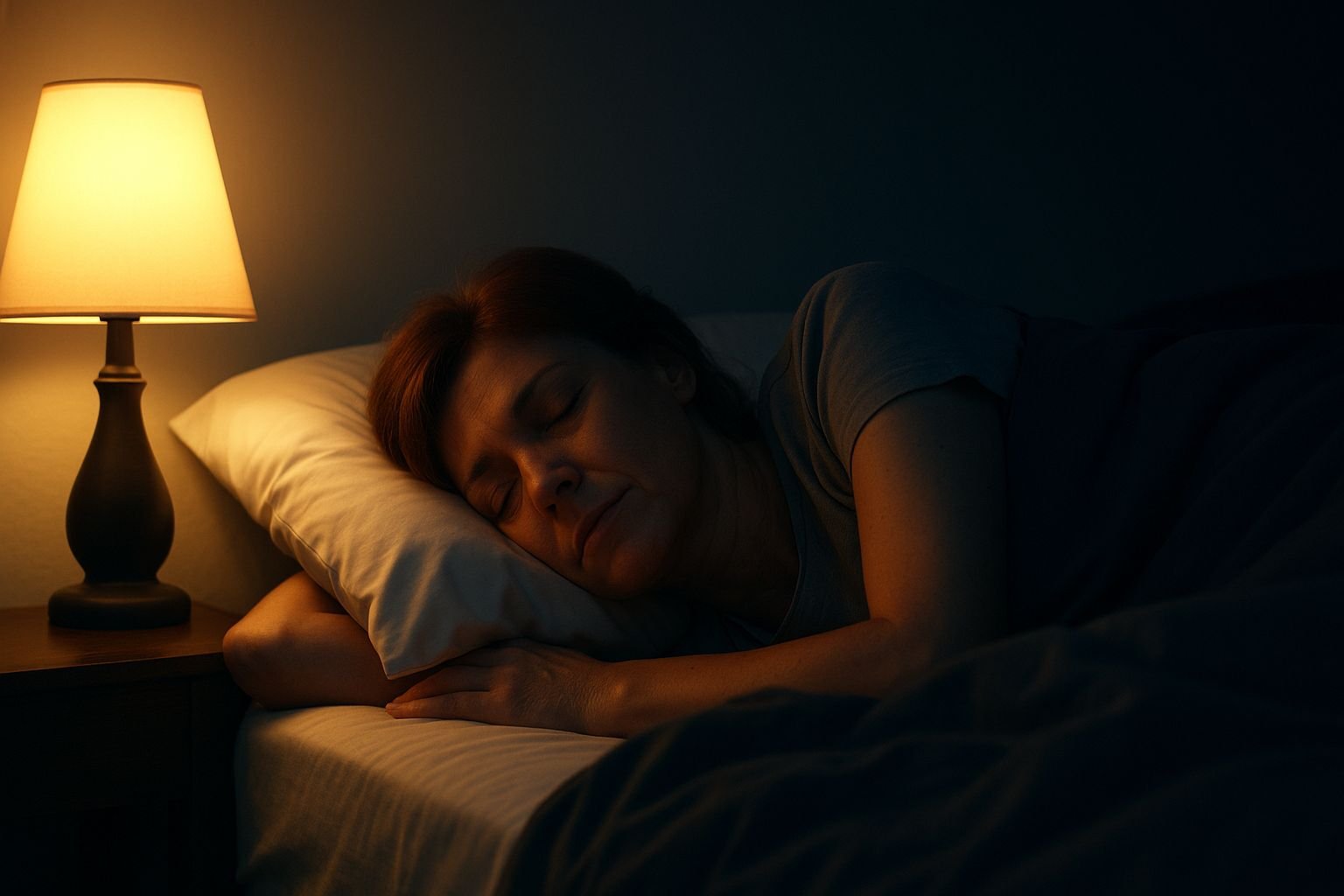

WASHINGTON, Oct 28 (CNN) – Sleeping in brightly lit rooms may do more than just disturb rest — it could significantly increase the risk of developing cardiovascular disease, the world’s leading cause of death, according to new research published in the journal JAMA Network Open.
The study, based on nearly 89,000 participants from the UK Biobank, found that people exposed to high light intensity during sleep hours faced substantially higher risks of heart failure, coronary artery disease, and stroke compared to those who slept in darker environments.
Sleeping in bright light linked to heart failure and stroke
Participants who slept under the brightest nighttime conditions — equivalent to keeping overhead lights on — had a 56% greater risk of heart failure, a 32% higher risk of coronary artery disease, and a 28% greater risk of stroke.
The findings suggest that even moderate nighttime light exposure could disrupt the body’s circadian rhythms, which regulate sleep cycles, hormone release, and cardiovascular function.
“Light can suppress melatonin, a hormone that helps the body prepare for sleep,” said Dr. Daniel Windred of Flinders University, the study’s co-author. “Reducing light exposure at night might therefore support not just better rest but better heart health.”
Tracking the impact of light exposure
Researchers analyzed more than 13 million hours of nighttime light data collected from wrist-worn devices between 12:30 a.m. and 6 a.m. Participants were then followed for about nine years to monitor cardiovascular outcomes.
The average age of participants was 62, and none had a prior history of heart disease. The researchers adjusted their findings for factors such as smoking, alcohol intake, physical activity, diet, and shift work — yet the association between nighttime light and heart disease risk remained strong.
Women were found to be more susceptible to heart failure and coronary artery disease, while younger individuals showed higher risks for atrial fibrillation (A-fib) — an irregular heart rhythm that can lead to stroke.
Circadian rhythm disruption and cardiovascular stress
Circadian rhythms — 24-hour biological cycles present in nearly every cell — are sensitive to light signals. Artificial light at night can confuse the body’s internal clock, leading to increased blood pressure, higher blood sugar, and inflammation, all of which are risk factors for cardiovascular disease.
“It’s possible that the body perceives nighttime light as a stressor, triggering hormonal and metabolic responses that elevate cardiovascular risk,” said Dr. Julio Fernandez-Mendoza, director of behavioral sleep medicine at Penn State Health, who was not involved in the study.
The study also noted that exposure to bright morning light — soon after waking — correlated with better heart health, suggesting that maintaining a healthy light–dark cycle may be essential for cardiovascular wellbeing.
Practical tips for protecting heart and sleep health
Experts recommend reducing artificial light exposure at night to protect both sleep and cardiovascular function.
“If turning the lights off isn’t possible, use dim or warm lighting instead of bright overhead bulbs,” Dr. Windred advised. “Avoid glowing alarm clocks, and consider blackout curtains or sleep masks to minimize disruption.”
Limiting screen use before bed and turning off household lights at least four hours before sleeping can also help restore natural melatonin production.
More research needed
Despite its scale, the study acknowledges limitations. It tracked light exposure for only one week, lacked ethnic diversity (97% of participants were White), and did not measure sleep quality directly. Researchers say further studies are needed to understand how reducing nighttime light could help lower cardiovascular risk across different populations.
Still, scientists believe the results strengthen evidence linking environmental light exposure to long-term health outcomes.
“Our research highlights how something as simple as light at night may influence one of the leading causes of death worldwide,” Windred said. “Small changes in sleep environments could yield big public health benefits.”