

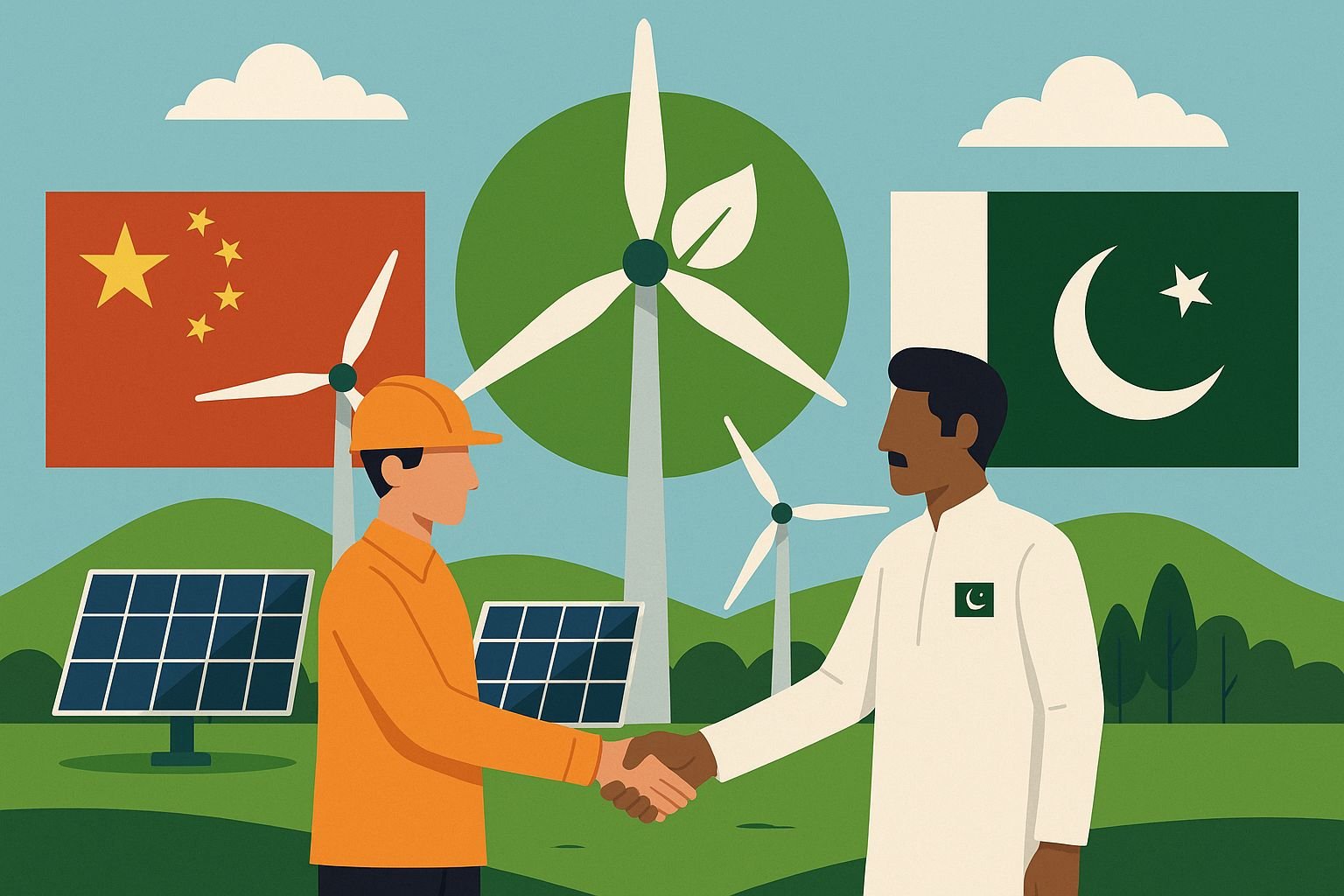

ISLAMABAD, Nov 18 (Wealth Pakistan): China’s upcoming Five-Year Plan for 2026–2030 places climate resilience and low-carbon development at the center of its national strategy. This direction creates major opportunities for Pakistan as it works to shift toward clean energy and climate-smart growth. As Beijing accelerates efforts to meet its 2060 carbon-neutrality target, it plans to expand its global partnerships in renewable energy, green finance and sustainable infrastructure.
China’s climate agenda and its implications for Pakistan
Environmental sustainability remains a top priority in China’s 2026–2030 plan. The agenda promotes cleaner air, safer water, and healthier ecosystems. It also supports a modern industrial system focused on energy efficiency, resource recycling and environmental protection. For Pakistan, this indicates that future CPEC cooperation will emphasize low-carbon development instead of fossil-fuel expansion.
Speaking to Wealth Pakistan, Muhammad Saleem, Climate Policy Analyst at the Ministry of Climate Change and Environmental Coordination, said China’s direction comes at a critical time for Pakistan. He noted that Pakistan faces recurring floods, heatwaves, glacial melt and rising water stress. Addressing these challenges, he said, requires affordable clean energy, decarbonisation and resilient infrastructure.
Saleem added that China’s renewed focus on renewable energy, green finance and low-carbon technologies aligns with Pakistan’s Nationally Determined Contributions (NDC 3.0). These commitments outline targets for reducing emissions and expanding clean-energy systems over the short and long term.
Opportunities under CPEC Green
According to Saleem, CPEC has already laid the foundation for cooperation in clean energy. The next phase, often referred to as CPEC Green, will offer avenues for investment in utility-scale solar and wind projects, battery storage, distributed renewable systems and upgraded transmission networks. He noted that opportunities are also emerging in green hydrogen, electric-vehicle manufacturing and urban transport electrification, areas where China holds strong industrial leadership.
China’s growing climate partnerships have created space for collaboration in climate-smart agriculture, water-resource management and early-warning systems. Saleem said these areas can help Pakistan strengthen climate resilience and support vulnerable communities.
Importance of green finance
Saleem stressed that green finance will play a vital role in Pakistan’s transition. China’s climate-finance instruments, including concessional lending, blended finance and support for nature-based solutions, can help Pakistan close its adaptation and mitigation investment gaps.
He said Pakistan can benefit by working closely with China to build a climate-resilient and low-carbon future. Stronger collaboration, he added, will support national energy security, economic stability and global climate action.
Lessons from China’s emissions trading system
In a conversation with Wealth Pakistan, Dr Muhammad Arif Goheer, Principal Scientific Officer and Head of Agriculture and Coordination at the Ministry of Climate Change, said Pakistan can learn from China’s Emissions Trading Scheme. He noted that China’s phased and structured approach offers a practical model for Pakistan as it pursues low-carbon growth.
Dr Goheer explained that China began with regional pilot programs and invested heavily in monitoring, reporting and verification systems. It then expanded to a national scheme. He said Pakistan could follow a similar path by starting with key sectors such as power and cement. This would allow the country to test compliance systems, registry processes and MRV protocols before expanding.
He added that these steps are essential for ensuring transparency, credible price discovery and investor confidence.
Building a credible carbon market
To align with global standards and the Paris Agreement’s Article 6 mechanisms, Dr Goheer advised Pakistan to establish clear cap-setting rules, define offset eligibility, and ensure transparent reporting. He said Pakistan should gradually move from free allocations toward auction-based mechanisms to improve market efficiency.
He also stressed the importance of stakeholder engagement. Industries, provincial governments and financial institutions, he said, must be involved to maintain political support and protect vulnerable sectors.
Overcoming barriers to green investment
Dr Goheer pointed out that Pakistan faces regulatory and institutional barriers that discourage Chinese investment in renewable energy and carbon markets. He said Pakistan should prioritize institutional strengthening, policy stability and streamlined approvals to attract foreign green investment.
He concluded that cooperation with China—through technology transfer, capacity building and joint pilot projects—can help Pakistan establish a credible carbon market and expand clean-energy development under CPEC.