

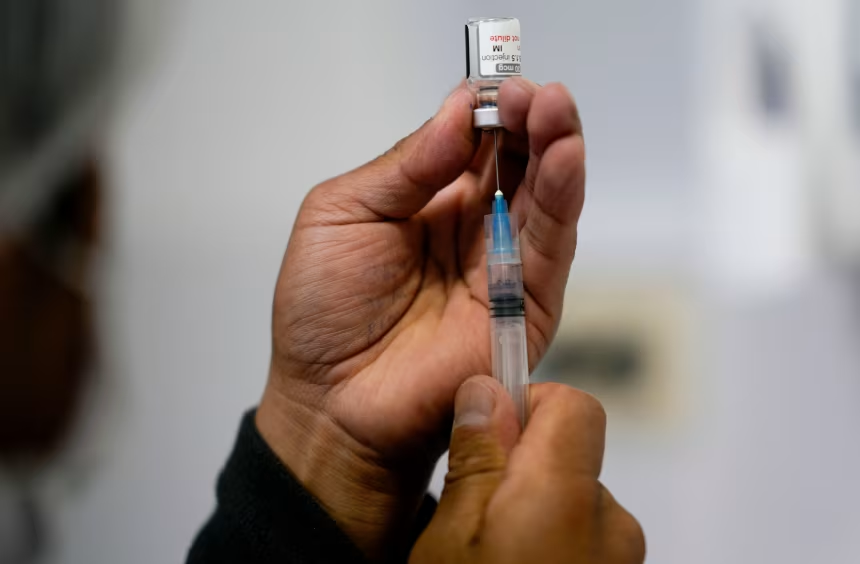

WASHINGTON, Oct 26 (AP) – The most commonly used COVID-19 vaccines could provide an unexpected benefit for some cancer patients by helping their immune systems fight tumors, according to new research published in the journal Nature.
mRNA vaccines linked to longer survival in cancer patients
Researchers found that people with advanced lung or skin cancer lived substantially longer when they received a Pfizer or Moderna COVID-19 vaccine within 100 days of starting immunotherapy treatment. The findings were made by scientists from the MD Anderson Cancer Center in Houston and the University of Florida.
The improved outcomes were not related to protection against the coronavirus. Instead, the vaccines’ key component, messenger RNA (mRNA), appeared to strengthen the immune system’s ability to respond to certain cancer treatments.
Lead researcher Dr. Adam Grippin from MD Anderson said, “The vaccine acts like a siren to activate immune cells throughout the body. We’re sensitizing immune-resistant tumors to immune therapy.”
How mRNA vaccines may boost cancer treatment
Messenger RNA is naturally found in human cells and carries genetic instructions for making proteins. It became widely known as the Nobel Prize-winning technology behind the COVID-19 vaccines. Scientists have long been exploring mRNA-based “treatment vaccines” to help the immune system recognize and attack cancer cells.
The current research suggests that even standard coronavirus vaccines using mRNA might enhance immune response in patients receiving checkpoint inhibitors — a class of drugs that helps immune cells detect and attack hidden tumors.
Checkpoint inhibitors have transformed cancer treatment in recent years, but they don’t work for everyone. The study indicates that mRNA vaccines may make resistant tumors more responsive to these drugs.
Promising but early-stage findings
The research team analyzed medical records of nearly 1,000 patients with advanced lung or skin cancer who were undergoing immunotherapy. Those who received an mRNA COVID-19 vaccine showed significantly better survival rates than those who did not.
Among lung cancer patients, vaccinated individuals were nearly twice as likely to be alive three years after beginning treatment. Melanoma patients who received the vaccines also lived longer, though the final survival data is still being analyzed.
Non-mRNA vaccines, such as flu shots, showed no similar effect.
Dr. Jeff Coller, an mRNA specialist at Johns Hopkins University who was not involved in the study, called the findings “a very good clue” that mRNA medicines could have wider benefits. “What it shows is that mRNA medicines are continuing to surprise us in how beneficial they can be to human health,” he said.
Future research and implications
Despite the encouraging results, researchers stress that more rigorous trials are needed to confirm the connection between mRNA vaccines and improved cancer outcomes. The MD Anderson team plans to study whether pairing COVID-19 mRNA vaccines with checkpoint inhibitors could enhance treatment before developing new cancer-specific mRNA vaccines.
Dr. Grippin noted that the team’s next step is to explore how these vaccines might be used as an adjunct therapy to make existing cancer drugs more effective.
Meanwhile, public debate continues around mRNA technology, with U.S. Health Secretary Robert F. Kennedy Jr. recently reducing funding for certain mRNA-related research. Nonetheless, scientists say the findings highlight how this technology could be repurposed to address other serious diseases beyond COVID-19.
This report was originally published by The Associated Press.