

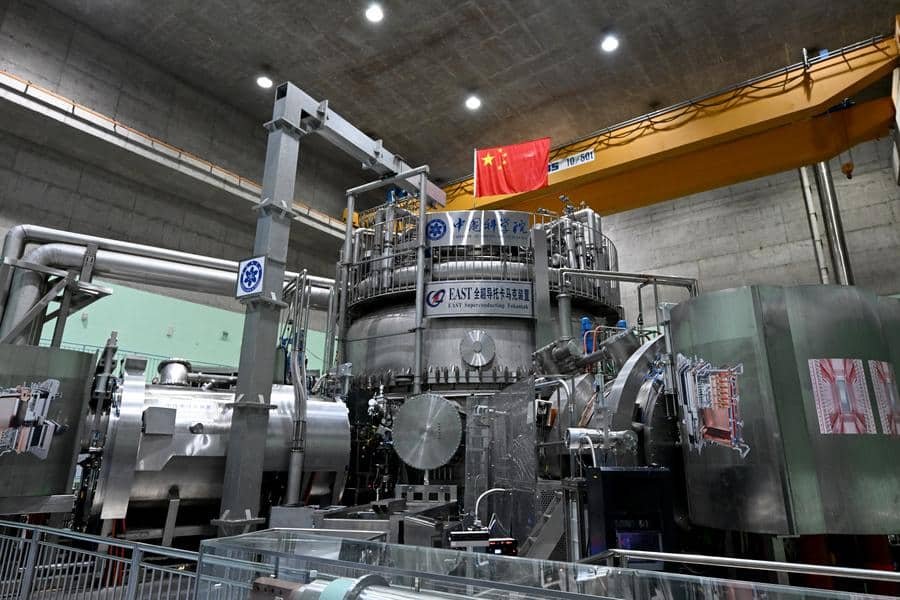
, focusing on innovation, modernization, and sustainable high-quality growth.)
BEIJING, Oct 20 (Xinhua) – The fourth plenary session of the 20th Communist Party of China (CPC) Central Committee has begun in Beijing, setting the stage for shaping the 15th Five-Year Plan (2026–2030) — a key roadmap to advance China’s socialist modernization drive by 2035.
Blueprint for the Next Development Phase
The session will review the CPC Central Committee’s draft proposals for the 15th Five-Year Plan for national economic and social development. The plan will serve as an overarching framework to guide China’s policy direction, strategic priorities, and growth targets for the next five years.
Since 1953, China’s five-year plans have played a crucial role in driving rapid economic growth and ensuring long-term social stability. They remain a core governance mechanism, reflecting the country’s capacity for sustained planning and reform implementation.
High-Quality Growth Despite Global Challenges
Between 2021 and 2024, China’s economy maintained an average annual growth rate of 5.5 percent despite global challenges, including the COVID-19 pandemic and complex international conditions.
The total economic increment during the ongoing 14th Five-Year Plan (2021–2025) is expected to exceed 35 trillion yuan (USD 4.93 trillion) — more than the annual GDP of a major Western economy.
China’s per capita GDP reached USD 13,445 in 2024, solidifying its position among upper-middle-income countries. Having eradicated absolute poverty and achieved moderate prosperity, the country now aims to basically realize socialist modernization by 2035 and build a “great modern socialist country” by mid-century.
Focus on Innovation and New Productive Forces
Looking ahead, the 15th Five-Year Plan will emphasize developing new quality productive forces through scientific and technological innovation. Key priorities include achieving breakthroughs in core technologies, upgrading traditional industries, and cultivating emerging sectors such as artificial intelligence (AI), quantum technology, and space exploration.
Recent advances in AI models, semiconductor technology, quantum computing, and manned spaceflight underscore China’s growing innovation capacity. The country’s “AI Plus” initiative is further integrating digital technology with industrial production and scientific research, creating new consumption and growth drivers.
Strengthening Domestic Demand and Green Development
The next five years will also focus on expanding domestic demand as the main engine of economic growth. Policies will encourage higher consumption, stronger investment returns, and rural revitalization.
Emerging sectors like the ice and snow economy, silver economy, and low-altitude economy are expected to unlock new consumption potential and job opportunities.
At the same time, China will accelerate its green transition, promoting low-carbon technologies and contributing to global climate goals through cost-effective solutions and technological expertise.
Reforms and Global Cooperation
From 2026 to 2030, China plans to advance comprehensive reforms and pursue high-standard opening up. Over 300 reform measures introduced at the previous plenary session will be implemented during the 15th Five-Year Plan period.
Five-year plans remain a distinctive strength of socialism with Chinese characteristics, offering long-term stability and policy continuity. They contrast with short-term policy fluctuations often seen in Western economies.
A Vision for 2035 and Beyond
With the 15th Five-Year Plan set for implementation next year, the CPC’s leadership aims to guide China toward deeper modernization, innovation-led growth, and greater international cooperation.
Through unified national effort and a clear strategic vision, China is expected to make steady progress toward achieving its 2035 goals despite global uncertainties.
This article was originally published by Xinhua.