

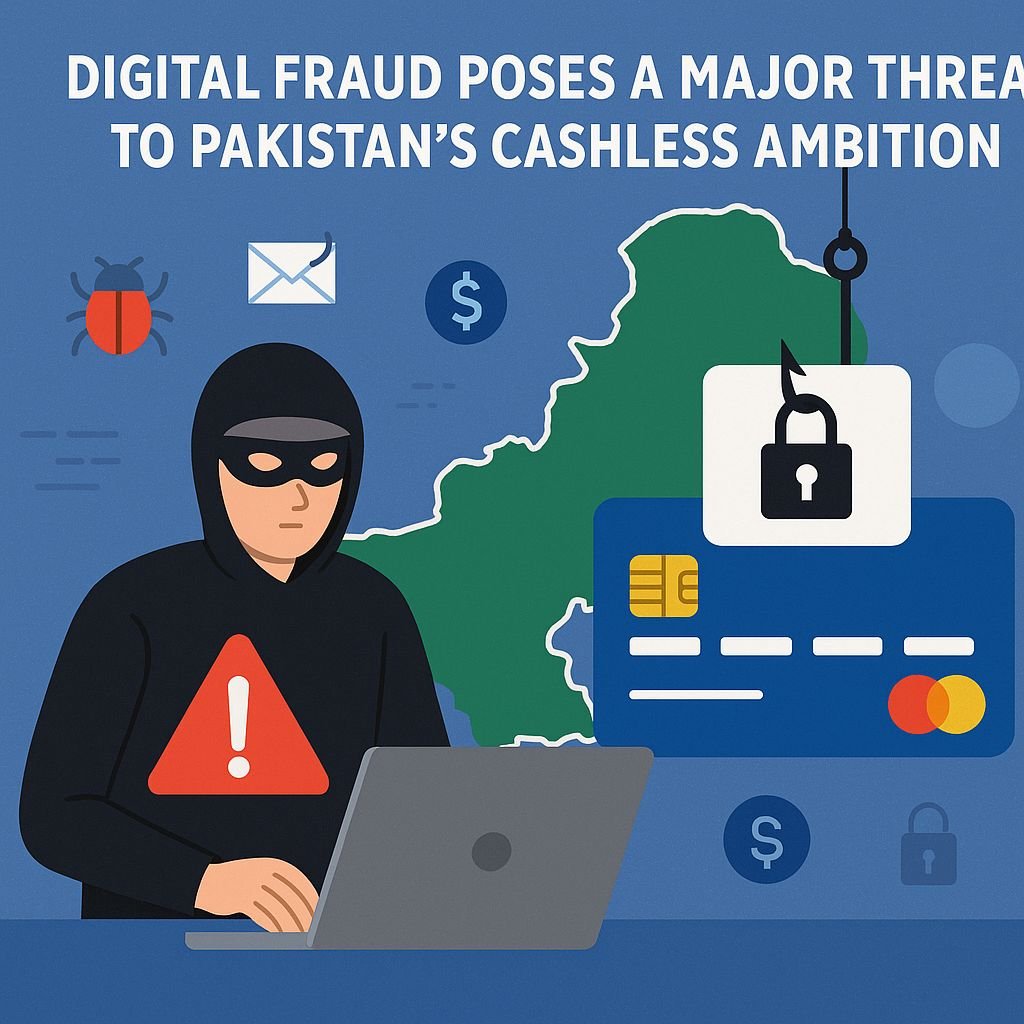

Pakistan is rapidly adopting digital payment systems to modernize its economy and promote financial inclusion. But rising incidents of digital fraud in Pakistan are undermining efforts to build a secure, cashless future.
Growing Digital Transactions and Security Concerns
According to the State Bank of Pakistan (SBP), the country’s digital infrastructure now supports 226 million bank accounts and 46 million RAAST IDs nationwide. The government aims to fully digitize payments by next year.
However, the financial sector warns that cybercrime is growing faster than safeguards. The Global State of Scams Report 2025 estimates that digital fraud costs Pakistan’s economy around $9.3 billion annually.
“When customers lose money or confidence in online systems, they revert to cash. This weakens trust and slows the adoption of digital wallets and mobile banking,” said Nazish Ali, Chief Executive Officer of Apna Microfinance Bank, in an interview with Wealth Pakistan.
Common Types of Digital Fraud
Ali explained that the most common cybercrime techniques include phishing, smishing, and vishing, which deceive users into sharing credentials or one-time passwords through fake emails, text messages, or calls.
Fraudsters also conduct SIM-swapping to intercept OTPs and gain access to bank accounts. ATM and debit card skimming remains widespread, enabling criminals to clone cards and steal data from terminals.
Hackers exploit weaknesses such as exposed admin portals, weak authentication, and insecure third-party links to execute unauthorized transfers. “Scammers even compromise banks’ internal systems and move funds to mule accounts before withdrawing cash through ATMs,” Ali noted.
Gaps in Cybersecurity Defenses
Pakistan’s regulatory environment is improving. The SBP has issued security guidelines for banking apps, introduced mandatory incident-reporting rules, and strengthened system controls. The Pakistan Banks Association and 1LINK have launched awareness campaigns to educate consumers.
Yet, major gaps remain in telecom security, customer education, and real-time monitoring, Ali cautioned.
Experts Call for Joint Action
Cybersecurity experts agree that enforcement remains weak. Pakistan’s cybercrime units are under-resourced and lack advanced technical expertise.
“Hackers exploit vulnerabilities, human errors, and regulatory loopholes,” said Attique Ahmad, a Lahore-based cybersecurity consultant. “Fear of fraud keeps many consumers and merchants dependent on cash.”
He added that several banks still run outdated core banking platforms without robust encryption, making them vulnerable to hacking. Insider leaks are also rising, with cases of employees selling customer data on the dark web.
Fraudsters have even launched fake apps imitating JazzCash, Easypaisa, and other mobile banking platforms to steal credentials — a major threat to branchless banking.
The Way Forward
Experts emphasize that combating digital fraud in Pakistan requires collective action by the SBP, commercial banks, telecom operators, and consumers.
Without stronger cybersecurity measures, awareness campaigns, and real-time monitoring systems, Pakistan’s dream of becoming a cashless economy may face serious setbacks.