

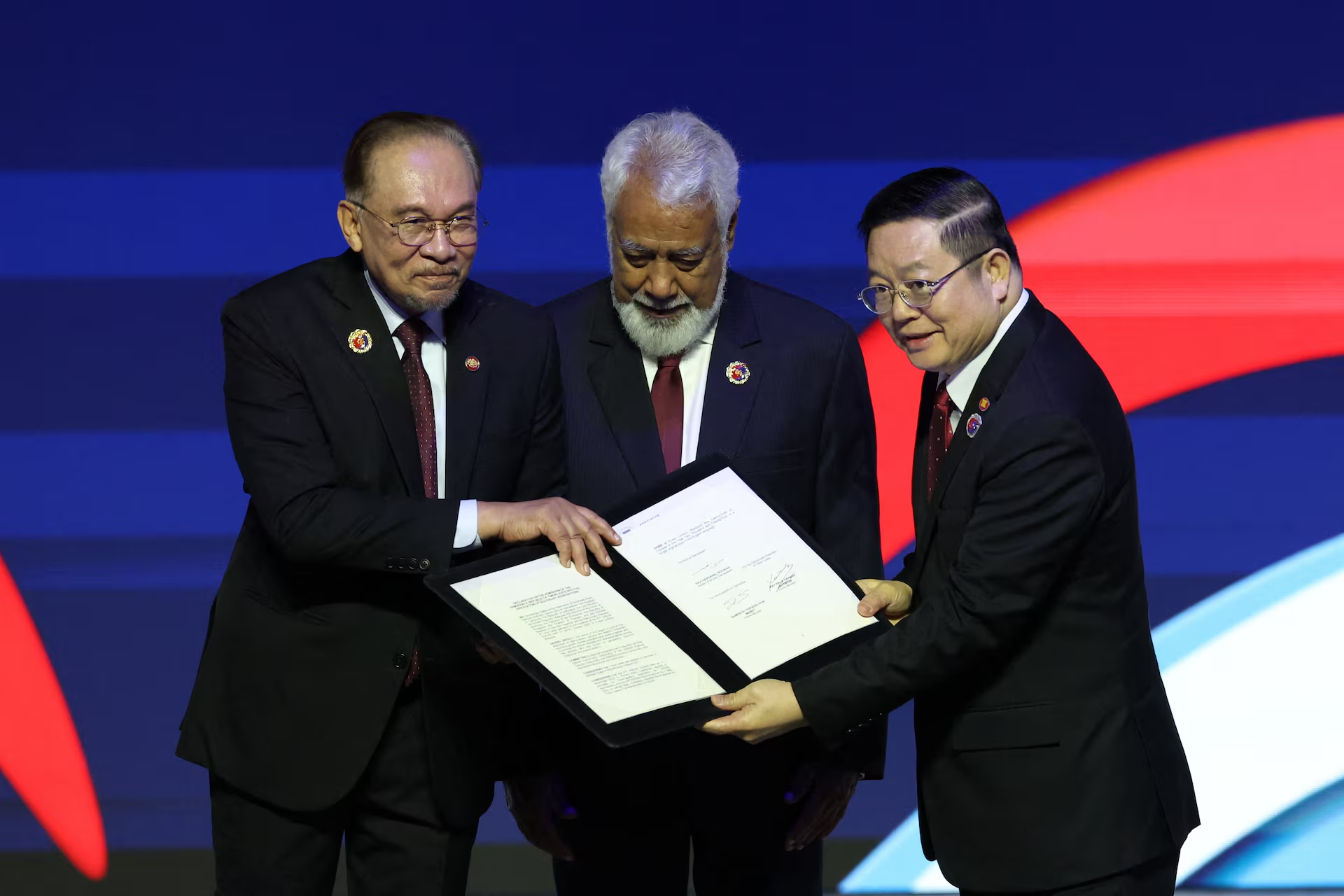

KUALA LUMPUR, Oct 26 (Reuters) – East Timor has officially become the 11th member of the Association of Southeast Asian Nations (ASEAN), marking a historic milestone for Asia’s youngest nation. The move fulfills a vision first set out by the country’s current president nearly 50 years ago while it was still under Portuguese rule.
Also known as Timor-Leste, the nation of 1.4 million people is among Asia’s poorest. It hopes ASEAN membership will boost trade and attract investment into its small economy, which stands at about $2 billion — a fraction of ASEAN’s $3.8 trillion collective GDP.
Symbolic victory after years of waiting
East Timor’s accession follows a 14-year wait for full membership. While it is not expected to dramatically change ASEAN’s economic balance, it represents a symbolic achievement for President Jose Ramos-Horta and Prime Minister Xanana Gusmao, both key figures in the country’s independence movement.
The nation’s flag was raised at the ASEAN summit in Kuala Lumpur on Sunday, drawing applause from regional leaders. The event marked East Timor’s formal entry into the bloc after years of preparation and negotiation.
New beginning with regional opportunities
An emotional Prime Minister Gusmao called it a “historic moment” for East Timor, describing ASEAN membership as the start of a new chapter filled with “immense opportunities” for trade and investment.
“For the people of Timor-Leste, this is not only a dream realized but a powerful affirmation of our journey,” he said during his speech at the summit. “Our accession is a testament to the spirit of our people — a young democracy born from struggle. This is not the end of a journey.”
From colonial rule to independence
East Timor was ruled by Portugal for three centuries before Lisbon abruptly withdrew in 1975. The vacuum led to annexation by Indonesia, resulting in a decades-long occupation marked by conflict and human rights abuses. After a U.N.-backed referendum, East Timor finally achieved full independence in 2002.
President Ramos-Horta, who won the Nobel Peace Prize in 1996, first proposed ASEAN membership in the 1970s. His goal was to secure East Timor’s long-term stability through regional integration and diplomacy.
Commitment to peace and dialogue
In a recent interview, Ramos-Horta said East Timor’s goal is to strengthen ASEAN’s mechanisms for dialogue and conflict resolution. “If we can contribute towards improving ASEAN’s conflict mechanisms, that is key,” he said. “In each country, we should put emphasis on dialogue.”
He added that East Timor will work to maintain political stability and avoid becoming a burden on the regional organization. The leadership hopes ASEAN membership will encourage investment, regional cooperation, and stronger diplomatic ties.
The report was originally published by Reuters.