

LAHORE, Nov 10 (Wealth Pakistan):
The Food and Agriculture Organization of the United Nations (FAO) has started a new project to promote efficient water use and sustainable irrigation in the Indus Basin.
The Water Budgeting and Agricultural Water Productivity Project falls under FAO’s global WaPOR programme and involves the Punjab Agriculture Department, Punjab Irrigation Department, MNS University of Agriculture Multan, IHE Delft, and the International Water Management Institute (IWMI).
Launch event highlights project goals
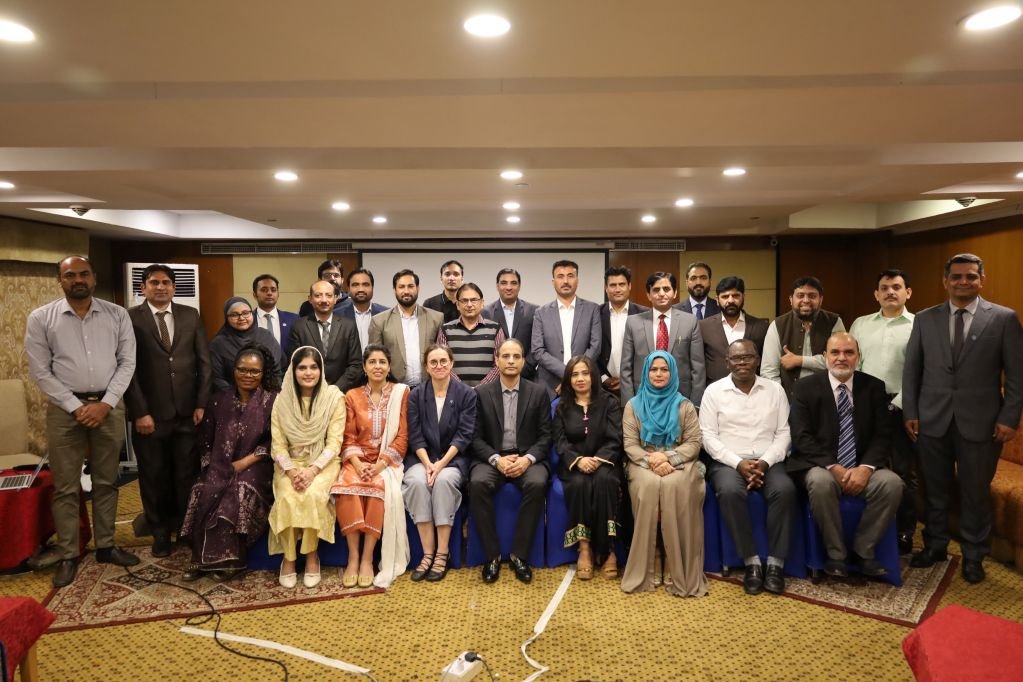
The launch ceremony of the FAO Water Budgeting Project in the Indus Basin was held at Park Lane Hotel, Lahore.
The event introduced participants to the project’s goals, scope, and expected results. It focuses on Bahawalnagar and Bahawalpur districts, where remote-sensing data will be used to measure crop water productivity and groundwater sustainability.
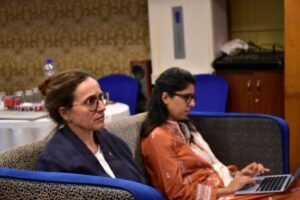
Dr. Maria Zaidi, WaPOR National Coordinator, opened the session, followed by Ms. Amina Bajwa, Assistant FAO Representative (Programme).
Virginie Gillet, Land and Water Officer at FAO Headquarters, explained how the WaPOR programme helps countries manage water more efficiently.

Alignment with Punjab’s agriculture and irrigation policies
Dr. Zaidi said the FAO Water Budgeting Project in the Indus Basin supports the Punjab Agriculture Policy 2018 and the Punjab Irrigation, Drainage, and Rivers Act (PIDRA) 2023.
Both policies stress the need for coordinated surface- and groundwater management to ensure long-term sustainability.
Khurram Amin, Additional Secretary (Technical) at the Punjab Irrigation Department, gave a detailed briefing on provincial water governance and its link with the Sustainable Development Goals.
He noted that effective data sharing and institutional coordination will improve irrigation efficiency across Punjab.
Experts share technical and scientific insights
Technical experts from the Punjab Irrigation Department shared data on groundwater conditions in Bahawalpur Zone.
Meanwhile, Marlos Mul, Associate Professor at IHE Delft, discussed the importance of scientific research and shared learning among institutions.
In addition, Dr. S. A. Prathapar spoke about global best practices in using big data for water management.
FAO’s international water expert, Jiro Ariyama, highlighted lessons from previous water productivity and accounting projects carried out in Pakistan.
Cross-provincial collaboration emphasized
The event was also attended by Julius Muchemi, Head of Province for FAO Sindh, and Emelda Berejena, Technical Advisor for FAO’s GCF-funded project and Head of Province for FAO Punjab.
They underlined the importance of cross-provincial collaboration to achieve long-term water security and sustainable agriculture.
Participants formed a Technical Working Group that includes representatives from PID, PAD, MNSUA, IWMI, and FAO.
This group will guide technical design, monitoring, and coordination for the FAO Water Budgeting Project in the Indus Basin.
FAO pledges long-term support for water reforms
In her closing remarks, FAO’s Virginie Gillet reaffirmed the organization’s commitment to supporting climate-resilient and data-driven water management in Punjab.
She said the project will build institutional capacity to use remote-sensing tools and improve irrigation service delivery.
The FAO Water Budgeting Project in the Indus Basin will also help track groundwater abstraction, including solar-powered tubewells.
Through these actions, the initiative aims to strengthen water governance reforms, improve crop productivity, and enhance food security across Pakistan.