


Wealth Pakistan International Desk
URUMQI, Oct 20 (Xinhua) – Once a key hub on the ancient Silk Road, Turpan is again connecting civilizations — this time through international Turfan studies that promote academic exchange and cultural cooperation.
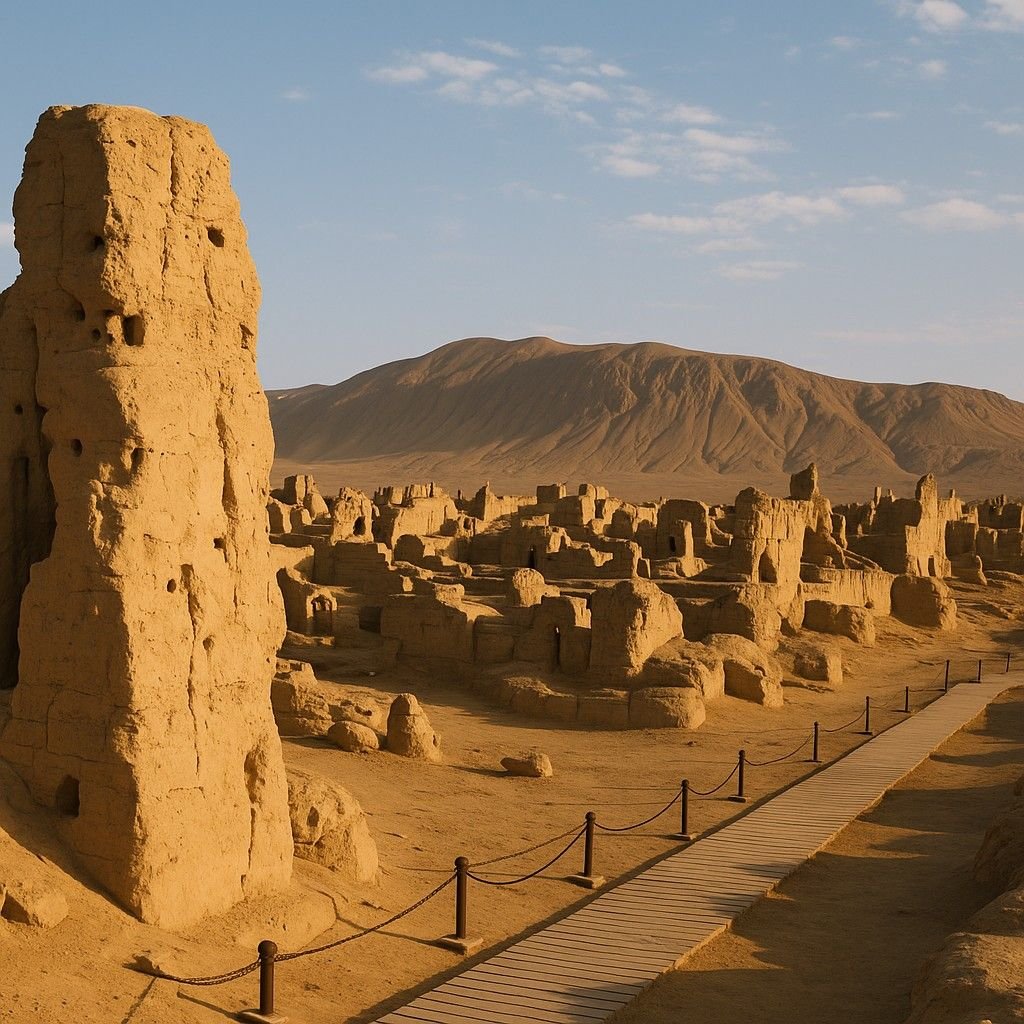
Located in northwest China’s Xinjiang Uygur Autonomous Region, Turpan has long served as a meeting point of farming, nomadic, and oasis cultures in Central Asia. Its dry climate has preserved thousands of manuscripts, cave murals, and artifacts, making the region a global centre for Silk Road archaeology.
International symposium on Turfan studies
From October 18 to 20, nearly 200 experts from 70 universities and institutions in 16 countries, including Germany, the United Kingdom, the United States, and Japan, attended the Seventh International Symposium of Turfan Studies. The event focused on heritage preservation, ancient scripts, and cultural evolution along the Silk Road.
Erica Hunter, a researcher from the University of Cambridge who studies Syriac manuscripts from Turpan, said the city symbolises harmony among diverse traditions. “Turfan is a remarkable example of coexistence between different ethnic and religious groups, both in history and today,” she said. “Dialogue and scholarship build mutual understanding.”
Revival of a global academic field
Turfan studies emerged as a distinct discipline in the late 19th and early 20th centuries, when explorers from Russia, Germany, Britain, and Japan excavated tombs and temples in the region.
At the symposium, Professor Peter Zieme of the Berlin-Brandenburg Academy of Sciences and Humanities presented research on a manuscript written in both Old Uygur and Chinese. He emphasised the independent role of Uygur monks and poets in shaping Buddhist thought.
“Turfan has always stood at the crossroads of civilizations,” he said. “Its manuscripts and relics reveal how cultures met, shared, and evolved across continents.”
New discoveries and growing Chinese leadership
In recent years, excavations at sites such as the Xipang Jingjiao Monastery — a Nestorian Christian complex — and the Tuyoq Buddhist Grottoes have revitalised global interest in Turfan studies. Chinese scholars are increasingly leading efforts to interpret ancient scripts once used by merchants and pilgrims.
Lin Lijuan, an associate professor at Peking University, said Syriac Christian manuscripts found in Turpan reveal early cultural and religious exchanges. “Through Turpan, Western ideas entered China and merged with local traditions,” she said.
Shared legacy of civilizations
Zhang Yong, Party Secretary of the Turpan Cultural Heritage Administration, said collaboration between Chinese and foreign experts is transforming scattered evidence into coherent knowledge.
“Turfan studies are a shared heritage of humanity,” he said. “The cooperation between global scholars ensures that Turpan remains a living symbol of dialogue between civilizations.”
The initiative reflects China’s broader commitment to strengthening Silk Road cultural research and promoting mutual understanding through academic exchange.
This article was originally published by Xinhua.