

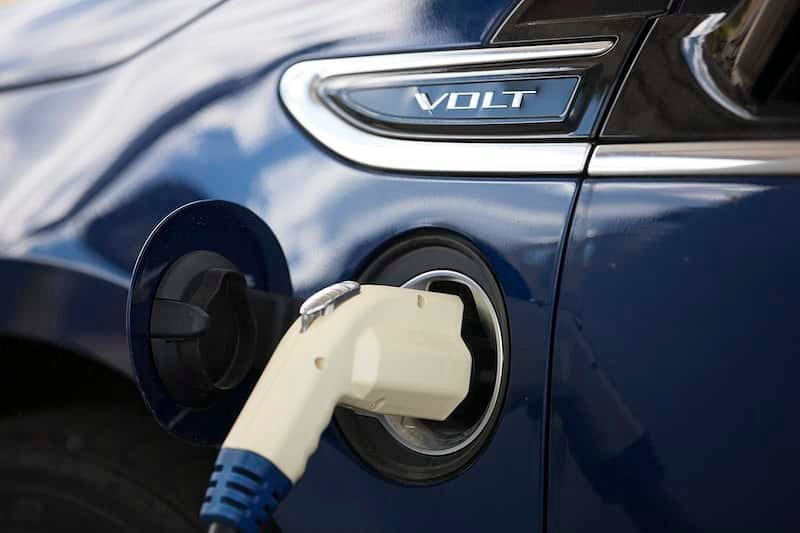
 has awarded a US$1.8 million grant to Pakistan to accelerate local EV production, as the Ministry of Industries & Production (MoIP) pushes a comprehensive EV policy aligned with global sustainability goals.)
Islamabad, Oct 23 (Wealth Pakistan) — In a major boost to Pakistan’s electric-mobility ambitions, the International Finance Corporation (IFC), a member of the World Bank Group, has provided a grant of US$1.8 million to encourage private-sector investment in local electric vehicle (EV) production.
Policy Framework and Steering Committee
This development comes as part of a broader initiative spearheaded by the Ministry of Industries & Production (MoIP) to formulate a comprehensive policy aimed at accelerating EV adoption in the country. According to available documents, a steering committee was established on September 13, 2024 under the Minister for Industries to steer and guide the development of a policy framework promoting the transition to electric mobility.
The committee held multiple rounds of deliberations and created six working groups focused on key areas such as technology, infrastructure, fiscal incentives and investment mobilisation.
Technical Expertise and Stakeholder Consultation
Technical expertise for the policy was provided by a team led by Dr Horizon Walker, a globally recognised expert in EV ecosystems. The group carried out a critical review of existing policies, analysed lessons from successful international programmes, and conducted over 60 consultative sessions with stakeholders from provincial governments, academia, the private sector, and industry associations.
By the end of November 2024, the committee had finalised the first draft of the policy, which was soon recognised by the International Monetary Fund (IMF) as a key component of Pakistan’s green-economic strategy. The IMF subsequently adopted the EV initiative as a major element of a US$1.4 billion arrangement under the Resilience and Sustainability Facility (RSF).
IFC Grant and Industrial Implications
Secretary Industries and Production Saif Anjum told the Standing Committee on Finance & Revenue that the IFC grant was a turning point in aligning Pakistan’s industrial policy with global sustainability standards. He said the IFC’s involvement would catalyse local manufacturing, reduce import dependence, and attract more private investment into clean-transport technologies.
The policy, backed by both the IMF and IFC, is expected to be rolled out later this year, marking a significant milestone in Pakistan’s transition toward cleaner, more sustainable transportation systems.
Economic & Environmental Benefits
Beyond the industrial dimension, the EV policy carries strong economic and environmental implications. Under Pakistan’s commitment to the Paris Agreement, the country aims to ensure that 30 percent of all new vehicle sales are electric by 2030. At the same time, its Nationally Determined Contributions (NDCs) commit to a 50 percent reduction in greenhouse-gas emissions by the end of the decade.
Experts say achieving these targets could help Pakistan avoid more than 4.5 million tons of CO₂ emissions annually, leading to substantial improvements in public health and environmental quality. The government estimates potential savings of around US$405 million each year through reduced health expenditures and increased productivity as a result of cleaner air and reduced pollution-related illnesses.
Energy, Trade and Industrial Opportunity
The transition to EVs also offers an opportunity to productively utilise Pakistan’s 12 to 16 terawatt-hours of surplus electricity, helping the power sector improve flexibility, efficiency and financial sustainability. By channeling unused capacity toward transport electrification, the country can reduce capacity payments to idle power plants—a long-standing strain on the national budget.
Equally significant are the anticipated energy and trade benefits. Pakistan’s average annual oil import bill currently stands at US$16.9 billion, putting heavy pressure on foreign-exchange reserves. According to government projections, the implementation of the EV policy could save approximately 2.07 billion litres of oil per year, translating into US$1 billion in import savings by 2030. Such savings would strengthen the balance of payments and reduce the fiscal burden associated with fuel imports and subsidies.
Jobs, Technology and Local Manufacturing
In addition to the energy and environmental advantages, the policy is poised to create new opportunities for investment and employment. By opening the door to EV manufacturing, Pakistan has a “time-limited opportunity” to diversify and deepen its technology base. With minimal incumbency in the EV segment, the country can establish itself as a competitive regional hub for EV production and associated industries such as battery manufacturing, charging infrastructure, and smart-grid technologies.
Analysts believe that with international backing and policy certainty, thousands of new jobs could be generated across engineering, assembly, maintenance and component-production sectors.