


By Muhammad Asif
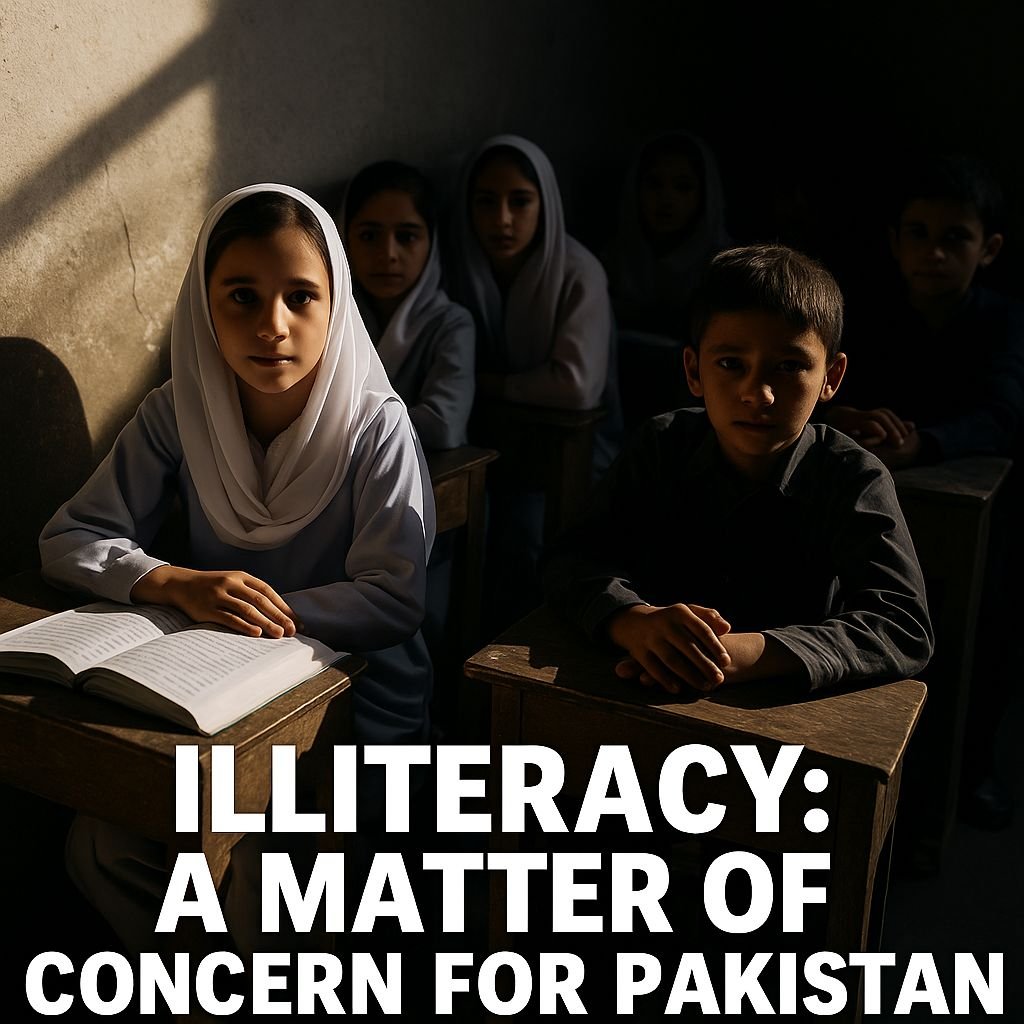
Illiteracy remains one of the most serious challenges facing developing nations, including Pakistan. Education is not a privilege but a constitutional right. Yet millions still live without basic reading and writing skills. This lack of literacy limits opportunities, leaving people jobless, uninformed, and unable to participate effectively in social and political life.
Root causes of illiteracy
Several factors contribute to Pakistan’s high illiteracy rate. Poverty, a shortage of schools, and inadequate educational infrastructure are the most pressing. According to UNESCO, about 13–14 percent of adults globally remain illiterate, and nearly two-thirds of them are women — highlighting persistent gender inequality in access to education.
In Pakistan, rural and underprivileged areas face an even greater crisis. Many children leave school early to support their families or due to long travel distances to the nearest educational institution. The lack of trained teachers, outdated curricula, and weak accountability systems further deepen the problem.
COVID-19 and the widening education gap
The COVID-19 pandemic intensified this crisis. School closures affected more than 1.6 billion students worldwide, with marginalized children suffering the most. Many in Pakistan lacked internet access, digital devices, or reliable electricity to continue learning.
This disruption revealed structural flaws: underfunded education systems, teacher shortages, and a lack of digital learning strategies. As a result, students experienced major learning losses, and dropout rates increased — especially among girls and low-income households.
Economic and social consequences
Illiteracy has far-reaching implications beyond classrooms. It reinforces poverty, widens social divides, and weakens national productivity. People without basic literacy struggle to find stable jobs or understand health and civic information.
Moreover, the growing education gap between the rich and the poor prevents social mobility. Many skilled individuals migrate abroad in search of better opportunities, contributing to brain drain and slowing down Pakistan’s overall development.
Steps toward a literate Pakistan
Overcoming illiteracy requires a coordinated national effort. Governments must invest in building schools, ensuring free and compulsory education, and hiring qualified teachers. Policies promoting gender equality, community involvement, and inclusive education can help reduce disparities.
Investment in early education is equally vital. Research shows that every dollar spent on early childhood care can yield up to seventeen dollars in long-term economic benefits. Educating the youngest generation builds the foundation for a more informed, skilled, and creative workforce.
Education as the backbone of progress
Education is the backbone of social progress, innovation, and national stability. A nation that neglects learning restricts its own future. To secure a brighter tomorrow, Pakistan must place literacy at the heart of its development agenda.
By working together—government, communities, and individuals—the country can break the cycle of illiteracy, unleash human potential, and empower future generations to build a stronger, more equitable Pakistan.