

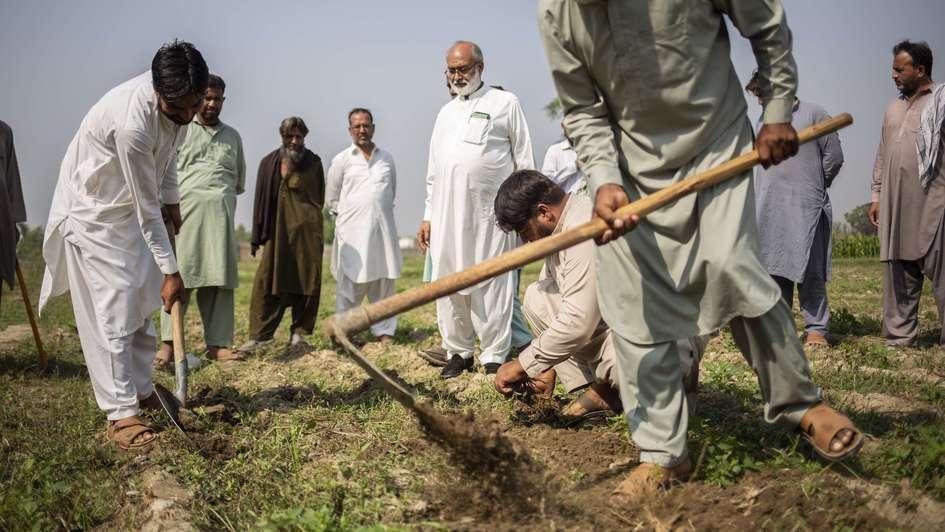

By Ayesha Saba
ISLAMABAD, April 12 (Wealth Pakistan): The Khyber Pakhtunkhwa (KP) government has spent Rs127.533 million during the current fiscal year on an ADB-funded Food Security Support Project in flood-affected districts, reports Wealth Pakistan.
Project scope and timeline
The Agriculture Department is implementing the project, and it will continue until June 30, 2028. The project has a total commitment of $79 million. So far, authorities have disbursed $15.10 million (19%), while $64.30 million (81%) remains to be released.
Meanwhile, the local share stands at Rs1.427 billion. In addition, the foreign cost amounts to Rs23.698 billion.
Financial progress and allocation
So far, the project has recorded a cumulative expenditure of Rs948.268 million. At the same time, the government has allocated Rs6.802 billion for the fiscal year 2025-26.
Climate-smart agriculture initiatives
Under this project, authorities are promoting climate-smart and resilient farming practices. They are providing fertilizers and seeds, including wheat, rice, and DAP, on a 50% cost-sharing basis.
Moreover, officials are training farmers in the safe and efficient use of fertilizers and climate-adaptive seeds. As a result, farmers can improve productivity and reduce risks linked to climate change.
Support for female farmers
The programme also targets women in agriculture. It provides vegetable packages and training in kitchen gardening, food processing, and preservation.
As part of this effort, authorities plan to train around 53,000 female farmers. Therefore, the initiative aims to strengthen household food security and rural livelihoods.
Institutional capacity and digital systems
In addition, the project focuses on strengthening institutional capacity and disaster preparedness. Authorities are developing a unified digital database of farmers in non-project districts.
Furthermore, they are introducing an e-subsidy system to improve transparency and efficiency.
Additional components
The project also supports the seed industry. For this purpose, authorities have proposed a speed breeding facility.
At the same time, they are introducing an ICT-based pest surveillance system for plant protection. The plan also includes support for project management and operational activities.
Procurement and approvals
Currently, officials are revising the PC-I. However, they are still awaiting No Objection Letters (NOLs) from the Asian Development Bank.
Meanwhile, they have submitted revised technical and budget evaluation reports for DAP fertilizer procurement to the ADB. They have also shared revised proposals for individual consultants and an IT firm.
In the next step, authorities will re-advertise wheat seed procurement. In addition, they are waiting for the ADB’s response on CSO-1 regarding either the issuance of an NOL or the reopening of the process.
The Chief Agriculture Department is now reviewing the proposal for the speed breeding facility.
Expected impact
Officials expect that the project will improve food security in flood-hit districts. Moreover, it will strengthen agricultural resilience against climate shocks.
Overall, the initiative will help increase farmers’ productivity. Consequently, it will support sustainable agricultural growth and improve rural livelihoods in Khyber Pakhtunkhwa.