

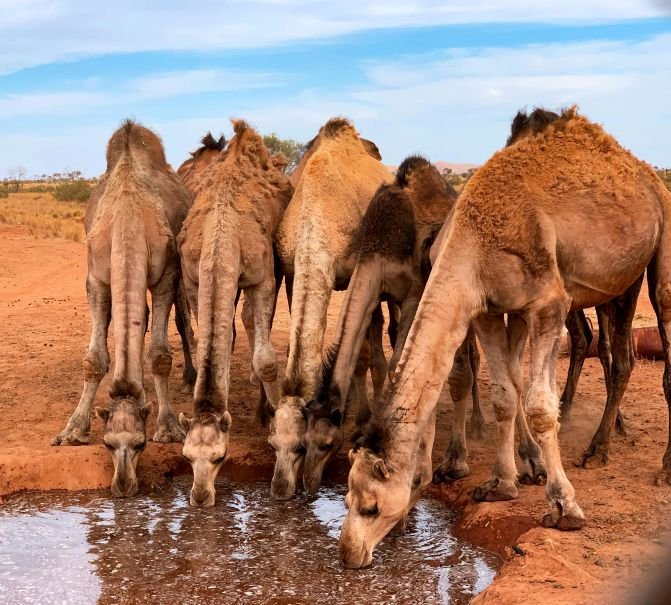

LAHORE, Nov. 26 (Wealth Pakistan) — The Punjab Livestock Department has begun investigating a mysterious disease that recently killed around 10 camels in the Cholistan desert.
Teams rush to collect samples
Dr Haider Ali Khan, spokesperson and Director at the Punjab Livestock Department, told Wealth Pakistan that a team from the National Veterinary Laboratory, Islamabad, reached Kot Sabzal in Rahim Yar Khan to collect blood samples.
Earlier, a Veterinary Research Institute (VRI) team from Lahore gathered samples from 52 camels for testing.
Over 11,000 camels checked in the desert
Dr Khan said livestock teams examined 11,597 camels across Cholistan. Only 1,100 animals showed symptoms. The teams treated and vaccinated them on the spot.
Punjab has a total camel population of 252,000, according to the Agriculture Census 2024. Most camels live in the Bahawalpur and DG Khan divisions.
Common diseases affecting camels
Camel herds in southern Punjab often suffer from parasitic infections such as anaplasmosis and Theileria. Skin issues like sarcoptic mange also appear frequently.
Additionally, Trypanosoma evansi, a protozoan disease, is common in the region. More severe conditions such as bluetongue, peste des petits ruminants (PPR), and brucellosis can also affect local herds.
Situation improving with quick treatment
According to Dr Khan, the situation has improved during the past two days. No new deaths have occurred, and sick animals usually respond within two to three days.
Five medicines are being used to treat cold, flu and breathing problems in the affected camels.
Experts rule out cross-border spread
Veterinarians in Rahim Yar Khan do not see any signs of a transboundary disease.
“If this illness had come from the Indian side, it would have spread across a wide area of southern Punjab. Instead, it remains confined to a narrow belt on the Punjab–Sindh border,” Dr Muhammad Noman, Veterinary Officer in Rahim Yar Khan, told Wealth Pakistan.
He said laboratories can develop a vaccine only after completing the analysis of the collected blood samples.
Illness similar to 2014 outbreak
The current respiratory illness, locally known as Phuphri, is similar to the disease that appeared in 2014.
Livestock experts have urged the Punjab government to take long-term measures to avoid future outbreaks.
Call for stronger surveillance
“Instead of relying on hit-and-trial treatments, the province needs a proper vaccine,” said Lahore-based livestock expert Dr Wasiullah Khan.
He also called for quarantine facilities at the Sindh–Punjab border. According to him, weak surveillance allowed Lumpy Skin Disease to enter Punjab in the past.
He warned that the recent camel illness may also have spread due to similar gaps in monitoring.