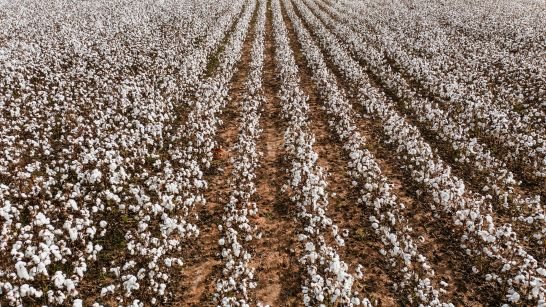

ISLAMABAD, Oct 23 (Wealth Pakistan): The Ministry of National Food Security and Research is giving final touches to the National Cotton Plan 2025, a comprehensive strategy designed to increase crop yield, improve cotton quality, and reduce production costs, according to documents available with Wealth Pakistan.
The plan aims to boost cotton output and promote import substitution through the adoption of modern seed varieties, efficient farming techniques, and good agricultural practices. It is part of a broader national effort to enhance value addition, diversify exports, and reduce dependence on raw material shipments.
Policy Backing and Strategic Alignment
The National Assembly’s Standing Committee on Commerce has endorsed a set of recommendations aligned with the Ministry of Commerce’s export-led growth strategy. The move supports Pakistan’s goal to strengthen its competitiveness and integrate more deeply into global value chains.
As the sixth-largest cotton producer in the world, Pakistan cultivates cotton across about 2 million hectares, primarily in Punjab and Sindh. However, yield and production have declined in recent years, eroding the country’s traditional advantage in textile exports and raising costs for manufacturers.
Shift Toward Value-Added Textiles
Despite the decline in raw cotton output, Pakistan’s textile industry has expanded in value-added segments. Exports of finished textile goods—such as apparel and home textiles—have risen, while shipments of raw materials have fallen.
During FY2025, finished textile products generated $14.29 billion, representing 80 percent of textile exports. In contrast, raw materials and intermediate goods accounted for $3.65 billion, or 20 percent, according to official data.
Textiles and Apparel Policy 2025–30
To consolidate recent gains, the Ministry of Commerce is finalizing the Textiles and Apparel Policy 2025–30, which seeks to maximize the use of locally produced cotton, expand value-added exports, and diversify into new markets.
The policy outlines steps to achieve $30 billion in textile exports by 2030, as approved by the National Export Development Board (NEDB). It identifies priority sub-sectors, target markets, and strategies to attract investment in high-value textile manufacturing.
Challenges and Market Diversification
The report highlights that Pakistan’s downstream textile industries remain smaller than those of regional competitors, limiting its global market share. To address this, the new framework encourages fresh domestic and foreign investment to expand production capacities and adopt advanced technologies.
The government is also facilitating the transition toward man-made fibers (MMF)—which now constitute 74 percent of global fiber use—to reduce dependence on cotton-based products.
Tariff Reforms and Technical Textiles Push
Under the National Tariff Policy 2025, the Tariff Policy Board is rationalizing customs duties on non-cotton yarns and fabrics. This aims to accelerate Pakistan’s shift toward MMF-based apparel, including sportswear, women’s wear, and high-performance fabrics.
The government is promoting local production of synthetic fibers such as polyamide, polyethylene, and polyurethane, aligning with global demand for technical textiles—a market projected to exceed $300 billion by 2030.
To guide this transition, the National Technical Textile Council has been established to develop a roadmap for Pakistan’s shift from conventional cotton products to high-value technical textiles used in construction, agriculture, packaging, medical, and automotive industries.
Public–Private Dialogue and Implementation
The formation of Sectoral Councils has strengthened dialogue between the public and private sectors, ensuring that policymaking aligns with industry priorities. These forums address trade barriers, monitor performance, and support Pakistan’s long-term shift from raw material exports to globally competitive, value-added textile manufacturing.
Officials believe the National Cotton Plan 2025 will serve as a foundation for sustainable growth, ensuring that cotton—the backbone of Pakistan’s textile sector—remains productive, profitable, and globally competitive.