

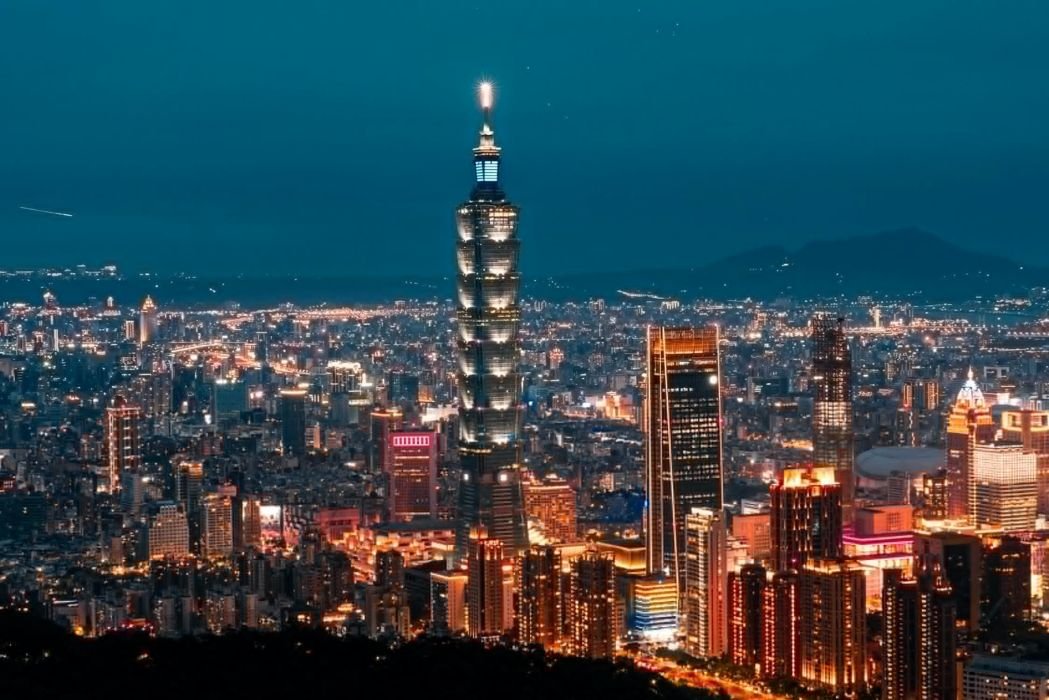

TAIPEI, Oct 29 (CNN) – Taiwan is bracing for possible policy shifts from Washington as US President Donald Trump prepares to meet Chinese leader Xi Jinping later this week in South Korea — their first in-person encounter of Trump’s second term. The island fears its strategic position could become a bargaining chip in trade negotiations between the two superpowers.
Speaking to reporters before his departure, Trump refused to rule out that Taiwan could feature in discussions with Xi, saying only that “a lot of things” would be on the table. His remark has renewed anxiety in Taipei that the United States might soften its stance on Taiwan’s autonomy in pursuit of a broader trade deal with Beijing.
Strategic ambiguity returns
While senior officials in Trump’s administration insist that no concessions are being considered, analysts say the president’s mixed messages suggest a return to Washington’s long-standing policy of “strategic ambiguity.” The approach — avoiding explicit commitments to defend Taiwan — contrasts sharply with former President Joe Biden’s repeated declarations that the US would intervene militarily if China attacked the island.
Some officials argue the shift merely restores traditional balance to US policy, but others warn that it risks undermining deterrence. “Trump’s second-term team includes more isolationist voices, and Taipei is unsure how far US support will really go if tensions escalate,” said Henrietta Levin, a senior fellow at the Center for Strategic and International Studies.
Taiwan’s cautious optimism
Taiwanese officials are publicly downplaying fears of a policy reversal. A senior government source in Taipei said the administration remains “cautiously optimistic” about the upcoming Trump–Xi talks and views recent statements by US Secretary of State Marco Rubio — affirming Washington’s continued backing for Taiwan — as reassuring.
Still, the island’s leadership has intensified outreach to Trump-aligned political circles in the United States, including conservative media figures and influencers. President Lai Ching-te recently granted a rare interview praising Trump’s diplomatic instincts, while Vice President Hsiao Bi-khim and Taiwan’s de facto ambassador to Washington have appeared on right-wing talk shows and podcasts.
Diplomatic observers say this campaign reflects Taipei’s recognition that informal political channels now carry increasing weight in shaping US foreign policy debates.
Military and economic concerns
Despite public reassurances, Taiwan remains uneasy about delayed arms shipments and the slow pace of US defense commitments. More than $20 billion worth of American weapons are pending delivery, with production delays linked partly to the war in Ukraine.
Trump’s administration has encouraged Taiwan to expand its own defense spending, urging the island to invest in asymmetric capabilities designed to make any invasion by China “costly and unsustainable.” However, sources in Washington say some military transfers have been halted under the Presidential Drawdown Authority program — raising further questions about long-term support.
Meanwhile, Taiwan is also navigating trade frictions with Washington. The island has pledged to buy six million tons of liquefied natural gas (LNG) from Alaska in a goodwill gesture, but it continues to resist US pressure to relocate a portion of its semiconductor production capacity to American soil.
Beijing’s ambitions and the stakes for Asia
China, which claims Taiwan as part of its territory, has reiterated that “reunification” remains a central national objective. President Xi’s government has tied the issue to its vision of “national rejuvenation,” with Beijing’s next five-year plan expected to emphasize greater economic integration with the island.
US intelligence assessments indicate that China’s military aims to be ready for a potential invasion by 2027. While Trump has publicly stated that he does not believe Xi will attempt such a move during his presidency, experts warn that complacency could weaken deterrence.
“If both sides waste the next four years assuming an invasion won’t happen, the region could face a far more dangerous situation by 2030,” said Dmitri Alperovitch, chairman of the Silverado Policy Accelerator.
This news was originally published by CNN.