

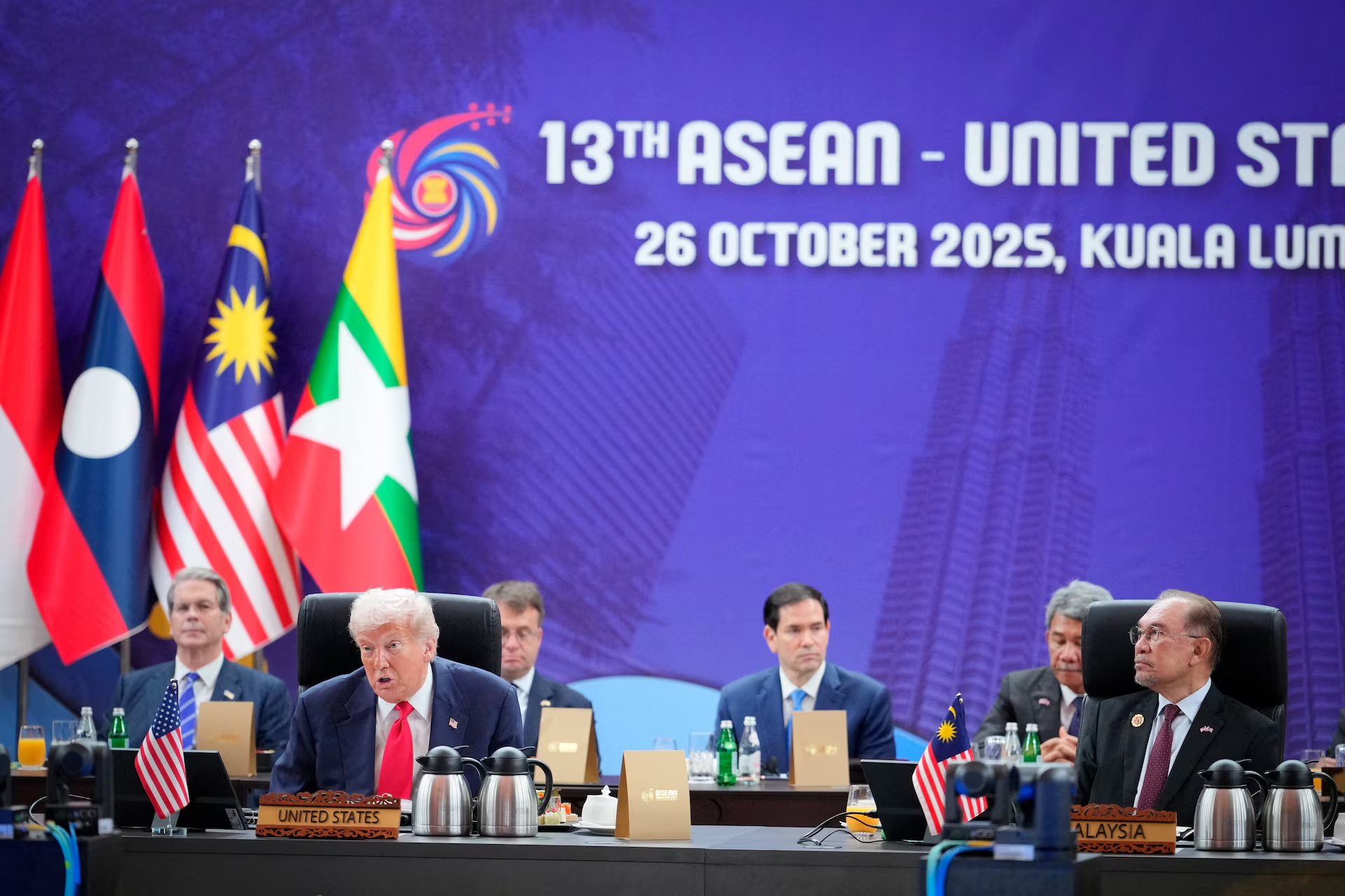

KUALA LUMPUR, Oct 26 (Reuters) – Senior U.S. and Chinese officials have outlined the framework of a potential trade deal that U.S. President Donald Trump and Chinese President Xi Jinping are expected to review later this week. The draft agreement would suspend planned U.S. tariffs and delay China’s export controls on rare earth minerals, U.S. officials said on Sunday.
Trade framework averts tariff escalation
U.S. Treasury Secretary Scott Bessent said the talks, held on the sidelines of the ASEAN Summit in Kuala Lumpur, removed the threat of Trump’s 100 percent tariffs on Chinese imports set for November 1. He added that China is expected to postpone its licensing regime for rare earth minerals and magnets for one year while it reviews the policy.
Chinese officials offered few details, maintaining a cautious tone about the discussions. Trump and Xi are scheduled to meet on Thursday during the Asia-Pacific Economic Cooperation (APEC) summit in Gyeongju, South Korea, to finalize the terms.
Bessent said he believes the tariff truce with China will extend beyond its November 10 expiry date. He also predicted that Beijing will resume large-scale purchases of U.S. soybeans, a move that would please American farmers after China halted such imports in September.
Soybeans and rare earths at the heart of the deal
Bessent told ABC’s “This Week” that U.S. soybean producers will benefit both this season and in the coming years. U.S. Trade Representative Jamieson Greer told Fox News that both sides agreed to pause several punitive measures and found a pathway for greater access to Chinese rare earths while improving the U.S. trade balance.
China’s Vice Minister Li Chenggang said the two sides had reached a preliminary consensus. “The U.S. position has been tough, while China has defended its rights and interests,” he said through an interpreter. Li described the discussions as constructive and solution-oriented.
Trump signals optimism before APEC summit
Trump arrived in Malaysia on Sunday for the ASEAN Summit, the first leg of his five-day Asia tour, which will culminate in his face-to-face meeting with Xi. Speaking after the weekend negotiations, Trump said, “I think we’re going to have a deal with China.”
The U.S. had threatened to impose 100 percent tariffs on Chinese goods starting November 1, retaliating against Beijing’s tightened export controls on rare earth minerals and magnets. China dominates over 90 percent of global rare earth supply, essential for electric vehicles, semiconductors, and missile systems.
Broader issues discussed: trade, fentanyl, TikTok
Officials confirmed that discussions also covered broader trade matters, including the U.S. fentanyl crisis, port entry fees, and the ongoing issue of transferring ownership of TikTok to American control.
Bessent told NBC’s “Meet the Press” that both sides are finalizing the TikTok arrangement to allow Trump and Xi to formalize it during their meeting in South Korea.
Political agenda: Taiwan, soybeans, and Hong Kong
On the sidelines of the ASEAN Summit, Trump hinted at future meetings with Xi in both China and the United States. He said, “We’ve agreed to meet later in China, and then in Washington or Mar-a-Lago.”
Trump is expected to raise several key issues during the talks, including Taiwan, Chinese purchases of U.S. soybeans, and the detention of Hong Kong media tycoon Jimmy Lai, founder of the now-defunct Apple Daily newspaper. Lai’s case has become a global symbol of China’s suppression of press freedom in Hong Kong.
Trump also said he plans to seek China’s cooperation in handling U.S. relations with Russia as the war in Ukraine continues.
Renewed tensions and fragile truce
Recent weeks have seen rising tensions between Washington and Beijing. A six-month trade truce reached in May and extended in August failed to prevent new sanctions, export curbs, and retaliatory threats from both sides.
China’s expanded rare earth export restrictions have disrupted global supply chains. The United States has reportedly considered countermeasures, including blocking exports of software and high-tech components to China.
The rare earth dispute and pending tariffs have placed the world’s two largest economies at a critical juncture as both leaders prepare for the Gyeongju summit.
This report was originally published by Reuters.