

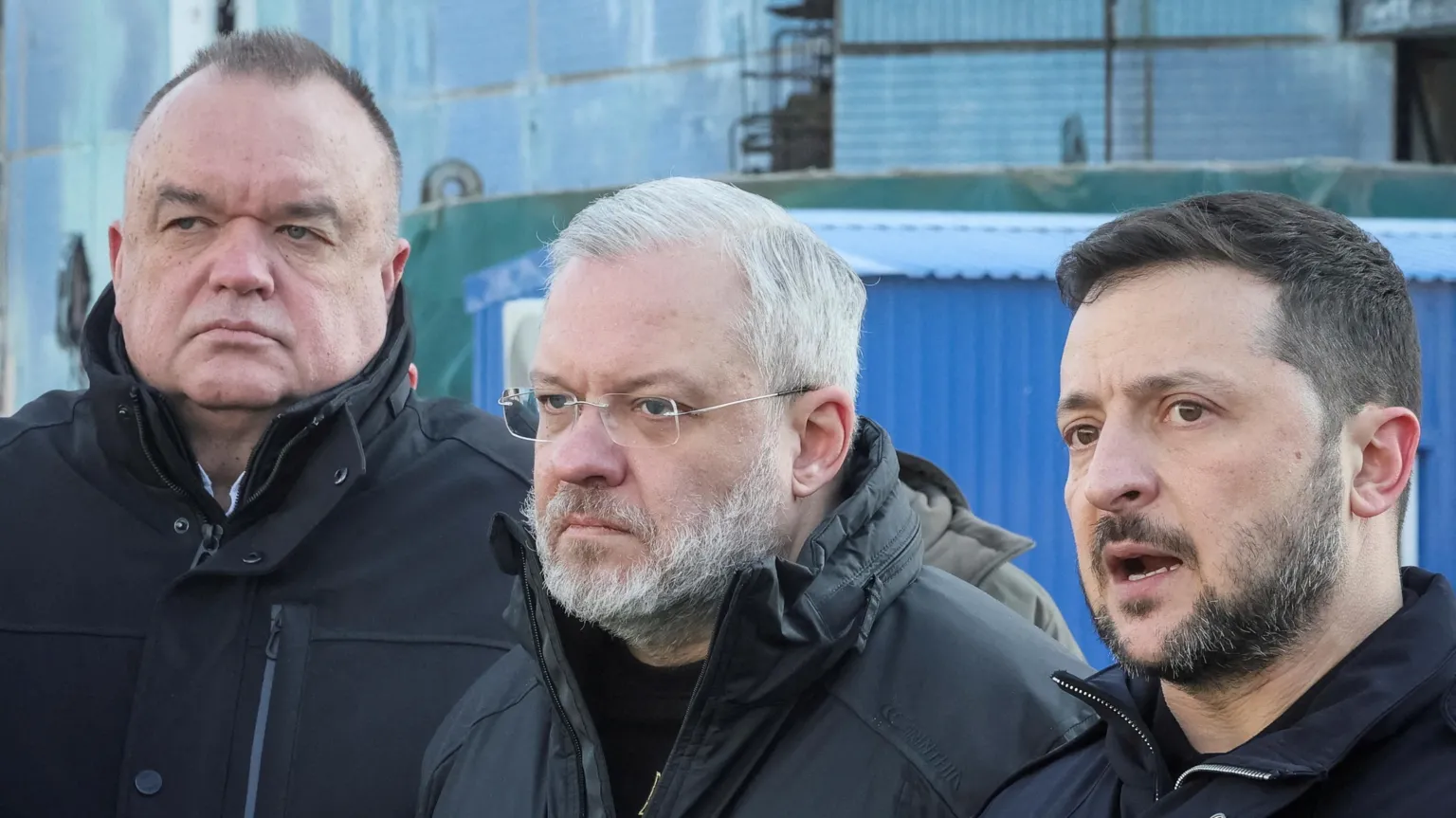

KYIV, Nov 12 (BBC): A major corruption scandal has engulfed Ukraine’s government, forcing two senior ministers to resign following an investigation into a $100 million embezzlement scheme in the energy sector.
President Volodymyr Zelensky called for the resignation of Energy Minister Svitlana Grynchuk and Justice Minister Herman Halushchenko after anti-corruption agencies revealed evidence of large-scale graft involving top officials and contractors.
Allegations of Widespread Embezzlement
According to the National Anti-Corruption Bureau of Ukraine (NABU) and the Specialised Anti-Corruption Prosecutor’s Office (SAP), the network of officials allegedly collected kickbacks from contractors working with Enerhoatom, the national nuclear energy operator. The investigation lasted 15 months and included more than 1,000 hours of audio recordings.
NABU said the group systematically received commissions ranging from 10 to 15 percent of contract values. The funds were allegedly laundered and transferred abroad, including to Russia. Authorities released photographs showing bags filled with cash believed to be part of the scheme.
The money was reportedly laundered through an office in Kyiv linked to the family of former Ukrainian lawmaker and current Russian senator Andriy Derkach.
Ministers and Business Figures Named in Probe
Some of those implicated are close to President Zelensky. Justice Minister Halushchenko and several senior officials allegedly accepted illegal payments from contractors building fortifications to protect energy infrastructure from Russian strikes.
Those named in the investigation include former Deputy Prime Minister Oleksiy Chernyshov and businessman Timur Mindich, a co-owner of Zelensky’s former TV studio Kvartal95, who has reportedly left the country.
Halushchenko denied wrongdoing, saying he would defend himself against the accusations. Grynchuk also rejected any misconduct, stating on social media that she had “not violated the law in any way.”
Political and International Fallout
The scandal comes amid intensified Russian attacks on Ukraine’s energy infrastructure, including substations that power nuclear plants. The revelations have renewed scrutiny of Ukraine’s corruption challenges and raised alarm among its Western allies.
Despite a decade of work by NABU and SAP, corruption remains deeply entrenched in Ukraine’s political system. Earlier this year, mass protests erupted when legislation threatened the independence of the two anti-corruption agencies.
Public pressure and concern from G7 ambassadors prompted Zelensky to reverse those changes. However, the latest case has revived doubts about his government’s commitment to reform and transparency.
Analysts warn that the scandal could affect Ukraine’s relations with the European Union, which granted the country candidate status on the condition that it strengthen anti-corruption reforms. NABU continues to release new evidence daily as the investigation widens.
This news was originally reported by BBC.