
Home Blog Page 10

EOBI’s investment portfolio reaches Rs651bn

0

ISLAMABAD, Nov 18 (Wealth Pakistan) – The Employees’ Old-Age Benefits Institution (EOBI) has reported that its investment portfolio reached Rs651.03 billion as of October 31, 2025, according to a document available with Wealth Pakistan.

The latest figures show that the institution continues to strengthen its financial position to protect the pensions and retirement benefits of registered employees. The portfolio reflects a mix of fixed income securities, real estate assets, and equity investments. This approach supports long-term stability and safeguards the fund against economic risks.

According to the breakdown provided in the official presentation, fixed income securities make up the largest part of the portfolio. These investments total Rs557 billion, representing 85 percent of the overall value. Most of this category consists of Pakistan Investment Bonds. PIBs alone account for Rs497.12 billion. In addition, accrued profits on PIBs amount to Rs37.49 billion, while Market Treasury Bills contribute Rs5.1 billion.

Real estate remains the second major component of EOBI’s investment structure. The value of real estate investments stands at Rs58.55 billion, which is nine percent of the total portfolio. This includes real estate properties worth Rs42.36 billion and real estate projects valued at Rs16.20 billion. These holdings help diversify the portfolio and provide a buffer against inflationary pressures.

Equity investments form the third category, amounting to Rs35.49 billion or six percent of the portfolio. This includes Available-for-Sale Equity worth Rs27.14 billion and Held-for-Trading Equity valued at Rs8.35 billion. Although this segment is smaller, it supports long-term growth through potential market gains.

The projected investment income for 2025 is Rs80.16 billion. This projection indicates strong income-generating potential and reflects the institution’s focus on financial sustainability.

EOBI’s overall investment strategy aims to ensure security and long-term growth. By maintaining a balanced and diversified portfolio, the institution positions its funds to withstand economic changes while continuing to protect the retirement benefits of millions of workers across Pakistan.

Housing Ministry completes Rs36bn development projects

0

ISLAMABAD, Nov 18 (Wealth Pakistan) – The Ministry of Housing and Works has finished eight major infrastructure projects worth Rs36.669 billion during the past five years. These schemes were fully funded by the federal government and carried out across the country from 2020 onward. Pakistan Infrastructure Development Company Limited (PIDCL), an attached department of the ministry, executed all these projects.

Completed schemes and costs

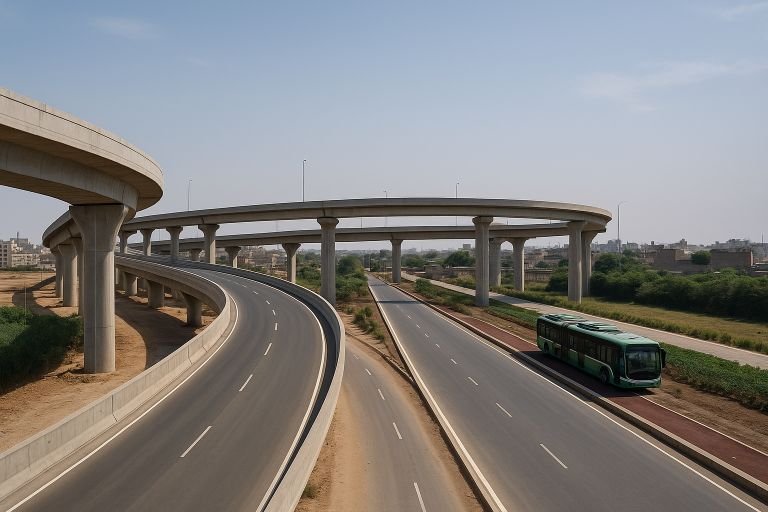
The completed projects include the Sher Shah Suri Road flyover, the 6.4km Nishtar Road, and the 8.9km Manghopir Road (Phase-I). They also include fire tenders for KMC, KMC development schemes, the laying of 66” and 48” water pipelines, a 0.5km stretch of PNS Mehran Road, and the infrastructure phase of the Green Line BRTS in Karachi.

The Sher Shah Suri Road flyover, finished in 2020, cost Rs2.39 billion. Nishtar Road and Manghopir Road (Phase-I) cost Rs1.9 billion and were completed in 2019 and 2021. The Manghopir Road section from Jam Chakro to Banaras (North Bound) came in 2024 at Rs3.19 billion.

KMC received fire tenders in 2021 at a cost of Rs1.88 billion. KMC development schemes, completed the same year, cost Rs1.011 billion. The 66” and 48” water pipeline project, completed in 2020, cost Rs1.65 billion. The 0.5km PNS Mehran Road project, completed in 2021, cost Rs0.04 billion. The Green Line BRTS (Infrastructure Phase-I), finished in 2022, cost Rs24.60 billion.

Ongoing urban development programmes

PIDCL is also working on several ongoing schemes. These include the Karachi Urban Infrastructure Development Package, the Hyderabad Urban Infrastructure Development Package, federal courts in Karachi, and offices for the Intelligence Bureau (IB) and National Accountability Bureau (NAB). The combined estimated cost is Rs24,000 million.

The Karachi package is expected to cost Rs15,000 million. The Hyderabad package has an initial estimate of Rs5,000 million. The Federal Courts Karachi project carries an estimate of Rs4,000 million. The cost of IB and NAB offices is under calculation.

PIDCL is also handling the 1.8km extension of the Green Line BRT at Rs4.59 billion and the 1km integration of the Orange Line with the Green Line at Rs0.058 billion.

Urban mobility and civic services expected to improve

A housing ministry official told Wealth Pakistan that these projects are improving urban mobility and civic services in large cities. He said road upgrades and water pipeline schemes aim to ease traffic congestion and address water shortages in Karachi.

Government seeks faster completion of remaining work

The ministry has directed PIDCL to speed up remaining schemes, especially those in Karachi and Hyderabad, due to their impact on regional economic activity. The government is also reviewing an expansion of the Karachi package. The proposed additions include more roads, better drainage, and new water supply channels, depending on available funds.

Feud erupts between Trump and ally Marjorie Taylor Greene

0

WASHINGTON, Nov 16 (BBC): A deep rift has emerged between US President Donald Trump and Republican congresswoman Marjorie Taylor Greene, ending years of close political alignment. Their disagreements, which began privately, have now escalated into a public and bitter feud.

Trump Calls Greene “Wacky” and a “Traitor”

On Friday, Trump attacked Greene on social media, calling her “wacky” and urging voters to remove her from office in next year’s elections.
He intensified his criticism on Saturday, calling her a “traitor” in another post from his residence in Florida.
Trump claimed that Greene was angry because he advised her not to run for governor or senator in Georgia. He said she repeatedly tried to contact him but he stopped taking her calls, adding, “I can’t take a ranting lunatic’s call every day.”

Greene Criticises Trump Over Epstein Files and Policy Decisions

Greene has recently questioned whether Trump still prioritises his “America First” agenda.
She criticised his approach to foreign conflicts, tariff decisions and rising living costs. However, her strongest disagreements focus on the release of files related to Jeffrey Epstein.
The House is preparing to vote on the Epstein Files Transparency Act, which would force the US Justice Department to release unclassified records linked to Epstein.
Greene is one of only four Republicans who joined Democrats in signing a petition demanding the files be made public.

Bitter Exchange Over Epstein Files Vote

Greene accused Trump of pressuring Republicans to block the release of the documents.
“He’s coming after me hard to scare other Republicans before next week’s vote,” she wrote on X (formerly Twitter).
She added that Trump’s attacks had made her a target for threats “fueled and egged on by the most powerful man in the world.”
Greene wrote, “I don’t worship Donald Trump. I worship God. I serve my district and the American people.”

Former Allies Turn Against Each Other

The dispute marks a dramatic shift in their relationship. Greene remained loyal to Trump during major controversies, including the January 6 Capitol riot in 2021.
Trump also defended her when she faced backlash for promoting conspiracy theories.
Now, Greene says his aggression toward her is “shocking” given her history of supporting his legislative agenda.

Analysts Say Feud Unlikely to Hurt Trump

Former Republican strategist Robert Moran said Trump is clearly trying to block the release of the Epstein files.
He said the feud is unlikely to damage Trump politically because voter groups remain deeply polarised.
However, he noted that many Republican voters support releasing the documents because they distrust powerful institutions and want transparency.

Trump’s Longstanding Ties to Epstein

Trump has faced criticism for years over his past connection to Jeffrey Epstein, the late financier and convicted sex offender.
Trump says he ended his relationship with Epstein in the early 2000s and denies any wrongdoing.

This news was originally published by BBC.

Type 1 diabetes is more severe in young children

0

LONDON, Nov 16 (BBC): Scientists say they now understand why type 1 diabetes is more aggressive in young children, especially those diagnosed under the age of seven. New research shows the pancreas is still developing at that age, making its insulin-producing cells far more vulnerable to immune system attacks.

Pancreas Still Developing in Early Childhood

Type 1 diabetes occurs when the immune system destroys beta cells in the pancreas — the cells that release insulin and control blood sugar levels.
Researchers found that in young children, these beta cells are still forming. They exist as small clusters or even single cells before eventually maturing into larger groups known as Islets of Langerhans.
The study revealed that the immune system tends to destroy the small immature clusters first, before they have a chance to mature. Older, larger clusters survive longer, producing small amounts of insulin and reducing disease severity.

Study Examined 250 Pancreas Samples

The findings, published in Science Advances, are based on pancreas samples from 250 donors of different ages.
Researchers at the University of Exeter compared how beta cells develop normally and how they change when type 1 diabetes begins.
They found that earlier in life, beta cells have less protection and are easier for the immune system to “pick off,” causing a fast and aggressive onset of the disease in young children.

Family Shares Experience With Childhood Diagnosis

Type 1 diabetes affects around 400,000 people in the UK.
Gracie, an eight-year-old from Merseyside, became critically ill at age one. Her father, Gareth, said she went from being healthy to almost dying in less than two days.
The family had to learn how to manage food intake, monitor blood sugar and use insulin quickly. Gracie now uses a glucose monitor and insulin pump. Her father says she is “bossing diabetes.”

New Drugs May Delay or Slow the Disease

Dr Sarah Richardson from the University of Exeter said the findings bring hope.
New immunotherapy drugs may delay the disease by protecting beta cells long enough for them to mature.
One drug, teplizumab, is already licensed in the UK. It can slow the immune attack on beta cells, although it is not yet available on the NHS.
Screening healthy children for early signs of the disease is also being explored.

“Missing Piece of the Puzzle,” Say Experts

The research forms part of the Type 1 Diabetes Grand Challenge, led by Diabetes UK, Breakthrough T1D and the Steve Morgan Foundation.
Rachel Connor of Breakthrough T1D said the study “provides a missing piece of the puzzle” by explaining why the disease progresses quickly in young children.
Dr Elizabeth Robertson of Diabetes UK said uncovering this mechanism will help scientists develop new immunotherapies that could give children more years without needing insulin — and may one day prevent the disease entirely.

This news was originally published by BBC.

China’s ancient bamboo slips make a modern comeback

0

WUHAN, Nov 16 (Wealth Pakistan): China’s ancient bamboo slips, once buried in tombs as silent records of early governance, are experiencing a major cultural revival. Museums, researchers and cultural institutions across the country are placing renewed focus on these early writing materials, turning them into symbols of heritage, creativity and national confidence.

Archaeological Sites Highlight Early Legal and Administrative Records

At a newly opened archaeological site in Hubei Province, curator Hou Liming stands beside a replica of a remarkable tomb where an official from the Qin era was buried with 1,155 bamboo slips.
These slips recorded laws on farming, agriculture, land, currency and property. Their discovery in 1975 reshaped understanding of China’s early administrative system and revealed how Emperor Qinshihuang governed his empire more than 2,000 years ago.
The newly opened site is part of a wider national trend to spotlight bamboo and wooden slips, known as jiandu, which were China’s main writing medium before paper.

Museums Across China Showcase Rediscovered Texts

On October 28, the Hubei Provincial Museum launched an exhibition featuring bamboo slips from the tomb of Marquis Yi of the Zeng state. These texts include details of funeral carriages and horses and are among the oldest known bamboo writings.
On the same day, Hunan Province reopened its upgraded Liye Qin Slips Museum, now displaying over 600 artifacts.
Visitors, including schoolchildren, expressed amazement at the sophistication of ancient records. Ten-year-old Zhou Shiyu said she was surprised to see multiplication tables and grain distribution logs more detailed than her homework.

Bamboo Slips Provide Insight Into Dynasties and Ancient Life

Liye is best known for the 2002 discovery of bamboo slips bearing nearly 200,000 characters on taxation, population, postal services, judiciary, medicine and other Qin-era affairs. These represent the most significant Qin-period find since the Terracotta Warriors.
China has so far unearthed more than 300,000 inscribed slips, mainly in Hunan, Hubei and Gansu.
Finds from the Warring States Period include Confucian and Taoist classics. Han Dynasty slips discovered in Gansu offer insights into Silk Road interactions, frontier administration and postal systems.

Researchers Say Slips Are Priceless Windows Into History

Chen Wei, a researcher at Wuhan University, said bamboo slips remain highly valued because they preserve reliable evidence of China’s early civilizations.
He said they help scholars understand political systems, cultural development and governance across different dynasties.

Digital Technology Gives Bamboo Slips a New Life

China’s renewed interest in traditional culture also supports the comeback of bamboo slips.
At the Liye Qin Slips Museum, a 3D virtual guide dressed in Qin-era clothing greets visitors and answers questions. Transparent digital screens allow visitors to rotate and enlarge high-resolution scans, revealing annotations and translations.
Museum director Zhou Dongzheng said digital tools help transform ancient slips into “living stories.”

Cultural Products Bring Ancient Scripts Into Daily Life

Gift shops now sell T-shirts, bags, magnets and cups decorated with bamboo-slip motifs. Visitors say these designs help bring ancient culture into everyday life and make history feel more accessible.

National Plans Support Cultural Revival

China’s cultural revival aligns with national development goals.
The Communist Party of China Central Committee recently released its recommendations for the 15th Five-Year Plan (2026–2030), which call for boosting cultural creativity and fostering a thriving socialist culture.
During the 14th Five-Year Plan period, China made significant gains in the cultural sector, with 7,046 registered museums by the end of 2024—over 90 percent offering free admission. Revenue from the cultural industry reached 19 trillion yuan in 2024, with a profit of 1.77 trillion yuan.

Heritage Tourism Boosts Local Economies

Local governments are using regional heritage to drive growth.
In Longshan County, home to the Liye discovery, themed tourism routes attracted 5.15 million visitors in the first nine months of the year, generating 5.24 billion yuan in revenue. Over 30 homestays and restaurants now thrive on rising interest in Qin-era culture.

Bamboo Slips Become a Modern Cultural Icon

Curator Hou said the revival reflects growing cultural confidence, especially among younger generations.
He noted that bamboo slips, once limited to academic study, are now appearing in films, creative goods, digital displays and educational programs.
“They are becoming approachable, relatable and shareable icons of Chinese culture,” he said.

Pope hosts Hollywood stars, warns cinema is under threat

0

VATICAN CITY, Nov 16 (Reuters): Pope Leo hosted a group of leading Hollywood actors and filmmakers at the Vatican, telling them that cinemas around the world face a “troubling decline” and need urgent support to survive. He said the shared experience of watching films must be protected, especially as digital overload changes how people consume stories.

Pope Says Cinema Is a “Workshop of Hope”

Actors Cate Blanchett, Monica Bellucci, Chris Pine and Viggo Mortensen attended the private audience. Directors Spike Lee, Gus Van Sant and Sally Potter were also part of the delegation.
Pope Leo, the first U.S.-born pontiff, told them that cinema remains a vital “workshop of hope” during a time of global uncertainty. He said many cinemas are disappearing from cities and neighbourhoods.
He urged institutions to defend the cultural and social value of film. Box office revenues in many countries remain far below pre-pandemic levels, and the United States and Canada reported their weakest summer since 1981, excluding the COVID shutdown.

Pope Urges Filmmakers to Resist “Logic of Algorithms”

The pope also warned that constant digital stimulation risks reducing storytelling to what algorithms predict will succeed.
He said, “The logic of algorithms tends to repeat what works, but art opens up what is possible.”
Pope Leo encouraged filmmakers to defend slowness, silence and differences whenever they serve the story.

Cinema Can Explore Human Pain With Honesty

Pope Leo said cinema, now in its 130th year, has evolved into a medium capable of exploring humanity’s deepest questions. Entering a theatre, he said, is like crossing a threshold where imagination widens and pain can take on new meaning.
He also urged artists to confront violence, war, poverty and loneliness with honesty. Good cinema, he said, “does not exploit pain; it recognizes and explores it.”

Blanchett, Spike Lee and Others Respond

Australia’s Cate Blanchett said the pope’s message was a clear call to embrace difficult and painful stories.
Filmmaker Spike Lee met the pope and presented him with a New York Knicks basketball jersey printed with “Pope Leo 14.” Lee said the invitation surprised him but described the meeting as “a great day.”
The pope also praised behind-the-scenes workers, calling filmmaking a collective craft in which no one is self-sufficient.

Pope Shares His Favourite Films

Ahead of the event, the Vatican released four of Pope Leo’s favourite movies:
The Sound of Music
It’s a Wonderful Life
Ordinary People
Life Is Beautiful
The gathering ended with each guest meeting the pope individually and presenting small gifts.

This news was originally published by Reuters.

South Africa seal first Test win in India in 15 years

0

KOLKATA, Nov 16 (Sky Sports): South Africa claimed a historic win in Kolkata, beating India by 30 runs in the first Test. Off-spinner Simon Harmer produced a match-winning spell as India collapsed while chasing 124 on day three. India’s captain Shubman Gill missed the run chase after suffering neck spasms and could not bat.

Harmer and Maharaj Run Through India

Harmer took 4-21 in the second innings after grabbing 4-30 earlier. He removed key batters and broke India’s resistance. Keshav Maharaj supported him well and ended the match with two wickets in two balls.
Axar Patel tried to revive India with a quick 26 from 17 balls. He hit two sixes and a four in one over from Maharaj. However, he fell trying to clear the boundary again, with Temba Bavuma taking a sharp catch on the run. Maharaj then dismissed Mohammed Siraj next ball to seal victory.

Bavuma Leads From the Front

The Proteas had not won a Test in India since 2010. They had lost seven and drawn one since then.
In this Test, South Africa needed only nine wickets in India’s chase because Gill retired hurt on day two.
Earlier, Bavuma scored an unbeaten 55 in South Africa’s second innings. It was the only half-century of the match. He lifted his team from 91-7 to 153 with support from Corbin Bosch.

Bowlers Dominate on a Tricky Pitch

South Africa made 159 in their first innings. India replied with 189 but could not build on their lead.
Harmer, Maharaj and Marco Jansen dominated India with swing and spin. Jansen dismissed Yashasvi Jaiswal and KL Rahul early. India stumbled to 38-4.
Harmer then removed Rishabh Pant and Dhruv Jurel. He trapped Ravindra Jadeja lbw after a short stand with Washington Sundar. He also caught Sundar in the slips and pinned Kuldeep Yadav lbw.

Series Shifts to Guwahati

Axar Patel added brief hope, but India fell short.
South Africa now hold a 1-0 lead in the two-match series. They are aiming for only their second Test series win in India and their first since 2000.
The final Test will be played in Guwahati from November 22 to 26. Three ODIs and five T20Is will follow.

This news was originally published by Sky Sports.

Traders demand railway station at Faisalabad Industrial Estate

0

LAHORE, Nov 16 (Wealth Pakistan): Industrialists in Faisalabad are calling for a railway station at the Faisalabad Industrial Estate to reduce transport costs and improve the flow of raw materials and finished goods. They say the new facility will strengthen manufacturing, boost exports and support long-term growth.

Punjab Reviews Plan for Railway Station at Faisalabad Industrial Estate

Raza Azhar Waqar, chairman of the Faisalabad Industrial Estate Development and Management Company, said the Punjab government has already prepared a plan to link the estate with the national railway network.
He explained that the proposed station will offer faster and cheaper cargo movement. According to him, the Punjab cabinet is reviewing the project, and approval is expected soon. He added that all preparations for the project are complete.

Industries Expect Faster, Cheaper and More Reliable Cargo

Industrialist Waheed Ahmed told Wealth Pakistan that most factories still rely on trucks for cargo transport. However, trucks often face delays due to traffic, checkpoints and weather. As a result, production schedules suffer.
He said a railway station will help industries move goods more quickly and at a much lower cost. Moreover, he noted that frequent fuel price changes make budgeting difficult for manufacturers.

Rail Link to Support Faisalabad’s Textile Hub

Ahmed said Faisalabad remains Pakistan’s textile capital, with hundreds of factories employing thousands of workers. Because of this large industrial base, a dedicated railway facility will improve the bulk movement of cotton, yarn and finished products.
He added that lower transport costs will help local manufacturers compete more effectively in both domestic and global markets.

Rail Transport Offers Higher Capacity and Lower Stress on Roads

Another industrialist, Aziz Ahmed, said road transport creates congestion, increases fuel expenses and causes delays. In contrast, rail cargo can carry much larger volumes. “One train can replace almost 30 trucks carrying cotton bales,” he said.
In addition, he said rail transport performs better during bad weather and offers more predictable delivery schedules.

Economic, Traffic and Environmental Benefits

Aziz noted that a railway station at the industrial estate will also reduce pressure on major highways. As a result, fuel use will fall and emissions will decline.
He said improved transport efficiency will attract more industries to the estate, which will help create jobs and expand the industrial cluster.

PSDP spending reaches Rs330bn in four months

0

ISLAMABAD, Nov 16 (Wealth Pakistan): Pakistan authorised development spending of Rs330.43 billion during the first four months of FY2025-26. This represents 33 percent of the total Public Sector Development Programme (PSDP) allocation for the year. The Monthly Development Update for November 2025 reports that the Ministry of Planning also achieved savings of Rs2.2 billion through its cost rationalisation exercise.

PSDP Allocations and Early Spending Pattern

The total PSDP size for FY2025-26 stands at Rs1,000 billion. Up to the end of October 2025, ministries and implementing agencies received authorisations worth Rs330.43 billion. This enabled them to begin work on priority development projects across the country.
A comparison with last year shows that Rs81.9 billion had been spent during July–October 2024-25, while expenditure in the same period this year stood at Rs76.0 billion.

Infrastructure Continues to Dominate PSDP

Infrastructure remained the largest component of the PSDP with a 63 percent share. It received Rs626.77 billion, of which Rs46.12 billion was utilised by the end of October.
The transport and communication sector was allocated Rs333.48 billion and used Rs25.93 billion in the first four months. Energy projects received Rs122.65 billion and utilised Rs2.54 billion. The physical planning and housing sector spent Rs4.69 billion out of its Rs72.73 billion allocation. Water projects accounted for Rs12.95 billion in expenditures against a total allocation of Rs97.90 billion.

Social Sector and Governance Expenditures

The social sector received Rs169.31 billion, or 17 percent of the PSDP. Education, including the Higher Education Commission, used Rs8.97 billion out of its Rs60.75 billion allocation.
The health and nutrition sector spent Rs0.14 billion, while the “others” category used Rs1.51 billion out of Rs21.71 billion.
The governance sector utilised Rs0.65 billion out of its Rs11.17 billion allocation. Science and IT projects received Rs37.59 billion and spent Rs1.69 billion. Industries and production saw expenditures of Rs0.48 billion in food and agriculture and Rs0.15 billion in manufacturing.

Funding for Special Areas and Merged Districts

Special areas, including Azad Jammu and Kashmir and Gilgit-Baltistan, were allocated Rs81.80 billion. Development schemes in the merged districts of Khyber Pakhtunkhwa received Rs65.44 billion under the Accelerated Implementation Program. A Joint Steering Committee chaired by the KP Chief Minister continues to provide oversight.

Role of Foreign-Funded Projects

The PSDP includes 86 foreign-funded projects with a combined foreign cost of Rs4.2 trillion. Fifteen are fully financed by development partners, while the remaining operate on a cost-sharing model.
Between July and October 2025, ministries sanctioned Rs25.1 billion in rupee cover for foreign-funded schemes, with expenditures amounting to Rs6.3 billion.

Releases and Expenditures by Development Partners

Releases included Rs4.03 billion from the World Bank, Rs4.12 billion from the Asian Development Bank, Rs1.75 billion from Korea, Rs15.02 billion from the United States and Rs0.014 billion from China.
Expenditures stood at Rs4.65 billion on World Bank–supported projects, Rs0.66 billion on US-funded initiatives, Rs0.32 billion on Korea-financed schemes, Rs0.07 billion on China-funded projects and Rs0.007 billion on Asian Development Bank programmes.

Monitoring, Evaluation and Cost Rationalisation

During October, 22 projects were monitored against a target of 19, while seven were evaluated against a target of eight.
By cutting non-essential components between July and September 2025, the Ministry reduced costs from Rs1,424.9 billion to Rs1,422.7 billion, saving Rs2.2 billion.

Government’s Priority on Efficient Spending

According to the report, the government remains committed to ensuring that PSDP spending supports national priorities, improves service delivery and generates high-impact outcomes across sectors.