
Home Blog Page 12

‘Double 11’ shopping bonanza ignites surge in China’s consumer spending

0

BEIJING, Nov 12 (Xinhua) – The Double 11 shopping festival in China has sparked a fresh surge in consumer spending, reflecting a shift toward smarter, greener, and more emotionally driven purchases. Discounted sales ranging from AI-powered refrigerators to blind boxes are reshaping buying habits across the country.

Government stimulus supports consumer demand

China recently released the fourth and final tranche of this year’s 300 billion yuan (about 42.3 billion U.S. dollars) in ultra-long special treasury bonds. The funding is part of a national initiative to boost domestic demand by replacing outdated consumer goods and upgrading industrial equipment. The Double 11 shopping festival in China has benefited from these trade-in programs, helping to accelerate sales across online platforms.

E-commerce boom across major platforms

The annual shopping event, which lasts around a month and ends in mid-November, has again become a major engine of retail growth. On Alibaba’s Tmall, sales of consumer electronics such as AI glasses and household robots have surged, supported by new product launches and aggressive promotions.
Tmall reported that smart-glasses sales had risen 25 times year on year by Oct. 30, while robotics brands like DEEP Robotics and UBTECH Robotics recorded double-digit growth.

JD.com sees record growth in AI products

JD.com also reported strong sales of AI-enabled devices. As of Tuesday, sales of smart electronics had more than doubled compared with last year. Smart-glasses sales grew 346 percent, digital-camera sales increased 238 percent, and action-camera sales jumped 220 percent.

Changing consumer preferences

Zhu Keli, founding dean of the China Institute of New Economy, said Chinese consumers were increasingly choosing high-quality products. “Tech products such as smart-home systems and health-monitoring devices are becoming mainstream choices,” he said.
At the same time, emotional value and personal experience are shaping buying decisions. Tmall data shows that sales of gaming merchandise and blind boxes have more than doubled since the start of the Double 11 shopping festival in China, signaling a boom in “emotional consumption” among younger shoppers.

Emotional value drives sales

Yang Xiujie, e-commerce director of Shandong Yihao Customized Brand Management Co., said her company’s “ugly-cute” cushion pillows and humorous desk signs had become bestsellers. “Young consumers are buying them not only for function but also for emotional comfort and identity,” she explained.
Experts say this reflects broader demographic and cultural trends, from elderly consumers fueling the silver economy to Gen Z shoppers driving emotional and experience-based spending.

AI transforming retail experience

Artificial intelligence is not only boosting product sales but also reshaping how e-commerce operates. Midea Group’s livestreaming base in Wuhan now uses AI visualization tools that let customers preview how appliances fit into their homes, creating realistic online experiences.
Tmall has also adopted AI to improve marketing accuracy by matching discount coupons with potential buyers. The system covers sectors such as fashion, beauty, electronics, home appliances, food, pet supplies, and outdoor gear, and it has significantly improved conversion rates.

Policy focus on domestic consumption

Analysts believe China will continue strengthening policies that stimulate consumer demand as it works to expand domestic markets. The Communist Party of China Central Committee’s recommendations for the upcoming 15th Five-Year Plan (2026–2030) emphasize raising the GDP share of household consumption and promoting inclusive policies that directly benefit consumers.
Feng Lin of Golden Credit Rating said additional support funds may soon target non-durable consumer goods and more consumption vouchers could be issued nationwide.

This news was originally published by Xinhua.

NHA set to announce tendering for M-6 Motorway soon

0

ISLAMABAD, Nov 12 (Wealth Pakistan) – The National Highway Authority (NHA) has completed every requirement and will announce tendering for the M-6 Sukkur-Hyderabad Motorway project within a month. All international lenders have cleared funding, which means construction can finally begin.

Funding approvals completed

Talking to Wealth Pakistan, NHA Member Aided Projects Ashfaq Ahmad Khan said donor banks held their board meetings in September and October. “These banks have finalised financing for the M-6 Sukkur-Hyderabad Motorway project,” he explained. He added that the Islamic Development Bank (IsDB) was the last lender to approve funding. “NHA received confirmation of 450 million dollars from IsDB in October,” he said.

Construction timeline

According to Ahmad, physical work on the motorway will start right after the tendering ends. “The NHA management and Federal Minister for Communications Abdul Aleem Khan are committed to start the work without delay,” he noted. The M-6 motorway covers 306 kilometres and is divided into five sections – Hyderabad–Tando Adam, Tando Adam–Nawabshah, Naushero Feroz–Ranipur, Ranipur–Sukkur, and Sukkur–Hyderabad.

Financing and implementation

The first two sections will use the Public-Private Partnership (PPP) model if other financing is unavailable. Meanwhile, the Saudi Fund for Development (SFD) will finance Section III, and IsDB will fund Sections IV and V. As a result, the M-6 Sukkur-Hyderabad Motorway project will link major industrial hubs and complete the missing part of the Karachi-Peshawar Motorway. In addition, it will serve as a continuous north-south economic corridor.

Background and rising cost

Previously, NHA had cancelled its agreement with M/s Techno-CMC (TECMC) Private Limited after the company failed to achieve financial close despite repeated extensions. The contract, signed in December 2022 under PPP mode, was worth Rs 307 billion. Now, the total estimated cost of the M-6 Sukkur-Hyderabad Motorway project has climbed to 1.7 billion dollars. It was 617 million in 2018 and 1.1 billion in 2022. The increase is mainly due to inflation and design changes.

Economic impact and traffic forecast

The M-6 motorway is a key national project. It will strengthen regional trade routes and reduce travel time between Sindh’s cities. NHA expects about 46 thousand vehicles daily – 34 thousand from N-5 and 11 thousand from N-55. Therefore, the motorway will ease traffic pressure on existing highways and lower transport costs for cargo and passengers.

Karachi linkage through M-10 upgrade

Meanwhile, NHA is upgrading the M-10 Motorway (Karachi Northern Bypass) to connect Karachi directly with the M-6 Sukkur-Hyderabad Motorway project at Jamshoro. This extension will create a modern, high-capacity route from Karachi Port to central Pakistan. As a result, freight movement will be faster and more efficient.

Future benefits

Experts believe that the M-6 Sukkur-Hyderabad Motorway project will generate thousands of jobs, promote industrial growth and enhance access to markets and services. It will also complete the Karachi-to-Peshawar Motorway network and advance Pakistan’s goal of a fully connected economic corridor.

High-value mango varieties

0

ISLAMABAD, Nov 12 (Wealth Pakistan) – High-value mango varieties in Pakistan are reshaping orchard profitability as growers shift focus from volume to premium cultivars. Experts say choosing the right varieties can help farmers earn dollars instead of rupees through exports and better local prices.

Shift toward profitable mango varieties

Talking to Wealth Pakistan, Abdul Ghaffar Grewal, former director of the Mango Research Institute Multan, said that only a few high-performing varieties are driving market demand.
“There are five mango varieties that are most profitable at this time,” he said. “These include Sindhri, Safaid Chaunsa, Late Ratol No 12, Chenab Gold, and Azeem Chaunsa.”

Recommended plantation mix

Grewal advised growers to dedicate 85–90 percent of their new orchards to these five varieties and use the remaining area for other favourites. He said the selected cultivars yield well, bear fruit every year, and have no record of crop failure.
“All five are exportable and also fetch good prices in the local market. Since buyers purchase them directly from the farm, growers save transport and commission costs,” he added.

Dominant cultivars and changing profitability

Pakistan produces about 95 percent of its mangoes from eleven major varieties, including Dasheri, Langra, Anwar Ratol, Sindhri, Chaunsa Summer Bahisht, Kala Chaunsa, Late Ratol No 12, Fajri, Safaid Chaunsa, Chenab Gold and Azeem Chaunsa.
However, Grewal pointed out that the once-popular Chaunsa Summer Bahisht is no longer profitable. “Farmers’ favourite Chaunsa Summer Bahisht is not included in these five varieties because its profit margin has declined,” he said.

Regional suitability and marketing cycles

Explaining regional differences, Grewal divided Pakistan’s mango-growing zones into three: Sindh, Rahim Yar Khan, and Multan (including Muzaffargarh, Khanewal and Vehari). “Mango flowering begins in Sindh, then moves to Rahim Yar Khan, and finally to Multan,” he said.
Fruit ripens in the same sequence, defining marketing windows and export cycles. Sindhri remains the best variety for Sindh, while Swarna Rekha (known locally as Sanora) is also grown and exported from the province.

Profitable zones for top varieties

In Rahim Yar Khan, Sindhri, Safaid Chaunsa and Late Ratol No 12 offer the best returns and export prospects. Chenab Gold and Azeem Chaunsa perform better in Multan and nearby districts, where both yield well and have higher farm-gate prices.
“The largest cultivation of Azeem Chaunsa is in Uch Sharif, while Chenab Gold is mostly grown around Jalalpur,” Grewal said.

Export timing affects profitability

Grewal explained that Rahim Yar Khan’s Chenab Gold and Azeem Chaunsa lost export potential because of marketing timing. Exporters start procurement in Sindh for Sindhri and then move to Rahim Yar Khan and Multan. “By the time they return to Rahim Yar Khan, its fruit has already passed prime stage,” he said.

Old favourites losing market share

Some traditional varieties – Dasheri, Langra, Fajri, Kala Chaunsa and Chaunsa Summer Bahisht – have become less viable for large-scale cultivation. “Their supply now exceeds demand, so profits remain limited,” Grewal observed.
Even so, he added that Langra could still be planted in saline or slightly salty lands where other mangoes fail.

Future outlook

Experts believe that adopting high-value mango varieties in Pakistan will improve export quality, increase foreign exchange earnings, and stabilize farm incomes. Growers who plan strategically based on regional suitability and export timing can achieve consistent, higher profits year after year.

Pet food processing a golden opportunity for investors in Punjab

0

LAHORE, Nov 11 (Wealth Pakistan) – Pet food manufacturing in Punjab offers a major opportunity for investors as the province still lacks local production facilities. Experts say urban growth and rising pet ownership are creating strong demand for high-quality products.

Investment potential in pet food manufacturing in Punjab

Talking to Wealth Pakistan, Akbar Ali, a former officer of the Punjab Livestock Department, said that Pakistan had yet to set up any modern pet food plant despite being an agricultural country. He said that the global pet industry had become a billion-dollar market, and Punjab could easily become part of it.
“Pakistan has ignored this sector for too long. For decades, we have focused on dairy, poultry, and meat for human consumption. However, as lifestyles change and pet ownership rises, there is growing recognition that pet care is also an important industry,” he said.

Growing market and import dependence

Akbar Ali said this was the right time to promote investment in pet food manufacturing in Punjab. He noted that Pakistan spends large amounts on imported food for cats and dogs, even though the demand for locally made products is increasing every month.
“Pet lovers are moving away from traditional food. They now want ready-made, balanced pet food. The demand already exists; what we need is local production,” he observed.

Rising costs for pet owners

Hasnain Haider, a Lahore-based pet trader, said that all the cat and dog food sold in Punjab markets was imported from Turkey, Thailand, or Europe. “Imported food is expensive and prices often change,” he said. “Many pet owners prepare meals at home, such as chicken or rice, but these are not always healthy or balanced.”
He added that local pet food manufacturing in Punjab would help control prices and offer fresh, affordable options. “A local factory can completely transform the market and support both pet owners and the economy,” he said.

Agricultural base supports local industry

Akbar Ali said Pakistan’s agro-economy provided the best foundation for pet food manufacturing in Punjab. The country already produces maize, rice, meat by-products, and fish meal, which are the main ingredients for pet food.
“The missing pieces are technology, research, and quality control. If the government offers tax breaks or duty exemptions on machinery, investors will respond quickly,” he said.

Government support and future outlook

A spokesperson for the Punjab Industries Department said the provincial government was determined to assist investors entering this field. The department plans to provide facilitation and guidance for setting up new factories.
Experts believe that pet food manufacturing in Punjab can become a high-value industry. It would create jobs, attract investment, reduce imports, and help Pakistan join the global pet food supply chain.

Overall potential of the sector

Overall, pet food manufacturing in Punjab can emerge as a promising industry supporting agriculture, trade, and employment. With strong local resources and growing demand, the province is ready for investors who want to turn this opportunity into a success story.

PIDCL receives Rs661.417m in first quarter of FY2025–26

0

ISLAMABAD, Nov 11 (Wealth Pakistan) – Pakistan Infrastructure Development Company Limited (PIDCL) has received Rs661.417 million under the Public Sector Development Programme (PSDP) for the first quarter of FY2025–26. The funds will support key urban and transport projects across Karachi and Khyber Pakhtunkhwa.

PIDCL’s projects under PSDP 2025–26

According to an official document available with Wealth Pakistan, PIDCL is carrying out 20 development schemes under the PSDP this year. The total approved allocation for these projects is Rs14,409.448 million.
The Ministry of Planning, Development and Special Initiatives released the funds in two phases. On July 31, 2025, it disbursed Rs631.417 million for 16 schemes. Another Rs30 million followed on October 21, 2025, for two additional schemes. Together, the releases total Rs661.417 million for the quarter.

Key projects and pending releases

The ministry still holds Rs1.5 billion that will be released in later quarters. The Green Line Bus Rapid Transit (BRT) Karachi remains the largest ongoing project. It carries a total cost of Rs29,193.790 million, with Rs3,000 million allocated for FY2025–26. So far, Rs450 million has been released for the project.
The operational phase of the Green Line BRT, with a total cost of Rs13,502.710 million, has received Rs27.750 million out of Rs185 million allocated for the year.

Urban improvement in Karachi

PIDCL’s first-quarter PSDP funds also target urban rehabilitation in Karachi. District Central and District East each received Rs11.250 million. District Korangi and Malir jointly received Rs7.5 million, while District South and West under Karachi Metropolitan Corporation got Rs11.250 million. These schemes focus on upgrading roads, drainage, and water systems to improve daily living conditions.

Parks and local infrastructure

Community projects were another focus of the PSDP releases. Car Bazaar Park was allocated Rs12 million, and Asian Football Ground received Rs14.917 million. In addition, rehabilitation work in Orangi Town, Nazimabad, and Landhi Town secured Rs12 million each. These initiatives will create greener, cleaner, and safer spaces for local residents.

Bridge projects in Khyber Pakhtunkhwa

Beyond Sindh, two bridge construction projects in Mansehra district of Khyber Pakhtunkhwa also benefited from the first-quarter PSDP funds. The Mari Safdar Shah Bridge and Shah Da Panja Bridge over the Siran River each received Rs15 million out of their Rs100 million annual allocations. These bridges are expected to strengthen rural connectivity and ease transportation.

Expected outcomes of PSDP funding

The release of Rs661.417 million in first-quarter PSDP funds reflects steady progress in the national development plan. Through these disbursements, PIDCL aims to improve urban mobility, restore community facilities, and enhance transport links. These projects will benefit millions of citizens while supporting economic growth and employment in multiple regions.

FAO launches water budgeting and productivity project in Indus Basin

0

LAHORE, Nov 10 (Wealth Pakistan):
The Food and Agriculture Organization of the United Nations (FAO) has started a new project to promote efficient water use and sustainable irrigation in the Indus Basin.
The Water Budgeting and Agricultural Water Productivity Project falls under FAO’s global WaPOR programme and involves the Punjab Agriculture Department, Punjab Irrigation Department, MNS University of Agriculture Multan, IHE Delft, and the International Water Management Institute (IWMI).


Launch event highlights project goals

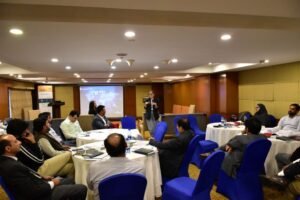
The launch ceremony of the FAO Water Budgeting Project in the Indus Basin was held at Park Lane Hotel, Lahore.
The event introduced participants to the project’s goals, scope, and expected results. It focuses on Bahawalnagar and Bahawalpur districts, where remote-sensing data will be used to measure crop water productivity and groundwater sustainability.

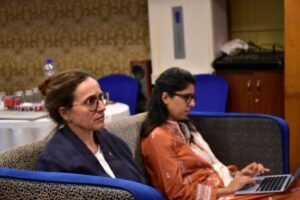
Dr. Maria Zaidi, WaPOR National Coordinator, opened the session, followed by Ms. Amina Bajwa, Assistant FAO Representative (Programme).
Virginie Gillet, Land and Water Officer at FAO Headquarters, explained how the WaPOR programme helps countries manage water more efficiently.


Alignment with Punjab’s agriculture and irrigation policies

Dr. Zaidi said the FAO Water Budgeting Project in the Indus Basin supports the Punjab Agriculture Policy 2018 and the Punjab Irrigation, Drainage, and Rivers Act (PIDRA) 2023.
Both policies stress the need for coordinated surface- and groundwater management to ensure long-term sustainability.

Khurram Amin, Additional Secretary (Technical) at the Punjab Irrigation Department, gave a detailed briefing on provincial water governance and its link with the Sustainable Development Goals.
He noted that effective data sharing and institutional coordination will improve irrigation efficiency across Punjab.


Experts share technical and scientific insights

Technical experts from the Punjab Irrigation Department shared data on groundwater conditions in Bahawalpur Zone.
Meanwhile, Marlos Mul, Associate Professor at IHE Delft, discussed the importance of scientific research and shared learning among institutions.

In addition, Dr. S. A. Prathapar spoke about global best practices in using big data for water management.
FAO’s international water expert, Jiro Ariyama, highlighted lessons from previous water productivity and accounting projects carried out in Pakistan.


Cross-provincial collaboration emphasized

The event was also attended by Julius Muchemi, Head of Province for FAO Sindh, and Emelda Berejena, Technical Advisor for FAO’s GCF-funded project and Head of Province for FAO Punjab.
They underlined the importance of cross-provincial collaboration to achieve long-term water security and sustainable agriculture.

Participants formed a Technical Working Group that includes representatives from PID, PAD, MNSUA, IWMI, and FAO.
This group will guide technical design, monitoring, and coordination for the FAO Water Budgeting Project in the Indus Basin.


FAO pledges long-term support for water reforms

In her closing remarks, FAO’s Virginie Gillet reaffirmed the organization’s commitment to supporting climate-resilient and data-driven water management in Punjab.
She said the project will build institutional capacity to use remote-sensing tools and improve irrigation service delivery.

The FAO Water Budgeting Project in the Indus Basin will also help track groundwater abstraction, including solar-powered tubewells.
Through these actions, the initiative aims to strengthen water governance reforms, improve crop productivity, and enhance food security across Pakistan.

Wheat sowing gains pace in Punjab as post-flood soil boosts prospects

0

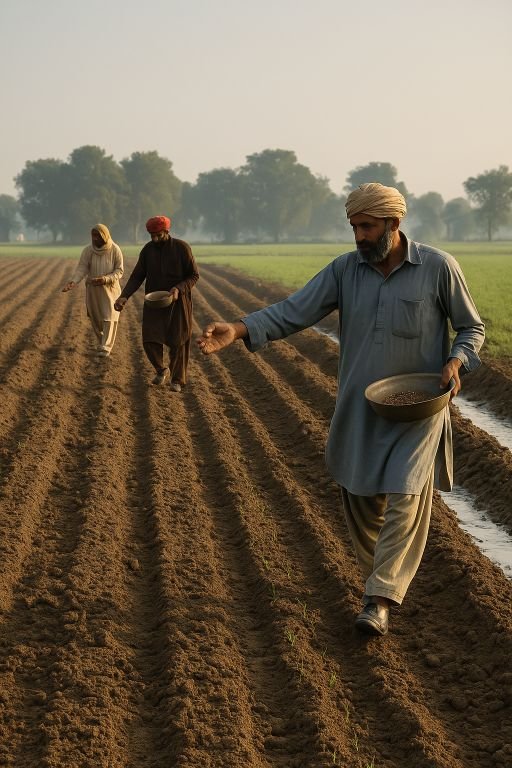
LAHORE, Nov 10 (Wealth Pakistan) – Wheat sowing in Punjab is gaining strong momentum as farmers rush to complete plantation before the optimal window closes on November 30.


Favorable conditions boost Barani areas

Experts say the Barani, or rain-fed, regions are showing excellent growth conditions this season. The September floods helped restore soil moisture, creating a fertile base for new crops.

“The situation is very favorable for wheat sowing in Punjab,” said Dr. Anjum Ali Buttar, consultant at the Punjab Agriculture Department. “So far, wheat has been sown on more than three million acres. Sowing is in full swing in Rawalpindi and DG Khan divisions, while progress is slower in central Punjab,” he told Wealth Pakistan.


Province targets 16.5 million acres this season

Punjab has set a wheat cultivation target of 16.5 million acres for the 2025–26 season. The recommended varieties include Akbar-2019, Dilkash-2020, Fakhar-e-Bhakkar, Aruj-2022, Nishan, Pakistan-2013, Faisalabad-2008, MH-2021, MA-2021, Subhani-2020, and Wafaq-2023.

“By the end of November, we expect nearly 95 percent of the target to be achieved,” said Dr. Buttar, a former director general of the department. He added that there is no shortage of inputs this year. Around 100,000 bags of certified wheat seed are available with the Punjab Seed Corporation and private companies.

In addition, the Punjab government, under its post-flood relief package, is offering interest-free loans and subsidies to support the cultivation of Rabi (winter) crops.


Floods enhance soil fertility

According to weather specialists, the floods have enriched the soil with organic material and improved its texture.

“The floodwaters increased moisture and deposited fertile alluvial matter,” said Muhammad Riaz, former director general of the Pakistan Meteorological Department. “However, in areas where water stayed longer, the soil has suffered from sand deposits.”

He said that better soil fertility and stable weather would likely result in a healthy wheat harvest this year. “The 2022 floods also produced a bumper crop. This season could bring similar results if sowing continues at the same pace,” Riaz noted.


Farmers worry about delayed sugarcane crushing

Despite optimism, some farmers remain concerned about possible delays in sugarcane harvesting, which could affect timely wheat sowing in Punjab.

“Any delay in the sugarcane crushing season will harm wheat growers,” said Akhtar Farooq Mayo, Chief Organizer of Kissan Board Pakistan. He noted that while the federal government has declared November 15 as the start date for crushing, the Pakistan Sugar Mills Association has not confirmed its readiness.

He urged both federal and provincial authorities to ensure that crushing starts on time and that payments to farmers are made promptly. “Sugar mills should face strict penalties if they delay operations,” Mayo said.

Experts call for urgent reform of NFC Award

0

ISLAMABAD, Nov 7 (INP-Wealth Pakistan): Pakistan’s fiscal model has become unsustainable and requires urgent, consensus-driven reform to ensure fair development and stronger national unity. This was the central message of a high-level webinar titled “Unlocking Pakistan’s Financial Future: The Power of the NFC,” organized by the Pakistan Economics Frontier (PEF).

The session featured leading economists and policymakers, including Dr Muhammad Sabir (Principal Economist, SPDC), Dr Vaqar Ahmad (Economist and President-elect, Rotary Pakistan Corporate), Sana Ullah Baloch (Former Senator), and Lehaz Ali (Journalist).

Call for a Performance-Based NFC Framework

Experts agreed that the existing population-based NFC formula has outlived its relevance. They said the system creates inefficiencies and fails to address deep development gaps among provinces.
The participants proposed a performance-based framework that ties fiscal transfers to measurable progress in poverty reduction, human development, and environmental outcomes.

They recommended the inclusion of multi-dimensional indicators such as inequality, revenue generation, health, education, and climate resilience. This would help move beyond the outdated population count and promote better governance across all provinces.

Rewarding Performance and Accountability

Dr Vaqar Ahmad stressed that reforming the NFC Award is both an economic and national priority.

“A performance-oriented NFC is not just an economic necessity but a strategic tool to strengthen national unity,” he said.
He added that the federal government must expand the resource base, provinces should raise their own revenues, and local governments need greater financial autonomy to improve public service delivery.

Addressing Regional Inequalities

Sana Ullah Baloch highlighted that the current formula widens regional disparities.

“A revised mechanism should consider factors like area, infrastructure deficit, and development potential,” he said.
According to him, integrating Balochistan and other lagging areas into the national mainstream requires an inclusive and fair distribution model.

Ensuring Transparency and Technical Rigor

Speakers urged that transparency and data-based decision-making be central to the next NFC Award. They recommended depoliticising the process through independent experts and robust datasets to build public trust.
They also underlined that empowering local governments through larger fiscal allocations is key to effective service delivery and a stronger citizen-state relationship.

About Pakistan Economics Frontier (PEF)

The Pakistan Economics Frontier is an independent think tank promoting evidence-based policy dialogue on Pakistan’s economic and development challenges. It continues to facilitate national discussions on fiscal reforms, social inclusion, and sustainable growth.

US drafts UN resolution for international Gaza stabilization force

0

UNITED NATIONS, Nov 6 (Reuters): The United Nations Security Council will begin negotiations Thursday on a U.S.-drafted resolution endorsing President Donald Trump’s Gaza peace plan and authorizing a two-year mandate for a transitional governance body and international stabilization force.

Washington pushes new Gaza plan

A senior U.S. government official said the draft resolution — circulated late Wednesday among the 15 Security Council members — has received regional backing from Egypt, Qatar, Saudi Arabia, Turkey, and the United Arab Emirates.

“The message is: if the region is with us, the council should be as well,” the U.S. official told Reuters on condition of anonymity.

To pass, a Security Council resolution requires at least nine votes in favor and no vetoes from any of the five permanent members: the United States, Russia, China, France, or Britain.

Vote expected within weeks

“The sooner we move, the better. We’re looking at weeks, not months,” the official said, adding that Washington does not expect Russia or China to block the proposal. “This is probably the most promising plan for peace in a generation,” the official said.

According to the draft text seen by Reuters, the measure would authorize the creation of a Board of Peace transitional administration to oversee a temporary International Stabilization Force (ISF) in Gaza. The ISF would be empowered to “use all necessary measures” — diplomatic language allowing the use of force — to protect civilians, ensure humanitarian access, and secure borders with Israel and Egypt in coordination with a newly trained Palestinian police force.

Mandate to disarm armed groups

The ISF’s mandate includes demilitarizing the Gaza Strip, dismantling militant infrastructure, and decommissioning weapons from non-state armed groups, including Hamas.

The U.S. official said Hamas is expected to comply with the peace agreement and surrender its weapons, though the group has not confirmed it will do so. “The ISF will have authority to disarm Hamas if necessary,” the official said.

Troop contributions under discussion

The force is expected to consist of around 20,000 personnel. While the United States has ruled out sending troops, it is in talks with Indonesia, the UAE, Egypt, Qatar, Turkey, and Azerbaijan to contribute forces.

“We’ve been in steady contact with potential contributors about what they need in terms of a mandate,” the official said. “Almost all of them prefer a U.N.-authorized mission.”

Israel has previously said it would not accept Turkish armed forces in Gaza. The U.S. official noted that consultations with Israel are ongoing.

Fragile ceasefire and urgency

Israel and Hamas agreed last month to the first phase of Trump’s 20-point Gaza peace plan, which includes a ceasefire and a hostage release arrangement. The plan is annexed to the draft U.N. resolution.

“Time is not on our side. The ceasefire is holding but fragile,” the U.S. official said. “We can’t get bogged down in wordsmithing at the council. This is a real test for the United Nations.”

This news was originally published by Reuters.

Microsoft forms ‘superintelligence’ team to focus first on medical diagnosis

0

SAN FRANCISCO, Nov 6 (Reuters): Microsoft has announced the creation of a new artificial intelligence research unit aimed at developing “superintelligent” systems capable of outperforming humans in specialized fields, beginning with medical diagnostics.

Aiming for human-level breakthroughs

The initiative, known as the MAI Superintelligence Team, will focus on building advanced AI models designed to deliver measurable real-world benefits rather than pursuing fully autonomous general intelligence. The project is being led by Mustafa Suleyman, Microsoft’s head of AI, who told Reuters that the company plans to invest “a lot of money” into the effort.

The announcement follows similar pursuits by Meta Platforms, Safe Superintelligence Inc, and others racing to push the limits of AI performance. However, many experts remain skeptical about whether true superintelligence can be achieved without fundamental scientific breakthroughs.

Humanist superintelligence

Suleyman, who co-founded Google DeepMind, said Microsoft’s vision differs from competitors that are chasing all-purpose AI systems. Instead, the company is focusing on what he calls “humanist superintelligence” — technology that advances human welfare without introducing uncontrollable risks.
“Humanism requires us to always ask the question: does this technology serve human interests?” he said.

He explained that Microsoft’s goal is to build specialized AI that can achieve superhuman performance in certain problem domains while posing “virtually no existential risk.” Examples include AI that accelerates battery innovation or discovers new medical compounds — areas that can drive societal and scientific progress.

Medical superintelligence within years

Medical diagnosis will be the team’s first target. Suleyman said Microsoft has “a line of sight to medical superintelligence in the next two to three years,” suggesting the company believes AI could soon surpass human capabilities in identifying diseases.

The envisioned systems would use reasoning-based models to interpret symptoms, predict conditions, and flag early signs of illness. Suleyman said that if successful, such AI could “increase life expectancy and give everyone more healthy years by detecting preventable diseases much earlier.”

A new direction in AI research

Microsoft’s superintelligence initiative reflects a growing debate among AI theorists about how far—and how fast—machines should advance. While some warn of existential risks from unchecked AI, others argue that focused, human-guided systems can transform industries safely.

Suleyman said the company will recruit top researchers from leading labs and has appointed Karen Simonyan as chief scientist of the new division. The group’s early projects will emphasize safety, transparency, and real-world applications before expanding to broader challenges in science and technology.

This news was originally published by Reuters.