Home Blog Page 23

Shahbaz Sharif to lead Pakistan’s delegation at FII9 in Riyadh

0

ISLAMABAD, Oct 26 (APP) – Prime Minister Muhammad Shehbaz Sharif will lead Pakistan’s high-level delegation to Riyadh from October 27 to 29 to attend the Ninth Edition of the Future Investment Initiative (FII9). The visit comes at the invitation of Saudi Crown Prince and Prime Minister Mohammed bin Salman.

The Pakistani delegation includes Deputy Prime Minister and Foreign Minister Senator Ishaq Dar, along with several senior cabinet ministers.

The FII9 will gather world leaders, investors, and innovators under the theme “The Key to Prosperity: Unlocking New Frontiers of Growth. The conference aims to discuss new opportunities for global cooperation and address challenges related to innovation, sustainability, economic inclusion, and shifting geopolitics.

According to a statement from the Foreign Office, Prime Minister Shehbaz Sharif will meet the Saudi leadership to explore new avenues of cooperation in trade, investment, energy, and human resource development. Discussions will also cover regional and international issues of mutual concern.

On the sidelines of the summit, the prime minister will meet leaders from other countries and heads of global organizations. These meetings will help promote Pakistan’s investment potential and its willingness to pursue partnerships in sustainable development, aligned with the “Think, Exchange, and Act” model of the forum.

The Foreign Office added that the visit reflects Pakistan’s strong commitment to economic diplomacy and strategic cooperation in areas such as technology, energy transition, and sustainable growth.

This news story was originally published by Associated Press of Pakistan.

Pakistan’s foreign reserves edge higher to $19.85 billion

0

By Qudsia Bano

ISLAMABAD, Oct 24 (Wealth Pakistan) – Pakistan’s total liquid foreign exchange reserves reached US$19.85 billion as of October 17, 2025, marking a slight improvement in the country’s financial position, according to the State Bank of Pakistan (SBP).

The latest figures show that US$14.46 billion is held by the SBP, while commercial banks maintain US$5.40 billion. These reserves form the country’s primary buffer to meet external payment obligations, stabilize the exchange rate, and maintain import cover.

Modest Weekly Increase

During the week ending October 17, 2025, the SBP’s reserves increased by US$14 million, reaching US$14,455.2 million. The marginal rise reflects continued inflows from workers’ remittances, export receipts, and the careful management of debt repayments.

Import Cover and Stability

The current reserve level provides Pakistan with a little over two months of import cover—a key benchmark for assessing external sector stability. Analysts say that although the increase is modest, it demonstrates the central bank’s cautious strategy to maintain foreign exchange liquidity amid challenging global financial conditions.

Broader Economic Context

Pakistan’s foreign reserves have fluctuated over recent years due to debt servicing, commodity price volatility, and variable capital inflows. However, the recent steady buildup aligns with the government’s broader efforts to strengthen the external account and stabilize the rupee.

Outlook for Coming Months

With total reserves nearing the US$20 billion mark, short-term prospects for the external sector appear relatively stable. Consistent inflows from exports, remittances, and potential disbursements from development partners are expected to further support the country’s foreign exchange position in the months ahead.

Pakistan targets $5.7b Chinese investment in Balochistan’s copper sector

0

By Ayesha Saba
ISLAMABAD, Oct 24 (Wealth Pakistan) — Pakistan is taking major steps to expand mineral cooperation with China. The country is preparing for a $5.7 billion copper and mining investment in Balochistan and plans to build a Non-Ferrous Metals Industrial Park in Gwadar.

Pakistan mission in Beijing promotes mining ties

Documents available with Wealth Pakistan show that the Pakistan Mission in Beijing is actively promoting mineral-sector exports. It is connecting local companies with leading Chinese investors and arranging meetings between Mohammad Dada Mining, Wah Nobel Group, and potential partners from China.

The mission has also drafted a new Copper and Mining Investment Policy and prepared marketing material to showcase Pakistan’s potential in iron, steel, and copper.

Strategic partnership with Chinese companies

A key development is the proposed Strategic Cooperation Agreement by the Metallurgical Corporation of China (MCC). The agreement brings together MCC, China Communications Construction Company (CCCC), the Gwadar Port Authority (GPA), and the Gwadar Free Zone Company Limited (GFZL).

Its objective is to advance the “South Port, North Mine” plan and accelerate work on the Gwadar Non-Ferrous Metals Industrial Park. The project will expand Pakistan’s mineral-refining capacity and increase export earnings through value-added production.

MoUs for copper exploration in Balochistan

Three Memoranda of Understanding have been shared with MCC for copper exploration and refinery development in Chaghi District, Balochistan. The plan, valued at $5.7 billion, is expected to generate about $6 billion in annual output, highlighting the sector’s potential for long-term growth.

The MoUs involve Siakoh Minerals Development (SMC-Private) Limited, Mari Mining Company Private Limited, and the Government of Balochistan, working in partnership with MCC Tongsin Resource Limited.

China’s growing demand for copper

China remains the world’s largest copper importer, driven by rapid industrial expansion. Its growing demand stems from the development of infrastructure, electric vehicles, and renewable-energy technologies such as solar panels. This provides Pakistan with a stable and profitable export market for copper and related minerals.

Developing downstream mineral industries

Meanwhile, the Ministry of Commerce, together with other government departments, is working to develop downstream processing industries for minerals such as copper, marble, and granite.

The ministry is also engaging Saudi investors under the Special Investment Facilitation Council (SIFC) to establish copper refineries and modern processing units in Balochistan and Khyber Pakhtunkhwa. These projects will help Pakistan produce copper rods, bars, and alloys, improving value addition and export income.

Copper exports remain a strategic priority

In 2025, Pakistan’s total copper exports stood at $1.06 billion, including both refined and unrefined products. Although exports dipped slightly, the sector remains central to Pakistan’s mining-led investment agenda under the SIFC.

Analysts say that Pakistan China mineral cooperation will continue to drive growth in mining, refining, and export-oriented industries, positioning the country as a future supplier of key minerals to global markets.

World record holders Khalil, Abouamer lead UIPM Obstacle World Championships

0

GENEVA, Oct 23 (Xinhua) — World record holders Farida Khalil and Moustafa Abouamer from Egypt are set to headline the 2025 UIPM Obstacle World Championships (OCR), opening Thursday at the National Olympic Sports Center in Beijing.

Beijing Hosts First-Ever UIPM Obstacle World Championships

The inaugural event runs from October 23 to 26 and brings together over 500 athletes from 30-plus countries. Competitors will test their speed and strength in 100 m, 400 m, and 3,000 m races.

The new format aims to combine athleticism, agility, and precision on complex obstacle courses.

UIPM President Rob Stull Praises Dynamic New Era

Union Internationale de Pentathlon Moderne (UIPM) President Rob Stull expressed excitement about the innovation.

“Here in Beijing, there is immense excitement and optimism,” he said. “Introducing Ninja-style obstacle racing has added a dynamic element to our sport. I expect outstanding performances from OCR, Ninja specialists, and modern pentathletes.”

China Embraces New-Look Modern Pentathlon

Zhang Bin, President of the Chinese Modern Pentathlon Association (CMPA), said the event reflects Beijing’s role as a dual Olympic city.

“Beijing stands ready to witness the renewal of the modern pentathlon,” Zhang noted. “The introduction of the Obstacle event has brought fresh energy to this century-old sport.”

Obstacle Events Blend Speed and Skill

The 100 m sprint course mirrors the new pentathlon discipline introduced in 2025. It features steps, big wheels, ascension bars, ver walls, rings, balance beams, climbing holds, under walls, flying hoops, giant steps, and a finish wall.
The 400 m race adds nets, monkey bars, and tilting ladders, while the 3 km course includes 20 obstacles looping around the stadium complex, according to the UIPM.

El Clasico takes center stage in La Liga this weekend

0

MADRID, Oct 23 (Xinhua) – The first El Clasico La Liga clash of the season arrives this weekend. Real Madrid aim to extend their lead, while FC Barcelona hope to recover form and take crucial points at the Santiago Bernabeu.

Barcelona Face Injury Concerns Before El Clasico La Liga

Barcelona have one extra day of rest before El Clasico La Liga. They played Olympiakos at home in the Champions League on Tuesday. Real Madrid, meanwhile, beat Juventus on Wednesday in a tough game.

Barcelona’s injury list remains a concern. Raphinha is doubtful, and Robert Lewandowski is ruled out with a hamstring strain. Ferran Torres also faces a late fitness test due to a muscle issue. Coach Hansi Flick will watch from the stands after his red card against Girona.

Real Madrid Look to End Losing Streak Against Barcelona

Real Madrid coach Xabi Alonso expects good news on the injury front. Dani Carvajal and Trent Alexander-Arnold could return at right-back. Madrid are motivated to reverse last season’s poor record. They lost four times to Barcelona – twice in La Liga, once in the Copa del Rey, and once in the Spanish Super Cup.

Weekend Matches Set for Excitement Across La Liga

The weekend opens on Saturday night with Real Sociedad hosting Sevilla. Home coach Sergio Fernandez faces pressure despite earning a draw at Celta Vigo last week. Real Sociedad sit in the relegation zone, while Sevilla’s momentum ended after a home loss to Mallorca.

Bottom-placed Girona, unlucky to lose to Barcelona last weekend, host second-bottom Oviedo. New coach Luis Carrion needs a win to earn fans’ trust after replacing Veljko Paunovic.

Espanyol play at home against Elche, who have impressed this season with strong possession play. Athletic Club face a quick turnaround of under 70 hours before meeting Getafe. They won 3-1 over Qarabag in the Champions League on Wednesday. Coach Ernesto Valverde criticized the early schedule, saying the match should have been delayed by a day to aid recovery.

Other Key Fixtures in La Liga Round

Getafe will miss suspended players Allan Nyom and Alex Sancris, both sent off against Real Madrid. Valencia take on third-placed Villarreal in an east-coast derby. Carlos Corberan’s men must end a four-match winless streak to climb the table.

Mallorca hope to build on their win over Sevilla when they host Levante, who suffered a heavy 3-0 defeat to Rayo Vallecano. Osasuna meet Celta Vigo, who have drawn 1-1 seven times this season. Celta also have limited rest after Thursday’s Europa League clash with Nice.

Alaves, boasting the best defensive record in La Liga, visit Rayo Vallecano. The round concludes on Monday as Real Betis host Atletico Madrid – a big test for Atletico’s shaky away form.

This news was originally published by Xinhua.

Kazakhstan and Azerbaijan to build green energy cable under Caspian Sea

0

Wealth Pakistan International Desk
ASTANA, Oct 23 (Kazinform) — Kazakhstan and Azerbaijan are advancing plans to construct a green-energy transmission cable beneath the Caspian Sea, linking the two countries through a major renewable-energy corridor. The project aims to strengthen regional energy cooperation and promote carbon-neutral growth.

Banks back new cross-Caspian energy link

Kazakh Energy Minister Yerlan Akkenzhenov said the partnership covers both oil transport through the Baku-Tbilisi-Ceyhan route and development of the new power link under the seabed.

“Cooperation with Azerbaijan is primarily focused on energy. It includes oil transportation via the Baku-Tbilisi-Ceyhan route and laying a green-energy cable along the Caspian seabed,” he told reporters.

According to Akkenzhenov, two international banks, including the Asian Development Bank (ADB), have already allocated funding for the project. “We will know the final cost later and then make a decision,” he added.

Expanding regional cooperation

The undersea-cable plan forms part of wider Kazakhstan–Azerbaijan cooperation in energy, transport, and digital infrastructure.

Earlier, Azerbaijani President Ilham Aliyev visited Kazakhstan, where he and President Kassym-Jomart Tokayev oversaw the signing of 15 agreements covering energy, logistics, digitalization, artificial intelligence, industrial safety, healthcare, and cultural exchanges.

These accords highlight both countries’ shared goal of deepening regional connectivity and promoting sustainable energy transition across the Caspian region.

Economic and environmental benefits

Experts say the proposed green-energy cable will diversify Central Asia’s export routes and encourage cross-border renewable-energy trade. It will also attract foreign investment and strengthen the reliability of regional power grids.

The initiative supports Kazakhstan’s aim to reach carbon neutrality by 2060 and complements Azerbaijan’s drive to expand renewable-energy capacity in partnership with regional and international organizations.

Both governments view the project as a model for future clean-energy cooperation in Eurasia, balancing economic growth with environmental responsibility.

This story was originally published by Kazinform News Agency.

China confirms Jinlin impact crater as world’s largest of past 10,000 years

0

Wealth Pakistan International Desk
GUANGZHOU, Oct 23 (Xinhua) — The Jinlin impact crater in south China’s Guangdong Province has been confirmed as the largest known impact crater formed on Earth since the Holocene period, which began about 11,700 years ago. The discovery was announced by the China Academy of Engineering Physics (CAEP).

Discovery in Guangdong’s low mountains

Located in the low mountainous area of Deqing County, northwest Guangdong, the Jinlin crater represents a major geological breakthrough. Researchers said the impact likely occurred during the early to middle Holocene period. The conclusion was drawn after studying the chemical weathering rate of local granite.

The finding sheds new light on Earth’s impact history and highlights southern China’s geological diversity, which has long been overlooked due to rapid weathering and vegetation cover.

Field study and scientific evidence

According to a paper published in the journal Matter and Radiation at Extremes, scientists conducted detailed field investigations and rock sample analyses to confirm that the Jinlin crater was caused by a high-speed extraterrestrial impact.

Chen Ming, the study’s lead author and a researcher at CAEP’s Center for High Pressure Science and Technology Advanced Research, said laboratory tests revealed clear signs of shock metamorphism in local rocks and minerals — a key indicator of an external impact.

“The mineral and structural evidence confirm that the Jinlin crater resulted from an external collision, not an internal geological process,” Chen said.

Scale and energy of the impact

Previously discovered Holocene-era craters were much smaller, most measuring less than 100 meters in diameter. The largest known until now was about 300 meters wide.

In contrast, the Jinlin crater spans nearly 900 meters, making it three times larger than any other crater of its period. Researchers estimated that the impact released energy equivalent to 600,000 tonnes of TNT, underscoring the event’s extraordinary magnitude.

Expanding geological knowledge

Before this discovery, only four confirmed impact craters had been found in China, all located in the northeast. None had been identified in southern China because of intense weathering and erosion that erased surface evidence.

The confirmation of the Jinlin crater therefore marks a milestone in understanding the distribution of impact events across Asia and the planet.

Experts believe the findings will refine global models of small-body impacts and improve research on planetary geology in tropical and subtropical regions.

“These results enhance our understanding of how and where impact events occur and provide guidance for future geological surveys,” the researchers concluded.

This story was originally published by Xinhua.

PM orders strategy overhaul to boost industrial growth and investment

0

ISLAMABAD, Oct 23 (APP) — Prime Minister Shehbaz Sharif has ordered all federal ministries to review their policies and prepare new strategies with experts and business leaders. The goal is to ensure inclusive and sustainable industrial growth in Pakistan.

Focus on business reforms and investment

During a high-level meeting with major business representatives, the prime minister reviewed proposals to revive industries and attract new investment. The discussion also covered steps to strengthen the national economy, according to the Prime Minister’s Office.

Shehbaz Sharif said helping the business community was a top government priority. He promised to remove barriers for investors and simplify business procedures.

Government aims to attract local and foreign investors

“The government welcomes both domestic and foreign investors,” he said. “Creating a friendly environment for new ventures remains our main objective.”

He explained that expanding exports, supporting industrial innovation, and promoting public-private partnerships were vital for Pakistan’s economic revival. These measures, he added, would turn recent stability into long-term prosperity.

Building competitiveness and value addition

The prime minister said that improving product competitiveness was central to the Pakistan industrial growth strategy. He added that the government was focusing on attracting foreign direct investment, especially in manufacturing and production.

He assured business leaders that ministries were converting macroeconomic gains into welfare-driven outcomes. According to him, policy continuity and coordination between institutions are essential for sustained growth.

Ministries told to cut costs and boost exports

“The government is taking concrete steps to attract foreign capital and support local industries,” Shehbaz Sharif said. “Our aim is to reduce production costs and enhance export competitiveness.”

He directed ministries to identify new trade opportunities and work closely with the private sector. These steps, he noted, would strengthen the industrial base and diversify exports.

Broad participation from key ministries

Business representatives praised the government’s ongoing economic reforms. They said that stable policies and consistent facilitation could make Pakistan a more attractive investment destination.

The meeting was attended by Finance Minister Muhammad Aurangzeb, Energy Minister Sardar Owais Ahmad Khan Leghari, Economic Affairs Minister Ahad Khan Cheema, Railways Minister Hanif Abbasi, Information Minister Attaullah Tarar, Commerce Minister Jam Kamal, National Food Security Minister Rana Tanveer Hussain, IT Minister Shaza Fatima Khawaja, Minister of State for Finance Bilal Azhar Kayani, and other senior officials.

This report was originally published by the Associated Press of Pakistan.


Pakistan’s public debt may drop below 60% of GDP by FY2035 with fiscal reforms

0

ISLAMABAD, Oct 23 (Wealth Pakistan): Pakistan’s public debt, which stood at Rs80.5 trillion by the end of June 2025, could decline to below 60 percent of GDP by FY2035 if the government sustains fiscal discipline and introduces coordinated economic reforms, according to an official analysis available with Wealth Pakistan.

The report highlights that maintaining a primary surplus of 1.5 percent of GDP each year could gradually reduce the debt-to-GDP ratio by about 1.5 percentage points annually, enabling Pakistan to achieve the Fiscal Responsibility and Debt Limitation Act (FRDLA) ceiling by FY2035.

Alternatively, even without maintaining a primary surplus, the analysis suggests that the debt ratio could still decline below 60 percent within six years if the average nominal interest rate remains at least three percentage points lower than the nominal GDP growth rate.
For this scenario to hold, real GDP growth would need to average 5 percent annually, with inflation around 8 percent and a stable real interest rate near 2 percent.

The baseline projection, however, shows Pakistan’s public debt remaining between 83 and 87 percent of GDP by FY2035 under current fiscal and monetary trends. The report warns that without corrective fiscal measures, the debt ratio will continue to exceed the FRDLA threshold, posing risks to macroeconomic stability and fiscal sustainability.

According to the analysis, the persistent gap between interest rates and GDP growth, recurring primary fiscal deficits, and exchange rate volatility have historically driven Pakistan’s rising debt trajectory. It emphasizes the need for a medium-term fiscal framework where the Ministry of Finance, the State Bank of Pakistan (SBP), and other institutions align their policies under mutually consistent targets.

“A combination of sustained economic growth, prudent external debt management, and aligned monetary policy could bring Pakistan’s debt ratio to a sustainable level relatively quickly,” the report notes. “However, this outcome hinges on strong institutional coordination and policy consistency.”

It cautions that in the absence of such coordination, “the government will continue to face serious constraints in managing public debt effectively.”

The document concludes that Pakistan must adopt a sequenced and collaborative reform approach where fiscal and monetary policies reinforce each other to restore fiscal sustainability, economic credibility, and investor confidence over the medium term.


Pakistan finalizing National Cotton Plan 2025 to raise yield and quality

0

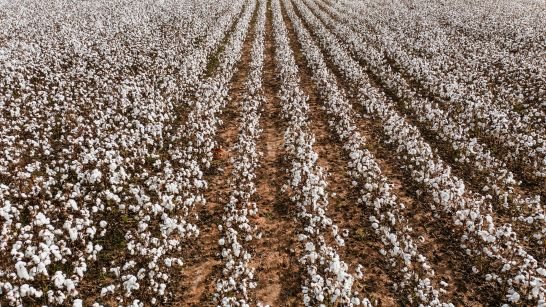
ISLAMABAD, Oct 23 (Wealth Pakistan): The Ministry of National Food Security and Research is giving final touches to the National Cotton Plan 2025, a comprehensive strategy designed to increase crop yield, improve cotton quality, and reduce production costs, according to documents available with Wealth Pakistan.

The plan aims to boost cotton output and promote import substitution through the adoption of modern seed varieties, efficient farming techniques, and good agricultural practices. It is part of a broader national effort to enhance value addition, diversify exports, and reduce dependence on raw material shipments.

Policy Backing and Strategic Alignment

The National Assembly’s Standing Committee on Commerce has endorsed a set of recommendations aligned with the Ministry of Commerce’s export-led growth strategy. The move supports Pakistan’s goal to strengthen its competitiveness and integrate more deeply into global value chains.

As the sixth-largest cotton producer in the world, Pakistan cultivates cotton across about 2 million hectares, primarily in Punjab and Sindh. However, yield and production have declined in recent years, eroding the country’s traditional advantage in textile exports and raising costs for manufacturers.

Shift Toward Value-Added Textiles

Despite the decline in raw cotton output, Pakistan’s textile industry has expanded in value-added segments. Exports of finished textile goods—such as apparel and home textiles—have risen, while shipments of raw materials have fallen.

During FY2025, finished textile products generated $14.29 billion, representing 80 percent of textile exports. In contrast, raw materials and intermediate goods accounted for $3.65 billion, or 20 percent, according to official data.

Textiles and Apparel Policy 2025–30

To consolidate recent gains, the Ministry of Commerce is finalizing the Textiles and Apparel Policy 2025–30, which seeks to maximize the use of locally produced cotton, expand value-added exports, and diversify into new markets.

The policy outlines steps to achieve $30 billion in textile exports by 2030, as approved by the National Export Development Board (NEDB). It identifies priority sub-sectors, target markets, and strategies to attract investment in high-value textile manufacturing.

Challenges and Market Diversification

The report highlights that Pakistan’s downstream textile industries remain smaller than those of regional competitors, limiting its global market share. To address this, the new framework encourages fresh domestic and foreign investment to expand production capacities and adopt advanced technologies.

The government is also facilitating the transition toward man-made fibers (MMF)—which now constitute 74 percent of global fiber use—to reduce dependence on cotton-based products.

Tariff Reforms and Technical Textiles Push

Under the National Tariff Policy 2025, the Tariff Policy Board is rationalizing customs duties on non-cotton yarns and fabrics. This aims to accelerate Pakistan’s shift toward MMF-based apparel, including sportswear, women’s wear, and high-performance fabrics.

The government is promoting local production of synthetic fibers such as polyamide, polyethylene, and polyurethane, aligning with global demand for technical textiles—a market projected to exceed $300 billion by 2030.

To guide this transition, the National Technical Textile Council has been established to develop a roadmap for Pakistan’s shift from conventional cotton products to high-value technical textiles used in construction, agriculture, packaging, medical, and automotive industries.

Public–Private Dialogue and Implementation

The formation of Sectoral Councils has strengthened dialogue between the public and private sectors, ensuring that policymaking aligns with industry priorities. These forums address trade barriers, monitor performance, and support Pakistan’s long-term shift from raw material exports to globally competitive, value-added textile manufacturing.

Officials believe the National Cotton Plan 2025 will serve as a foundation for sustainable growth, ensuring that cotton—the backbone of Pakistan’s textile sector—remains productive, profitable, and globally competitive.