
Home Blog Page 25

China contributes innovative power to global fusion development

0

CHENGDU, Oct 20 (Xinhua) – As the world intensifies efforts to harness fusion energy, China is emerging as a key innovator and trusted partner in advancing global fusion research and technology.

China Praised as Key Partner in ITER Project

Pietro Barabaschi, Director-General of the International Thermonuclear Experimental Reactor (ITER), lauded China as “a very strong partner” during the Second Ministerial Meeting of the IAEA World Fusion Energy Group and the 30th IAEA Fusion Energy Conference held in Chengdu, Sichuan Province.
“China’s contribution has been ever-growing — not only in the delivery of components but, most significantly, in the assembly of ITER by Chinese companies,” Barabaschi said.
He noted that ITER exemplifies unity and cooperation: “Countries do not always get along, but when it comes to ITER, you will see everybody working with the same objective.”

IAEA Recognizes China’s Leadership

IAEA Director-General Rafael Grossi also acknowledged China’s pioneering role, noting that the Southwestern Institute of Physics (SWIP), under the China National Nuclear Corporation (CNNC), has been designated the IAEA’s first Collaborating Center for Fusion Energy Research and Training.
Grossi said the distinction reflects China’s long-term commitment and institutional excellence in nuclear fusion research.

Fusion Energy: A Clean and Safe Future

Fusion energy — a key direction in the peaceful use of nuclear energy — offers several advantages over fission: higher energy density, abundant raw materials, minimal radioactive waste, and intrinsic safety.
Shan Zhongde, Director of the China Atomic Energy Authority (CAEA), said China is prioritizing the development of fusion energy through large-scale scientific facilities, integration of industry and research, and strong international partnerships.
“China will continue to work with the IAEA, ITER, and all nations to promote sustainable energy development and contribute Chinese wisdom to building a clean and beautiful world,” Shan said.

Milestones in China’s Fusion Research

As a major ITER partner, China has successfully designed, manufactured, and delivered 18 key components and systems, including magnet supports, blanket shield modules, and feeder systems. In April, the final Correction Coil In-Cryostat Feeder components were shipped to France, completing the full set required for ITER’s magnet feeder system.

Domestically, China’s innovation momentum remains strong. The HL-3 tokamak, an “artificial sun” facility in Chengdu, achieved atomic nucleus and electron temperatures exceeding 100 million°C in 2025. Similarly, the Experimental Advanced Superconducting Tokamak (EAST) in Hefei set a world record by maintaining high-confinement plasma for 1,066 seconds.

Global Collaboration and Open Science

China has opened its HL-3 facility for international collaboration — now the only ITER satellite device in China. The country has forged partnerships with over 140 fusion research institutions in more than 50 countries, reflecting its open and cooperative approach to scientific progress.

Chen Jiming, ITER first wall project leader at CNNC, said the development of extreme-temperature-resistant components such as the “first wall” has spurred both technological innovation and industrial upgrading in China.

Driving a Sustainable Energy Future

Through continuous innovation and close international cooperation, China is contributing its technological strength, scientific vision, and policy leadership to the global pursuit of fusion energy — advancing humanity’s goal of achieving a clean, safe, and sustainable energy future.

This news was originally published by Xinhua.

CPC to set tone for new five-year plan crucial for advancing modernization

0

BEIJING, Oct 20 (Xinhua) – The fourth plenary session of the 20th Communist Party of China (CPC) Central Committee has begun in Beijing, setting the stage for shaping the 15th Five-Year Plan (2026–2030) — a key roadmap to advance China’s socialist modernization drive by 2035.

Blueprint for the Next Development Phase

The session will review the CPC Central Committee’s draft proposals for the 15th Five-Year Plan for national economic and social development. The plan will serve as an overarching framework to guide China’s policy direction, strategic priorities, and growth targets for the next five years.

Since 1953, China’s five-year plans have played a crucial role in driving rapid economic growth and ensuring long-term social stability. They remain a core governance mechanism, reflecting the country’s capacity for sustained planning and reform implementation.

High-Quality Growth Despite Global Challenges

Between 2021 and 2024, China’s economy maintained an average annual growth rate of 5.5 percent despite global challenges, including the COVID-19 pandemic and complex international conditions.
The total economic increment during the ongoing 14th Five-Year Plan (2021–2025) is expected to exceed 35 trillion yuan (USD 4.93 trillion) — more than the annual GDP of a major Western economy.

China’s per capita GDP reached USD 13,445 in 2024, solidifying its position among upper-middle-income countries. Having eradicated absolute poverty and achieved moderate prosperity, the country now aims to basically realize socialist modernization by 2035 and build a “great modern socialist country” by mid-century.

Focus on Innovation and New Productive Forces

Looking ahead, the 15th Five-Year Plan will emphasize developing new quality productive forces through scientific and technological innovation. Key priorities include achieving breakthroughs in core technologies, upgrading traditional industries, and cultivating emerging sectors such as artificial intelligence (AI), quantum technology, and space exploration.

Recent advances in AI models, semiconductor technology, quantum computing, and manned spaceflight underscore China’s growing innovation capacity. The country’s “AI Plus” initiative is further integrating digital technology with industrial production and scientific research, creating new consumption and growth drivers.

Strengthening Domestic Demand and Green Development

The next five years will also focus on expanding domestic demand as the main engine of economic growth. Policies will encourage higher consumption, stronger investment returns, and rural revitalization.
Emerging sectors like the ice and snow economy, silver economy, and low-altitude economy are expected to unlock new consumption potential and job opportunities.

At the same time, China will accelerate its green transition, promoting low-carbon technologies and contributing to global climate goals through cost-effective solutions and technological expertise.

Reforms and Global Cooperation

From 2026 to 2030, China plans to advance comprehensive reforms and pursue high-standard opening up. Over 300 reform measures introduced at the previous plenary session will be implemented during the 15th Five-Year Plan period.

Five-year plans remain a distinctive strength of socialism with Chinese characteristics, offering long-term stability and policy continuity. They contrast with short-term policy fluctuations often seen in Western economies.

A Vision for 2035 and Beyond

With the 15th Five-Year Plan set for implementation next year, the CPC’s leadership aims to guide China toward deeper modernization, innovation-led growth, and greater international cooperation.
Through unified national effort and a clear strategic vision, China is expected to make steady progress toward achieving its 2035 goals despite global uncertainties.

This article was originally published by Xinhua.

China criticises UK for delaying ruling on new embassy

0

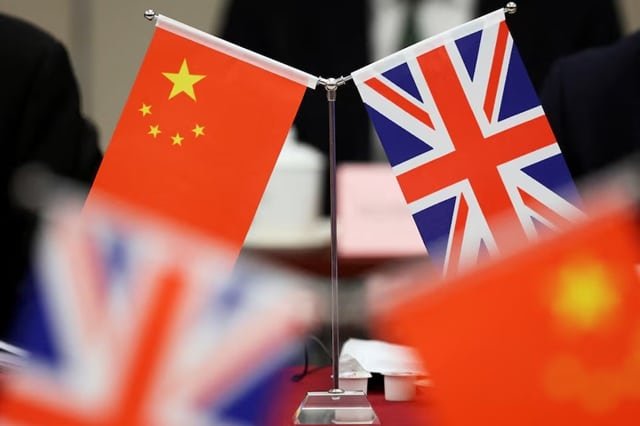
LONDON, Oct 20 (Reuters) – China accused Britain on Monday of lacking “credibility and ethics” after the UK government postponed a decision on whether to approve Beijing’s plan to build a new embassy in London.

China’s plans to build its biggest embassy in Europe near the Tower of London have stalled for the past three years because of opposition from local residents, lawmakers and Hong Kong pro-democracy campaigners in Britain.

Last week, Britain again delayed a decision on whether to approve the plan, days after ministers faced pressure over the collapse of a trial of two men accused of spying for Beijing.

The Chinese embassy in London on Monday expressed “strong concern and opposition” to the latest postponement, which pushes a final decision on the project back to December 10.

“The UK has shown a total lack of the spirit of contract, credibility and ethics,” the embassy said in a statement. “It has repeatedly put off the approval …citing various excuses and linked the project with other issues, constantly complicating and politicising the matter.”

The British government cited delays in receiving input from different government departments as the reason for the move.

Some British media have reported that the government had given assurances to China over the approval of the embassy, but Prime Minister Keir Starmer’s spokesperson said: “No such assurance could have been given, as this decision is subject to a quasi-judicial process, independent from the rest of government.”

The news was originally published by Reuters.

Zelenskiy paints meeting with Trump as a success

0

KYIV, Oct 20 (Reuters) – Ukrainian President Volodymyr Zelenskiy has described his recent meeting with Donald Trump as a success, highlighting progress on acquiring new air defence systems — despite reports suggesting the talks were tense.

Zelenskiy: Meeting Yielded Positive Results

Speaking to reporters on Sunday, Zelenskiy said the meeting produced “positive” outcomes, including plans to acquire 25 Patriot air defence systems to strengthen Ukraine’s protection against Russian missile attacks.
The Ukrainian leader said the talks with Trump and his team lasted more than two hours and resulted in a constructive message.
“His message, in my view, is positive — that we stand where we stand on the front line,” Zelenskiy said.

Reports of Tense Exchanges

Zelenskiy’s upbeat tone contrasted with earlier reports that Trump had berated him during the White House meeting, allegedly using profanity and pressing him to concede territory to Russia.
According to multiple sources, the meeting was “tense,” with Trump warning that Ukraine risked destruction if it failed to strike a peace deal with Moscow.

Focus on Air Defence Deal

Zelenskiy confirmed that Ukraine was close to finalizing a deal to purchase 25 Patriot systems, calling it a “major step forward” in strengthening national defence.
Although he did not specify when the contract would be signed, he noted that discussions on air defence dominated his Washington visit.

However, Zelenskiy’s request for Tomahawk cruise missiles for long-range strikes inside Russia was not approved. He said Trump appeared cautious about taking actions that could provoke Russian President Vladimir Putin, ahead of their expected meeting at a planned summit.

Trump-Putin Meeting in Budapest

Trump and Putin are expected to meet in Budapest, Hungary — a NATO and EU member that has maintained close ties with Moscow throughout the war.
Zelenskiy criticized the choice of venue, saying: “We are talking about peace in Ukraine, not elections in Hungary.” Nonetheless, he expressed willingness to attend peace talks there if invited.

Rebuilding Ties After a Rocky Start

The meeting marked a turnaround in the relationship between Trump and Zelenskiy, following a disastrous encounter in February where Trump and Vice President JD Vance reportedly berated the Ukrainian leader on camera.
Zelenskiy said he had spent months rebuilding the relationship and viewed last week’s discussions as “a step toward greater understanding.”

This news was originally published by Reuters.

Iran says cooperation deal with UN nuclear watchdog is void

0

DUBAI, Oct 20 (Reuters) – Iran has scrapped a cooperation deal that it signed with the UN nuclear watchdog IAEA in September, its Supreme National Security Council Secretary said on Monday, according to state media.

The statement came around three weeks after Iran’s foreign minister, Abbas Araqchi, said Tehran would scrap the agreement, which let the IAEA resume inspections of its nuclear sites, if Western powers reinstated U.N. sanctions.

The confirmation will be a setback for the International Atomic Energy Agency which has been trying to rebuild cooperation with Tehran since Israel and the United States bombed the nuclear sites in June.

“The agreement has been cancelled,” Ali Larijani said while meeting with his Iraqi counterpart in Tehran, according to state media.

“Of course, if the agency has a proposal, we will review it in the secretariat,” he added.

This news was originally published by Reuters.

US steps up diplomacy after Gaza truce shaken

0

Wealth Pakistan International Desk
CAIRO/JERUSALEM, Oct 20 (Reuters) – The United States has intensified diplomatic efforts to stabilize the fragile Gaza ceasefire after renewed violence threatened to derail the week-old truce between Israel and Hamas.

Ceasefire under pressure

US envoys met Israeli Prime Minister Benjamin Netanyahu on Monday, urging both sides to recommit to the 20-step ceasefire plan supported by President Donald Trump.

The talks followed a Palestinian attack that killed two Israeli soldiers and Israeli airstrikes that left at least 28 Palestinians dead. Both Israel and Hamas say they remain committed to the truce, but the latest violence has raised concerns about whether Washington can maintain pressure to keep the peace and push the process forward.

Washington’s regional mission

The American delegation, led by Steve Witkoff and Trump’s senior adviser Jared Kushner, is working to consolidate the ceasefire and prepare for the next phase of implementation.

Vice President JD Vance is also expected in Israel on Tuesday to meet Netanyahu for further discussions on “regional challenges and opportunities.”

High-level meetings in Cairo and Jerusalem reflect Washington’s resolve to sustain progress. “This is the historic dawn of a new Middle East,” Trump said earlier, underscoring the political stakes surrounding the fragile truce.

Violence and confusion in Gaza

On Monday, Palestinian medics reported three additional deaths caused by Israeli tank fire near the so-called “yellow line” separating Israeli-controlled areas from Gaza’s main residential zones.

The Israeli army said the strike targeted militants crossing the boundary. Gaza residents, however, said the line remains poorly marked and confusion persists.

“The whole area is in ruins. We saw the maps, but we can’t tell where those lines are,” said Samir, a resident of Gaza City’s Tuffah district. Later, Israel released footage showing bulldozers placing yellow concrete blocks to mark the boundary.

Talks in Cairo and the Hamas response

In Cairo, Egypt hosted Hamas leader Khalil Al-Hayya for consultations on implementing the truce. A Palestinian official said discussions focused on forming a technocratic administration to govern Gaza without direct Hamas involvement — a central element of the Trump-brokered plan.

Hamas and its allied factions, however, oppose any external administration and refuse to disarm. The group also accuses Israel of violating the ceasefire by killing dozens of Palestinians and blocking essential supplies.

Hostage issue and humanitarian concerns

Israel is reportedly awaiting the return of more hostage remains before announcing further progress. Hamas said it would hand over one additional body on Monday.

Israeli officials maintain that Hamas must be fully disarmed and have warned that any militants remaining beyond the yellow line “will be targeted without warning.”

Despite tensions, Israeli authorities confirmed that humanitarian aid convoys would continue entering Gaza.

Public anxiety over fragile peace

Many Gaza residents remain fearful that another round of fighting could erupt.

“I felt my heart drop when I heard the blasts. It felt like the ceasefire had collapsed,” said Abu Abdallah, a displaced businessman from Gaza City. “People are panic-buying food, and prices are rising. The truce feels very fragile.”

Analysts say the United States faces growing pressure to prevent another escalation while balancing regional politics and humanitarian concerns.

This story was originally published by Reuters.

Supreme Court adjourns hearing on 26th Constitutional Amendment petitions

0

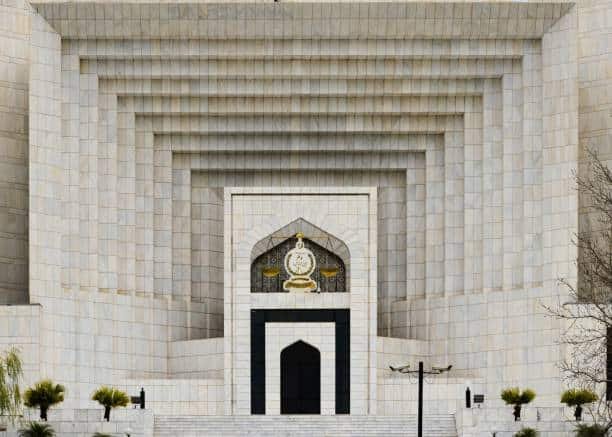
ISLAMABAD, Oct 20 (APP) – The Supreme Court of Pakistan on Monday adjourned until Tuesday the hearing of several petitions challenging the 26th Constitutional Amendment.

An eight-member larger bench, headed by Justice Amin-ud-Din Khan, heard the case. The bench also included Justices Jamal Khan Mandokhail, Muhammad Ali Mazhar, Ayesha Malik, Hasan Azhar Rizvi, Musarrat Hilali, Naeem Akhtar Afghan, and Shahid Bilal Hassan. The proceedings were live-streamed to ensure transparency and public access.


Petitioners question bench in 26th Constitutional Amendment case

At the outset, senior lawyer Akram Sheikh, appearing as one of the petitioners, questioned the constitutional competence of the current bench. He argued that since the eight-member bench had been formed under the same 26th Constitutional Amendment being challenged, it should not hear the case.

Sheikh urged the formation of a full court comprising all 24 judges of the Supreme Court to decide the constitutional issue. He said the entire court should decide such an important matter. If any judge felt it inappropriate to sit on the bench, they could recuse themselves.

Justice Jamal Khan Mandokhail asked whether including all judges might create a conflict of interest. Sheikh replied that a smaller bench could not overrule a decision made by a larger one.


Bench observations and further arguments

Justice Naeem Akhtar Afghan remarked that forming a full court in the current situation would be “like an over-pampered child asking for the moon,” raising doubts about the practicality of such a demand.

Later, lawyer Shabbir Raza Rizvi also argued that constitutional issues, such as the 26th Constitutional Amendment, should be heard by the full Supreme Court rather than a specific constitutional bench. He said a joint reading of Articles 176 and 191-A made it clear that such cases fell within the jurisdiction of the full court.

Justice Mandokhail asked what would happen to the requirements of Article 191-A(3) if the Practice and Procedure Committee decided to form a full court. In response, Rizvi said the issue was directly linked to the independence of the judiciary and called on the bench to take a principled stand.


Hearing adjourned until Tuesday

After hearing detailed arguments from both sides, the bench adjourned the proceedings until Tuesday at 11 a.m. The case will continue to determine whether the petitions against the 26th Constitutional Amendment should be heard by the current bench or by the entire Supreme Court.

Government approves Wheat Policy 2025-26

0

ISLAMABAD, Oct 20 (APP) – The federal government has approved the National Wheat Policy 2025-26, setting the official wheat procurement price at Rs 3,500 per maund. The decision aims to ensure fair returns for farmers and maintain stable national wheat reserves.


National Wheat Policy 2025-26 to ensure farmer welfare and food security

Prime Minister Muhammad Shehbaz Sharif chaired a high-level meeting that approved the new policy. The session was attended by the chief ministers of Punjab, Sindh, Balochistan, and Gilgit-Baltistan, as well as representatives from Khyber Pakhtunkhwa and Azad Jammu and Kashmir. Senior officials and agricultural stakeholders were also present.

The prime minister said the government’s top priority was to protect farmers’ interests while ensuring food security across Pakistan. Wheat, he added, is not only the staple food of the people but also a major source of income for millions of farmers.

“The government is fully aware of the challenges faced by the farming community and is taking every possible measure to support them,” he said.

He added that as Pakistan’s economy relies heavily on agriculture, a strong wheat sector was essential for sustainable growth. The National Wheat Policy 2025-26 was drafted after extensive consultations with provincial governments, farmer organizations, and industry representatives.


Procurement and supply framework under the policy

Under the new framework, the federal and provincial governments will jointly procure 6.2 million tonnes of wheat during the 2025-26 harvest. The procurement price of Rs 3,500 per maund aligns with the international wheat import parity rate, helping Pakistani farmers remain competitive both locally and globally.

Officials briefed the meeting that the procurement plan ensures fair profits for growers while maintaining market balance. In addition, the new wheat policy removes all restrictions on inter-provincial wheat movement to allow uninterrupted supply across Pakistan.

This step, according to officials, will help stabilize prices, encourage private-sector participation, and strengthen the national food supply chain.


National monitoring and coordination

To ensure effective implementation, the government has formed a National Wheat Monitoring Committee headed by the Federal Minister for National Food Security. The committee will include representatives from all provinces, meet weekly, and report directly to the Prime Minister.

The monitoring body will oversee procurement, maintain strategic reserves, and review policy performance on a regular basis.

Prime Minister Shehbaz Sharif appreciated the cooperation of provincial governments in developing a consensus-based approach. He expressed confidence that the National Wheat Policy 2025-26 would boost productivity, enhance farmers’ income, and reinforce national food security.

PSDP expenditure rises 16 percent in first quarter of FY2025-26

0

By Ayesha Saba
ISLAMABAD, October 20 (Wealth Pakistan): Public Sector Development Programme (PSDP) expenditure reached Rs40.3 billion in the first quarter of FY2025-26. The spending marks a 16.09 percent increase from Rs34.8 billion utilized during the same period last year.

Infrastructure sector sees major spending

According to the Ministry of Planning, Development and Special Initiatives’ Monthly Development Update for October, the infrastructure sector recorded Rs17.3 billion in spending as of September 30, 2025. Within this category, the transport and communication sector utilized Rs2.6 billion.

The energy sector and the physical planning and housing sector used Rs1.5 billion and Rs2.4 billion, respectively. Their total allocations for the year stand at Rs122 billion and Rs102.4 billion. The water sector, which also has an allocation of Rs102.4 billion, spent Rs10.8 billion during the same period.

Social sector allocations and spending

For FY2025-26, the social sector received Rs167.1 billion, representing 17 percent of the total PSDP outlay. Of this, Rs58.5 billion was earmarked for education, including the Higher Education Commission, which spent Rs4.4 billion during the quarter.

The health and nutrition sector utilized Rs0.1 billion against its allocation of Rs16.8 billion. Under the “Others” category, Rs21.7 billion was set aside, and Rs0.9 billion has been spent so far.

Digital transformation remains a focus

The Science and IT sector received an allocation of Rs37.6 billion, reflecting the government’s focus on digital transformation and research. The sector has already spent Rs11 billion, showing steady progress toward building Pakistan’s innovation ecosystem.

Industrial and governance sectors

The industries and production sector received Rs7.9 billion, including Rs5.1 billion for food and agriculture and Rs2.9 billion for industrial development. Expenditure stood at Rs0.3 billion for agriculture and Rs0.1 billion for industrial projects.

The governance sector, aimed at improving transparency and efficiency, was allocated Rs11.2 billion. Spending during the quarter reached Rs0.5 billion.

Foreign-assisted projects

The report highlights that 86 foreign-assisted projects have been included in the PSDP for FY2025-26, with a total allocation of Rs229 billion. This represents 23 percent of the overall PSDP. As of September 30, 2025, expenditures under this component stood at Rs3.3 billion.

According to the report, these disbursements followed revised accounting procedures from the Finance Division to ensure transparency and efficiency in managing foreign-funded projects.

Government focus on growth and transparency

The first-quarter performance shows the government’s commitment to inclusive growth and infrastructure modernization. It also reflects efforts to maintain fiscal discipline while promoting education, technology, and governance reforms.

Progress in these priority areas signals steady movement toward achieving the goals set in the national development agenda for FY2025-26.

Punjab launches second phase of livestock loan scheme

0

By Muhammad Luqman

LAHORE, October 20 (Wealth Pakistan): The Punjab Livestock Department has launched the second phase of its livestock loan scheme for cattle farmers. The program aims to raise milk and meat production, meet local demand, and earn foreign exchange through exports to food-deficient markets such as the Middle East.

Punjab leads in livestock population

According to the 7th Agricultural Census 2024, Punjab remains Pakistan’s livestock hub with 104.2 million animals. These include 16.9 million cattle and 14.2 million buffaloes, along with large numbers of goats, sheep, and poultry.

Dr. Haider Ali Khan, Director of the Punjab Livestock Department, said that loans will support farming of 300,000 livestock heads during the fiscal year 2025–26.

Easy livestock loans for rural farmers

Dr. Khan told Wealth Pakistan that the department has started issuing Livestock Cards, similar to the Kissan Cards. These cards allow rural farmers to get loans between Rs135,000 and Rs270,000. Each loan will be provided for four months with a one-month grace period for repayment.

Women’s empowerment through livestock

The second phase of the free livestock distribution scheme has also begun in 12 districts of South Punjab. It focuses on helping women build livelihoods through dairy farming.

“Poor and deserving women are receiving free animals such as cows, buffaloes, and goats so they can start small dairy farms,” Dr. Khan said.

A total of 5,500 animals will go to women in Multan, Khanewal, Lodhran, Vehari, Bahawalpur, Bahawalnagar, Rahim Yar Khan, Dera Ghazi Khan, Layyah, Muzaffargarh, Rajanpur, and Kot Addu. So far, Rs370 million has already been distributed among farmers.

Livestock’s economic potential

Experts view the initiative as a step toward making animal husbandry a profitable business in Punjab’s rural economy.

“Livestock contributes around 11 percent to Pakistan’s GDP, yet its potential remains underutilized,” said Dr. Muhammad Junaid, Consultant at the Ministry of National Food Security and Research.

He added that Malaysia’s plan to import meat worth US$200 million from Pakistan shows the export potential of the sector. Punjab already produces 43 percent of Pakistan’s beef and 32 percent of its mutton.

Growing global demand for halal meat

Dr. Junaid pointed out that the global halal meat market now exceeds 2.8 trillion dollars and could reach 7.5 trillion dollars by 2032. He said Pakistan can expand its market share if it strengthens the livestock supply chain and ensures international quality standards.

He also noted that, although Pakistan is the fourth-largest milk producer, its share in the 1,035-billion-dollar global dairy market is still very small.

“Federal and provincial governments must work together to help Pakistan emerge as a key exporter of milk and meat products,” he said.