

Home Blog Page 26

Rupee Finds Its Rhythm

0

By Moaaz Manzoor

In a rare stretch of calm for Pakistan’s currency markets, the rupee held its ground throughout the week — quietly defying regional volatility and external noise.
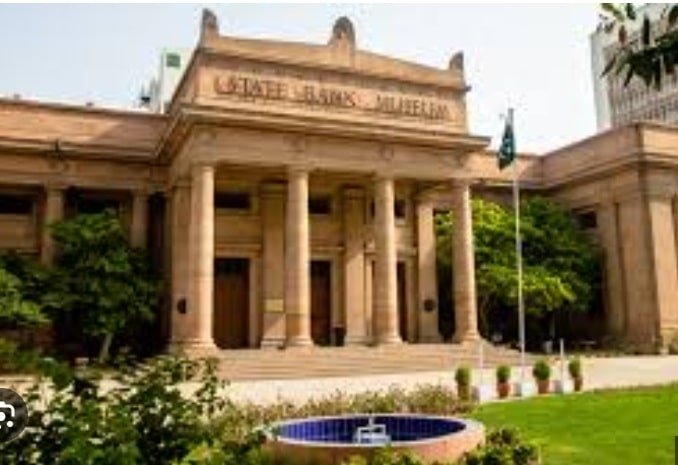
Supported by steady remittances and a gradual rise in the State Bank’s foreign-exchange reserves, the local currency stayed locked within one of its tightest trading bands in months.

A Week of Measured Stability

Between October 13 and 17, 2025, the rupee moved within a whisper-thin range of roughly 50 paisa. According to State Bank of Pakistan (SBP) data, the dollar was quoted at Rs 280.95/281.38 on October 13 and ended the week at Rs 280.87/281.31 — a change so small it barely made headlines. Yet in a market that had seen double-digit swings not long ago, this kind of stillness feels like progress.

The currency’s composure reflected two comforting trends: consistent worker remittances and incremental reserve accumulation. SBP reserves rose to USD 14.44 billion, up USD 20.7 million week-on-week. The rupee’s weekly close at 281.10 per USD marked a gain of 0.03 %, modest but meaningful for investor psychology.

Major Currencies Reflect Broader Calm

The rupee’s performance mirrored stability across other major pairs. The British pound swung mildly, closing higher at Rs 377.77/378.36, while the euro firmed to Rs 328.91/329.43. The Chinese yuan and Saudi riyal traded in narrow bands, showing little stress on Pakistan’s external position. Even the Japanese yen, often volatile, posted only a gentle uptick to Rs 1.87 by week’s end.

Such composure across multiple currencies suggests that Pakistan’s exchange-rate management has entered a consolidation phase — neither artificially propped up nor left entirely to drift. Market participants describe this phase as “quiet confidence.”

What’s Driving the Calm?

Analysts at Arif Habib Limited point to sustained inflows through official channels, notably remittances and disbursements tied to multilateral programmes.
AKD Securities adds that “controlled dollar demand” — due to limited import growth and cautious corporate hedging — has also contributed to the PKR’s resilience.

This delicate balance is underpinned by the IMF’s ongoing Extended Fund Facility (EFF) and the upcoming review cycle, which have both improved Pakistan’s credit outlook. The interbank market, for now, is functioning without the kind of panic that typically accompanies uncertainty over external financing.

A Pause Before Policy

The stability in the rupee coincides with expectations that the State Bank’s monetary policy meeting later this month will maintain a steady policy rate. For currency traders, that continuity matters. It anchors expectations and signals that macroeconomic management, at least for now, is predictable.

In short, the rupee seems to have found its rhythm — not through aggressive intervention, but through consistency. In a country often defined by sudden jolts in its financial narrative, that in itself is a quiet success.

IMF Boost Brings a Breath of Confidence to PSX

0

By Moaaz Manzoor

The Pakistan Stock Exchange (PSX) ended the week on a firm footing — a rare calm in a market long defined by nervous energy.

Confidence, it seems, is making a quiet comeback. The catalyst? A blend of IMF assurance, steady macro indicators, and a perceptible easing of regional tensions.

The benchmark KSE-100 Index closed at 163,806 points, up 708 points (0.4%) week-on-week. The gain may look modest, but it’s significant for what it signals: a market regaining trust in the country’s economic direction.

Average trading volumes surged 34.5% to 1.83 billion shares, while value traded rose 1.4% to USD 198 million — numbers that show investors aren’t just dipping their toes; they’re wading back in.

IMF Agreement Revives Market Mood

The timing of Pakistan’s USD 7 billion Extended Fund Facility (EFF) and USD 1.3 billion Resilience and Sustainability Facility (RSF) progress couldn’t be better. The staff-level agreement reached this week with the IMF restored much-needed confidence that the reform agenda remains alive. Once approved by the Fund’s Executive Board, it will unlock around USD 1 billion under the EFF and USD 200 million under the RSF.

This is not just an accounting transaction — it’s a psychological boost. In Pakistan’s markets, sentiment often moves faster than fundamentals, and the IMF’s nod is often taken as an endorsement of stability.

Macro Indicators Offer Mixed Signals

The State Bank of Pakistan’s reserves edged up slightly to USD 14.44 billion, while the rupee held stable at 281.10 per dollar. But the broader macro picture is still patchy.
The trade deficit widened to USD 3.4 billion in September, a 33.8% year-on-year jump to USD 9.4 billion in 1QFY26 — a reminder that global and domestic cost pressures are still alive.

Yet, there are green shoots. Refinery throughput excluding furnace oil rose 21.6% YoY, and high-speed diesel demand jumped 32.1%, a clear indicator of reviving domestic activity. Oil production, too, climbed 1.3% WoW to 65,301 barrels/day, driven by improved output from the Sharf, Pasakhi, and Makori East fields.

The government’s successful debt auctions — PKR 506.7 billion raised in PIBs and PKR 775.9 billion in T-Bills — reinforced confidence that the market remains liquid and that investors see stability ahead, not chaos.

Sectoral Drivers and Market Psychology

The biggest push came from banks, contributing 904 points, followed by power, technology, miscellaneous, and cement. Scrips like UBL, HUBC, BOP, LUCK, and MEBL led the gains, while fertilizer, E&P, and OMCs lagged.

This sectoral performance tells a story: investors are rotating toward high-yielding, dividend-paying stocks — a typical move when confidence returns but uncertainty still lurks.

Analysts at AKD Securities and Arif Habib Limited agree that the IMF’s staff-level agreement, combined with a stronger credit outlook and lower fixed-income yields, has provided breathing room. “Investor sentiment is expected to improve further as foreign portfolio inflows return, driven by better ties with the US and Saudi Arabia,” AKD Securities noted, citing the KSE-100’s “attractive valuation” at 7.3× earnings and a 6.7% dividend yield.

Stability Over Euphoria

Still, not everyone is celebrating just yet. Ali Najib of Arif Habib Limited cautioned that the market endured volatile sessions before settling. “Participants remained cautious amid persistent inflationary pressures, while the upcoming monetary policy meeting is likely to maintain a status quo stance,” he said.

Syed Zafar Abbas of Zahid Latif Khan Securities echoed a similar sentiment: “The PSX touched an all-time high of around 169,000 points before closing near 164,000. The market appears to be entering a correction phase amid inflation concerns and border tensions. A rate cut at this stage would come as a major surprise.”

In short, the PSX may be learning to breathe again — slowly, rhythmically, and without panic.
The fundamentals are still fragile, but confidence, once rekindled, can be a powerful economic force.

Why SBP is Likely to Hold Interest Rate at 11%

0

By Moaaz Manzoor

As the next monetary-policy meeting of the State Bank of Pakistan (SBP) approaches on 27 October, a quietly cautious tone is likely to prevail. Recent data show inflation ticking higher and the trade imbalance widening — yet the early signs of a domestic recovery insist that policy stability remain the order of the day.

Markets overwhelmingly expect the SBP to hold the policy rate at 11 %. Analysts at Arif Habib Limited (AHL) interpret this as the central bank’s attempt to thread a needle: on one hand, emerging inflation pressures and a marginally wider current-account deficit; on the other, a nascent recovery that must not be derailed.

Inflation rose to 5.6 % in September 2025 from 3.0 % in August — a sharp jump largely attributable to flood-related supply disruptions in food. The average inflation forecast for FY26 has nudged above 7 %, placing it just outside the SBP’s 5-7 % target band.

Core inflation, however, held steady at 7.3 %, suggesting underlying price pressures remain contained and giving the central bank breathing room to maintain its cautious approach.

On the external front, the rupee has appreciated 0.9 % so far this fiscal year, helped by improved credit ratings, stronger foreign inflows and progress under the IMF programme. But trouble is brewing.

According to the Pakistan Bureau of Statistics, the trade deficit widened to USD 3.4 billion in September. Exports stood at USD 2.5 billion — down 11.9 % year-on-year, though up 3.4 % from August — while imports surged 15.2 % year-on-year and 11.6 % m/m to USD 5.9 billion. During Q1 FY26 the trade deficit jumped 33.8 % y/y to USD 9.4 billion. Remittances of USD 3.2 billion in September (up 1 % y/y) provided a cushion; AHL estimates the full-year current-account deficit will remain manageable within the SBP’s projected range of 0 to -1 % of GDP, suggesting external pressures are present — but not yet overwhelming.

Domestically, signs of revival are visible. Large-scale manufacturing grew 9 % y/y in July, driven by gains in textiles, food and petroleum. Bond yields have also held broadly steady— reinforcing market confidence that the SBP will stay the course.
In AHL’s pre-policy survey, 87.5 % of respondents (banks, asset managers, corporates) expect the rate to remain unchanged; just 12.5 % foresee a modest 50-bps cut. Syed Zafar Abbas of Zahid Latif Khan Securities told Wealth Pakistan the central bank is unlikely to consider a cut at this point.

He argued that while the IMF staff-level agreement is positive, it may not immediately shape policy because the post-flood recovery remains slow and inflation risks are still present. “Economic indicators have yet to show major improvement, and with inflation risks still present,” he said, “the State Bank may prefer to maintain the current stance this quarter.”

In short: the SBP finds itself between a rock and a soft place. The recovery needs steady support; the external and inflation risks need monitoring. Given that balance, a “steady-as-she-goes” policy is not merely likely — it is prudent.

The Growing Tragedy of Road Accidents in Turbat

0

By Ayesha Bashir

Turbat, the second-largest city of Balochistan, has increasingly become a place of sorrow as deadly road accidents continue to claim the lives of its young and hopeful citizens.

The quote, “Be alert! Road accidents hurt,” painfully reflects the harsh truth faced by families who lose their loved ones to reckless driving and unsafe roads. Each tragedy leaves behind silence, grief, and memories of unfulfilled dreams.


Growing toll on Turbat’s youth

Every few days, the city witnesses another collision — and with it, another set of lives lost. The youth who once left home to study, work, or visit family now return only as heartbreaking memories for those who awaited them.

Just two days ago, three young men died instantly when a speeding Zambad vehicle collided with their car. The driver fled, leaving the victims behind on the road.

On October 18, 2025, another accident shook the city when two brothers on a bicycle were hit by a car. Among them was Sir Jamal Rahim, a respected teacher at DELTA Academy Turbat, who died on the spot. His companion suffered serious injuries.

The brothers had just left the academy for their hometown Hoshab, about 117 kilometres from Turbat, to spend the weekend with family. Jamal’s mother had been waiting for his arrival — a wait that turned into lifelong grief.


Unsafe roads and absent governance

Such incidents are no longer rare in Balochistan. Broken roads, poor lighting, lack of speed control, and careless driving have turned the province’s highways into death traps.

Overspeeding, reckless overtaking, and mobile phone use while driving have become routine practices. Yet, government attention remains minimal, and enforcement is weak.

Each life lost is a reminder that road safety measures, awareness campaigns, and strict law enforcement are not luxuries but essential public responsibilities.


A call for action

The recurring tragedies in Turbat highlight a deep governance failure. It is painful to witness how neglect, indifference, and poor infrastructure continue to rob families of their loved ones and their future.

The people of Turbat call on the Government of Balochistan and local authorities to take urgent action. Roads must be repaired, traffic regulated, and awareness campaigns launched to promote safer driving.

Every statistic hides a personal story — a son who never returned home, a mother who still waits by the door, and dreams that ended too soon.

As the saying goes, “Drive like your own life depends on it — because it truly does.”

The writer is an ex-student of DELTA Academy Turbat.

Punjab to establish new E-Rozgaar Center in Lahore

0

By Muhammad Saleem

LAHORE, Oct 19 (Wealth Pakistan) – The Punjab government has intensified its digital-skills drive, announcing the establishment of a new E-Rozgaar Center in Lahore to equip youth with freelancing and entrepreneurship expertise.


PITB leads Punjab’s digital-empowerment plan

An official of the Punjab Information Technology Board (PITB) told Wealth Pakistan that the initiative follows the provincial government’s vision to prepare youth for the global digital economy.

“The days of purely theoretical education are gone. It is now the era of digital skills — and our youth must meet the expectations of international clients,” the official said.

Recently, PITB and Hunarmand Punjab signed a Memorandum of Understanding to collaborate on digital-training programmes. Under the Hunarmand Punjab initiative, 50,000 scholarships will be offered across Pakistan, with 25,000 reserved for Punjab.


E-Rozgaar 2.0 expands access to digital learning

The upcoming E-Rozgaar Center will operate under the E-Rozgaar 2.0 programme, widening the province’s network of digital-training hubs. According to PITB, the new facility will offer courses in digital marketing, freelancing, software development, artificial intelligence (AI), machine learning, and coding.

“Digitally skilled people will help generate jobs, promote entrepreneurship, and strengthen the national economy,” the official added.

He said the government has developed a modern curriculum aligned with global freelancing trends. “Without developing digital-entrepreneurship skills among our youngsters, we cannot connect them with the international community,” he remarked.


Students welcome initiative but note ground challenges

Rida Hussain, a participant in a current programme, appreciated the vision but pointed out on-ground problems.

“The government’s effort is commendable, but there are issues such as teacher shortages and poor internet connectivity,” she said, urging Chief Minister Maryam Nawaz Sharif to hold surprise inspections to ensure quality.

She added that students are sometimes asked to give positive feedback to inspection teams even when facilities fall short. “We value the Chief Minister’s vision for youth development, but the indifferent attitude of some programme managers is discouraging,” she noted.


Experts urge inclusion of rural youth

Digital-marketing expert Mohsin Ali said that while the new centre is a positive step, more efforts are needed to reach rural youth.

“Pakistan’s rural areas hold immense potential. The government should extend digital training to remote regions and introduce AI and coding courses in schools and colleges,” he suggested.

He emphasized that integrating digital skills into formal education would help students adapt early to the changing job market. “The future belongs to digital entrepreneurship — and this initiative can bridge Pakistan’s digital divide,” he added.


Driving Punjab toward a digital future

The E-Rozgaar 2.0 programme represents a major leap in Punjab’s journey toward a digitally empowered economy. With PITB and Hunarmand Punjab working together, the government aims to make digital literacy and freelancing mainstream across the province.

Tarbela 5th Extension Transmission Line Project achieves 87% completion

0

By Ayesha Saba
ISLAMABAD, Oct 19 (Wealth Pakistan): The World Bank-funded 500 kV Tarbela 5th Extension Transmission Line Project under the Public Sector Development Programme (PSDP) has reached an advanced stage, achieving 87.5 percent physical and 87 percent financial progress as of September 29, 2025.

Implemented by M/s Netracon in joint venture with MMP-BIDR (JV), the project aims to upgrade Pakistan’s high-voltage grid and ensure reliable power evacuation from the Tarbela Hydropower Station to the national transmission network.


Project Scope and Revised Timeline

According to documents available with Wealth Pakistan, the project has a PC-1 cost of Rs 4,140.33 million and a contract value of Rs 2,504 million (USD 24 million).

Originally scheduled for completion by November 3, 2024, the target has been revised to December 30, 2025. Work continues steadily across multiple fronts with design and engineering 97.5 percent complete, procurement 97.2 percent, civil works 85 percent, and erection 76 percent. Stringing activities have reached 29 percent, while testing and commissioning will follow in the final phase.


Enhancing Pakistan’s Grid Reliability

Officials from the National Transmission and Despatch Company Ltd (NTDC) said the Tarbela extension is critical for strengthening Pakistan’s power transmission infrastructure and improving grid reliability.

Once completed, the new line will enhance system stability, reduce bottlenecks, and facilitate efficient power transfer from Tarbela’s hydropower generation to the national grid, supporting the government’s goal of ensuring uninterrupted and sustainable electricity supply nationwide.

Lahore’s textile and food industries face crackdown over pollution

0

By Muhammad Saleem
LAHORE, Oct 19 (Wealth Pakistan): Deteriorating environmental conditions have raised alarms for Lahore’s food and textile industries, which rely heavily on coal and other traditional fuels in their production processes. Officials have warned that businesses continuing to contribute to pollution will face strict action.


Industries Struggle to Balance Costs and Compliance

Shafaqat Ali, a weaving unit owner, told Wealth Pakistan that many small and medium textile factories have no choice but to depend on coal and outdated boilers due to high energy costs and limited gas supply.
He said switching to cleaner energy requires large investments that are unaffordable for small businesses already burdened by inflation, high operational expenses, and declining exports.

“We want to go green and align our businesses with environmental standards, but we need government support and financial incentives to make it possible,” he said.


Units Warned Against Smoke Emissions

Ali explained that a yarn-sizing unit had warned him of delays after the Environment Department instructed factories to stop smoke emissions or face closure. He said most units use corn cobs, wood, or other materials to power their boilers as alternatives to costly gas.

He appealed for leniency, saying that the closure of these units could trigger mass layoffs, worsening unemployment and inflationary pressures.


Food Businesses Also Under Restrictions

Muhammad Dilawar, a hotel owner from Rehman Pura, told Wealth Pakistan that the Environment Department had directed restaurants to stop using coal for cooking. “It is impossible to prepare barbecue without coal, so we have stopped serving it,” he said.

He added that Lahore’s traditional food industry is at a crossroads as restrictions continue each winter. While many restaurants now use gas cylinders, he said the flame cannot replicate traditional barbecue cooking methods.

“As residents, we also want a clean environment, but shutting down businesses is not the right solution to tackle smog,” Dilawar remarked.


Government Tightens Monitoring and Enforcement

An officer of the Environment Department said the Punjab government is monitoring all sectors that contribute to pollution and has connected dozens of factories to an emissions-tracking system.

He warned that strict action would be taken against violators but emphasized that cooperation between businesses and regulators was essential.
“Only smarter practices, cleaner energy, and public–private collaboration can help Lahore breathe again—literally and economically,” he said.

Pakistan engaging partners to set up carbon trading network

0

By Ayesha Saba
ISLAMABAD, Oct 18 (Wealth Pakistan): Pakistan is engaging a wide range of international organizations, development partners, and private stakeholders to establish a national carbon-trading framework that will strengthen climate governance and monetize climate actions.

In an interview with Wealth Pakistan, Muhammad Saleem Shaikh, Climate Analyst at the Ministry of Climate Change and Environmental Coordination, said the initiative—driven by the Paris Agreement’s Article 6—allows countries to trade carbon credits to meet climate goals. For Pakistan, a nation with historically low emissions, this offers a major economic opportunity to generate revenue from its mitigation efforts.


Collaborative Work Underway on Carbon Governance

“The foundational work is underway. We are engaging with international non-governmental organizations and a broad array of stakeholders to build a robust carbon-governance system,” the analyst explained. He added that Pakistan sees strong potential for market development in energy, forestry, and construction sectors.


China Emerging as Strategic Partner

A key partner in the effort is China, which has become a global leader in carbon-market mechanisms.
“China possesses immense expertise and operational experience, particularly in the carbon-trading sectors of energy and transport,” Saleem Shaikh noted. Cooperation with China is expected to accelerate Pakistan’s readiness through shared best practices, regulatory tools, and technical expertise.

With the right mix of policy reforms, technical support, and regional cooperation, particularly with China, Pakistan hopes to position itself as a credible participant in the global carbon-credit system while advancing its Paris Agreement commitments.


Nature-Based Projects Support Carbon Goals

Pakistan has recently launched several nature-based initiatives aligned with carbon-sequestration objectives, including the planting of 14 million trees in mangrove forests. These projects enhance biodiversity while generating potential carbon-credit revenue.


Regulatory and Capacity Challenges Persist

The official acknowledged that building a functioning carbon market faces challenges such as regulatory gaps and limited institutional capacity.
“Lack of awareness, limited technical expertise, and policy ambiguity are key barriers,” he said. “Without structured carbon governance, private and international investors remain cautious.”

He added that the government is working to convene all stakeholders to identify obstacles and craft solutions that will create a transparent, efficient carbon-trading system supporting sustainable development and green investment.

WB-funded Dasu transmission line project makes significant progress

0

By Ayesha Saba

ISLAMABAD, Oct 18 (Wealth Pakistan) – The World Bank-funded Dasu Transmission Line Project is progressing steadily to strengthen Pakistan’s high-voltage grid, with significant milestones achieved and overall completion targeted for June 2026.

According to documents available with Wealth Pakistan, the project consists of two key components: Lot-I (765 kV Dasu–Mansehra, 157 km) and Lot-II (765 kV Mansehra–Islamabad West, 97.6 km).


Progress on Dasu–Mansehra section

As of September 29, 2025, the 765 kV transmission line from Dasu to Mansehra has reached 38 percent physical progress and 21 percent financial progress, reflecting steady advancement toward its completion goal.

With a total PC-1 cost of Rs 132,249.76 million, the project will carry electricity from the Dasu Hydropower Project to the national grid.

A detailed review shows that design and engineering works are 100 percent complete, procurement stands at 40 percent, civil works at 27 percent, and erection at 15 percent, while testing and commissioning activities are yet to begin.


Progress on Mansehra–Islamabad West section

Meanwhile, the Mansehra–Islamabad West (97.6 km) segment has achieved 42 percent physical progress and 34 percent financial progress.

Design and engineering are fully complete, procurement has reached 50 percent, civil works 28 percent, and erection 2 percent, indicating visible progress across multiple fronts.


Part of Pakistan’s wider transmission expansion plan

With an estimated total cost of Rs 132,249.76 million (USD 123.46 million plus Rs 11,070 million), the Dasu Transmission Line Project forms part of Pakistan’s broader power-transmission expansion programme. The initiative aims to improve grid reliability and expand power-evacuation capacity from large hydropower plants in northern Pakistan.

Officials of the Ministry of Energy (Power Division) said the project is crucial for integrating clean and affordable hydropower into the national grid. They noted that it will help reduce dependence on imported fuels and ensure a stable electricity supply to northern and central regions.


Key role in national energy security

Once operational, the Dasu–Mansehra–Islamabad corridor will become a critical high-capacity transmission backbone. It will enable efficient delivery of new hydropower generation and strengthen Pakistan’s overall energy-security framework.

Housing, livelihood crisis deepens as floods displace four million across 70 districts

0

By Qudsia Bano

ISLAMABAD, Oct 18 (Wealth Pakistan) – More than four million Pakistanis have been displaced across 70 districts following the 2025 floods that devastated homes, villages, and livelihoods nationwide, according to a preliminary damage report issued by the Ministry of Planning, Development and Special Initiatives.

The report revealed that 229,763 houses were destroyed or damaged, causing housing-sector losses of around Rs 92 billion. Punjab accounted for over 92 percent of these damages — about 213,097 homes — followed by scattered losses in Sindh, Khyber Pakhtunkhwa, Balochistan, Gilgit-Baltistan, and Azad Jammu and Kashmir.


Massive housing losses across provinces

“Given the magnitude of destruction, rehabilitation and reconstruction may take up to a decade, especially in remote or severely affected areas,” the report warned. Thousands of families remain in makeshift shelters or open spaces with little access to safe water, sanitation, or health care.

The humanitarian crisis deepened as 22,841 livestock perished and cropland, roads, and bridges were damaged. Rural communities reliant on small-scale farming and livestock rearing have lost their primary sources of income.

The report recorded 1,039 deaths and 1,067 injuries, reflecting the floods’ severe human toll.


Punjab worst affected; Sindh and KP also hit hard

Provincial assessments paint a grim picture. In Punjab, over 160,000 houses were partially damaged and nearly 50,000 completely destroyed. In Khyber Pakhtunkhwa, hundreds of settlements along river belts were inundated, while in Sindh, rising waters submerged low-lying villages for weeks. Many displaced families have yet to return home as standing water persists.


From relief to long-term reconstruction

The Planning Ministry stressed that the focus must shift from emergency relief to sustainable community rebuilding.

“Recovery will require coordinated planning, sustained financial investment, and multi-sectoral support to restore housing and rebuild resilient communities,” it said.

Experts quoted in the report called for disaster-resilient housing designs, improved drainage systems, and affordable financing for reconstruction. They cautioned that rebuilding with traditional materials would repeat the same vulnerabilities exposed by the 2025 floods.


Verification and donor coordination

The National Disaster Management Authority and provincial agencies have begun verifying damages to prioritise support for the most vulnerable — including widows, landless farmers, and persons with disabilities.

Authorities are also engaging donors and NGOs to design a Flood Recovery Framework that links housing grants with local job creation through brick-making, carpentry, and small-scale construction.


Long-term displacement raises urbanisation risk

The report warned that prolonged displacement could trigger urban migration, growth of informal settlements, and pressure on city services. Without rapid rural-housing recovery, many families may permanently leave their ancestral villages, fuelling unplanned urban expansion.

It concluded that Pakistan’s future disaster-management strategy must integrate housing reconstruction with climate-adaptation and poverty-reduction goals.

“Every house rebuilt with resilience becomes a shield against the next calamity,” the ministry stated.