
Home Blog

Daycare centres proposed in ICT, AJK, GB under Rs2.87bn human rights project

0

ISLAMABAD, April 10 (Wealth Pakistan): The Ministry of Human Rights has proposed setting up daycare centres in Islamabad Capital Territory (ICT), Azad Jammu and Kashmir (AJK), and Gilgit-Baltistan (GB) under a Rs2.87 billion project to promote human rights and women’s development.

According to documents available with Wealth Pakistan, the initiative falls under the “Umbrella PC-I: Human Rights & Women Development Initiatives.” The project includes several components to strengthen institutions, promote gender equality, and support working women.

Daycare centres for working women

The proposal allocates around Rs570 million for establishing daycare centres in ICT, AJK, and GB. These centres will provide safe childcare facilities, especially for women working in public-sector institutions.

The initiative aims to help women balance work and family responsibilities. It also seeks to increase female participation in the workforce. The document shows that the Departmental Development Working Party (DDWP) approved this component in April 2025.

Federal Institute of Human Rights

The project also proposes setting up the Federal Institute of Human Rights (FIHR) with an estimated cost of about Rs1.5 billion. The institute will serve as a national platform for research, training, and policy development in the human rights sector.

It will organise training programmes, seminars, and conferences. It will also support evidence-based policymaking and improve coordination among institutions.

Gender equality programme

Another key component is the Gender Equality and Women Empowerment Programme, with an estimated allocation of around Rs800 million. This programme will promote awareness of women’s rights and strengthen gender-responsive policies.

It will also improve institutional mechanisms for the protection and empowerment of women. In addition, it will encourage community-level engagement on gender issues.

Project impact

Once approved, the project will strengthen Pakistan’s human rights framework. It will also address structural barriers faced by women through practical steps, including access to childcare facilities.

Lahore heritage restoration gains pace as key projects reviewed

0

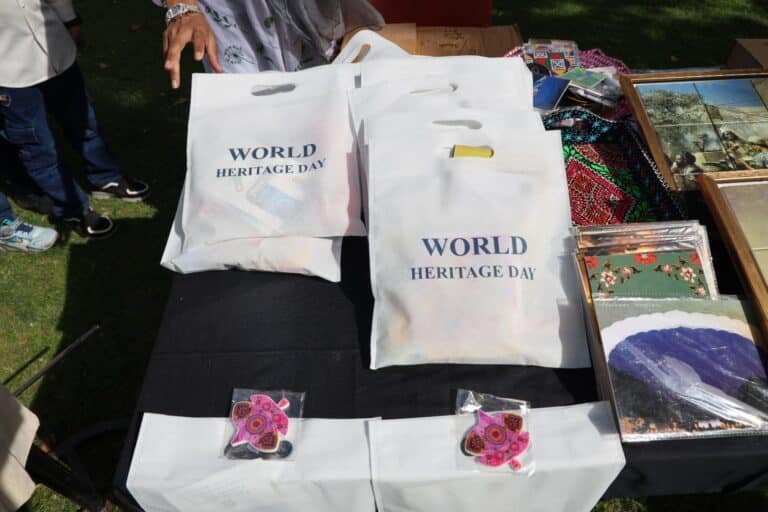
LAHORE, April 9 (ABC): Authorities reviewed progress on major heritage conservation projects in Lahore, focusing on restoration work at key sites including the Lahore Fort, Wazir Khan Mosque and adjoining areas of the Walled City.

Officials from the Aga Khan Cultural Service – Pakistan (AKCS-P) and the Walled City of Lahore Authority (WCLA) held a detailed meeting to assess ongoing work, discuss challenges, and outline future strategies. Participants included AKCS-P Chairman Akbar Ali Pesnani, CEO Tausif Khawaja, board members, and WCLA Director General Najmus Saqib.

The meeting examined joint conservation efforts and explored ways to strengthen technical practices, improve coordination, and promote sustainable development alongside heritage preservation.

Extensive restoration underway at Wazir Khan Mosque

Authorities highlighted significant progress at the Wazir Khan Mosque, one of Lahore’s most prominent Mughal-era landmarks. Restoration teams carried out structural consolidation of domes, walls, and foundations to stabilise the historic structure.

They also restored floors, lime plaster, rooftops, and parapets using traditional materials and techniques. Conservation experts worked to preserve original architectural elements while ensuring long-term durability.

Officials noted that conservation efforts extended beyond the mosque building. Teams rehabilitated the surrounding neighbourhood, which had faced deterioration over time. They restored historic houses along the southern side of Chowk Wazir Khan and conserved smaller monuments and façades within the square.

Authorities plan further interventions at the site. These include conservation of the north-west and south-west minarets and restoration of frescoes inside the prayer chamber. They also aim to redevelop the southern neighbourhood, including façade improvements of selected properties such as the WCLA office.

Officials said these efforts aim to transform the mosque and Chowk Wazir Khan into a vibrant cultural, tourism and community space.

Sheesh Mahal restoration advances with specialised techniques

The meeting also reviewed progress on conservation projects at the Lahore Fort, supported by the Agence Française de Développement (AFD). Work at the Sheesh Mahal, known for its intricate mirror work, has moved forward in phases.

Teams completed site assessments and emergency stabilisation to address structural risks. Experts conducted laboratory testing to identify suitable conservation materials and ensure compatibility with the original structure.

Authorities trained skilled labour in traditional stucco techniques, which are now being applied in restoration work. They also undertook specialised efforts to recreate the original mirror elements of the palace.

To achieve this, experts revived a closed industrial unit in Shikarpur to manufacture custom-made convex mirrors that match the historic design. Officials described this step as critical for maintaining authenticity in restoration.

Workers addressed structural damage by applying grouting to fill voids and cracks in walls and ceilings. This process strengthened the structure and helped prevent water infiltration.

Picture Wall conservation nears completion

At the Picture Wall of the Lahore Fort, one of the largest mural walls in the world, conservation work has reached its final stages.

Teams reconstructed panel impressions and carried out brick imitation to match the original construction style. Conservation experts also retraced and repainted frescoes across numerous panels with careful attention to original patterns and colours.

Officials said the work preserved the artistic integrity of the wall while reinforcing its structural stability.

Commitment to expand heritage conservation efforts

Participants reaffirmed their commitment to strengthen collaboration between AKCS-P and WCLA. They emphasised the need to expand conservation efforts to additional heritage sites and cities across Pakistan.

The meeting also discussed potential joint initiatives involving the Department of Archaeology to enhance institutional coordination and support long-term preservation of historic assets.

Officials noted that continued collaboration, use of traditional craftsmanship, and adoption of international best practices remain central to safeguarding Lahore’s architectural heritage.

Rs85.5bn spent on Balochistan road projects under CPEC in three years

0

ISLAMABAD, April 9 (Wealth Pakistan): Nine major road projects in Balochistan under the China-Pakistan Economic Corridor (CPEC) have utilized Rs85.49 billion out of a total allocation of Rs191.67 billion under the Public Sector Development Program (PSDP) from 2022-23 to 2025-26, according to an official document available with Wealth Pakistan.

The projects are currently underway in the western zone of Balochistan. Their financial and physical progress varies across different sections.

Major projects account for bulk of spending

The Khuzdar–Kuchlak N-25 (330 km) project holds the largest share among all schemes. Authorities allocated Rs60.6 billion for this project, of which Rs28.98 billion has already been utilized.

Two other major sections — Karachi–Kararo & Wadh–Khuzdar N-25 (273 km) and Kararo–Wadh and Kuchlak–Chaman N-25 (187 km) — have each received allocations of Rs33 billion. So far, expenditures stand at Rs8.69 billion and Rs7.67 billion, respectively.

These projects form a significant part of the overall road infrastructure plan under CPEC in the province.

Advanced sections show strong progress

The Awaran–Naal M-8 (168 km) section shows notable progress. It has utilized Rs19.01 billion out of its total allocation of Rs23.03 billion. This makes it one of the most advanced projects in terms of financial utilization.

Other ongoing schemes also show steady progress. The Hoshab–Awaran M-8 (146 km) project has consumed Rs5.25 billion out of Rs11.29 billion.

Similarly, the Nokundi–Mashkel (103 km) section has recorded spending of Rs4.85 billion from its allocation of Rs7.36 billion.

The Quetta Western Bypass N-25 (22.7 km) project has utilized Rs3.27 billion against a total allocation of Rs5.91 billion.

Remaining projects continue gradual execution

The Basima–Khuzdar N-30 (106 km) project has spent Rs3.66 billion out of Rs5.90 billion allocated for it.

Meanwhile, the Zhob–Kuchlak N-50 (298 km) section has utilized Rs4.11 billion from its total allocation of Rs11.58 billion.

All these projects remain under execution, with spending levels reflecting different stages of progress.

Connectivity improvement remains key objective

These road projects aim to improve connectivity across Balochistan, especially along the western route of CPEC.

Better road infrastructure is expected to facilitate trade and reduce travel time. It will also improve access to remote areas and support regional economic integration.

The document indicates that development work continues across all sections, with progress linked to fund utilization and project execution timelines.

Nutrition initiative benefits over 360,000 adolescent girls

0

ISLAMABAD, April 08 (Wealth Pakistan): More than 360,000 adolescent girls have benefited from a dedicated health and nutrition initiative under the Social Protection for Health and Climate Resilience project implemented by the Benazir Income Support Programme (BISP).

According to official documents available with Wealth Pakistan, the initiative, supported by the German Development Bank KfW, was implemented in six selected districts. It focused on improving the health and nutritional status of girls aged 13 to 19, particularly in vulnerable and climate-affected areas.

Under the programme, eligible participants received conditional cash transfers of up to Rs2,000 per quarter. The financial assistance was linked to compliance with key health conditions. These included regular intake of iron and folic acid supplements and participation in awareness sessions on nutrition and wellbeing.

The measures aimed to address widespread micronutrient deficiencies among adolescent girls. They also promoted healthier lifestyles through preventive care and improved awareness.

The initiative initially set a target to reach around 104,303 girls by mid-2025. However, it exceeded this target by a wide margin. A total of 361,459 beneficiaries have already been enrolled under the programme.

Out of the total beneficiaries, more than 124,000 were newly registered participants. This increase reflects the programme’s expansion and wider outreach in targeted districts.

The intervention was implemented with a total allocation of €2 million. It formed a key component of the broader Social Protection for Health and Climate Resilience project in Pakistan.

The project aims to integrate social protection measures with health and climate resilience strategies. It focuses on protecting vulnerable populations from the adverse effects of climate change.

By targeting adolescent girls at a critical stage of development, the initiative supports improved long-term health outcomes. These include better maternal health, reduced malnutrition, and stronger community resilience.

The programme highlights a growing policy focus on preventive healthcare and social protection. It also reflects efforts to strengthen human development indicators in climate-affected regions of the country.

NARC’s Lentil-24 variety shows strong performance in field trials

0

ISLAMABAD, April 07 (Wealth Pakistan): The National Agricultural Research Centre (NARC) has developed a high-yielding lentil variety, NARC Lentil-24. The new variety is showing strong performance in field trials.

“The new variety will significantly boost productivity across the country. It will also enhance farm incomes and strengthen food security,” said Dr. Shahid Riaz Malik, Principal Scientific Officer and Program Leader at NARC, while talking to Wealth Pakistan.

High yield and climate resilience

He said NARC Lentil-24 offers high yield potential along with climate resilience. It also shows resistance to multiple diseases and features improved plant architecture.

As a result, farmers can use mechanised harvesting more efficiently. Moreover, the variety has wide adaptability and performs well across different agro-ecological zones and cropping systems in Pakistan.

Untapped potential in pulses sector

Dr Shahid noted that pulses cover around 1.16 million hectares. This accounts for about 5% of Pakistan’s total cropped area, while cereals dominate 56%.

He said major pulses grown in Pakistan include chickpea, lentil, mung bean, mash, and kidney beans. The country’s total cropped area stands at 22.51 million hectares.

He stressed that the pulses sector offers strong growth potential. Although farmers mostly grow pulses under rainfed conditions, this also creates opportunities for innovation and better farm management.

Wide yield gap highlights opportunity

Dr Shahid explained that a significant yield gap exists in the pulses sector. The national average yield stands at around 553 kg per hectare.

However, progressive farmers already achieve nearly 1,500 kg per hectare. In some cases, yields can reach up to 3,000 kg per hectare.

“This variation shows the vast untapped potential in the sector. It also highlights the role of improved seeds, better practices, and modern technologies in increasing productivity,” he said.

Need for modern technology and better inputs

He emphasised that expanding access to quality seeds, mechanisation, and efficient irrigation can transform the sector. In addition, stronger extension services and improved post-harvest management will help boost output.

He also highlighted the importance of advanced breeding and genetic innovation. These include climate-resilient and high-yielding varieties developed through genomics, speed breeding, and artificial intelligence.

Focus on innovation and partnerships

Dr Shahid said NARC is already making progress in this area. The organisation promotes improved crop management practices, water-use efficiency, and climate-smart agriculture.

He added that strengthening seed production and supply systems remains essential. Authorities should ensure timely availability of quality seeds while improving certification and quality control mechanisms.

He also pointed to the growing potential of value-added processing and food innovation. Pulse-based products can benefit from rising domestic and global demand, especially for plant-based protein alternatives.

Call for collaboration

He called for stronger national and international collaboration in research. He also stressed the need for effective knowledge transfer to farmers.

Such coordinated efforts will help accelerate growth in Pakistan’s pulses sector.

Work on CPEC-linked Yarikh–Sagu Motorway set to begin in May

0

ISLAMABAD, April 7 (Wealth Pakistan): Construction work on the Yarikh–Sagu Motorway (Package-I) will likely resume in May this year. Authorities plan to restart the project after completing key preparatory steps.

According to documents available with Wealth Pakistan, the 50-kilometre, four-lane CPEC-linked project started on June 16, 2023. So far, it has achieved only 12.02% progress.

New contractor to take over remaining work

The National Highway Authority Executive Board has assigned the remaining construction work to M/s Umer Jan & Co JV Mina Construction Company. The firm will complete all pending work on the project.

Officials expect documentation, joint measurements, and mobilisation of the new contractor to take around two months. After that, construction activities will begin in May.

Revised timeline and project cost

The project carries an overall PC-I cost of Rs76,486 million. Meanwhile, the Package-I contract cost stands at Rs22,886 million.

Authorities initially planned to complete the project by June 15, 2025. However, delays forced them to revise the completion date to May 3, 2028.

Funding allocated under PSDP

For FY2025-26, the government has allocated Rs1,000 million for the project under the Public Sector Development Programme (PSDP). This allocation will support the resumption and continuation of construction work.

Rs580m projects planned to modernise Pakistan’s archival heritage

0

ISLAMABAD, April 06 (Wealth Pakistan): The government has proposed two projects worth Rs580 million under the Public Sector Development Programme (PSDP) 2026-27. These projects aim to modernise Pakistan’s archival heritage and improve record management.

According to official documents available with Wealth Pakistan, the plan includes a Rs285 million national programme for digitisation and restoration. It also includes a Rs295 million project to upgrade the National Archives of Pakistan (NAP) under Phase-II.

Digitisation programme to preserve historical records

The government has proposed Rs200 million for the digitisation and restoration programme in FY2026-27. This programme focuses on preserving valuable historical records that face the risk of damage and loss.

Officials plan to use modern digitisation and restoration techniques. These methods will protect archival materials and store them in durable formats. As a result, authorities will preserve historically important records more safely.

In addition, the programme will improve access to archival resources. Researchers, scholars, and institutions will retrieve and manage records more efficiently.

Focus on institutional capacity and standards

The initiative will also strengthen institutional capacity. Authorities will improve archival management practices and adopt international standards.

At the same time, the programme will promote greater awareness of Pakistan’s documentary heritage. This step will support long-term preservation efforts.

Infrastructure upgrade under NAP Phase-II

Alongside digitisation, the government has proposed a Rs295 million infrastructure project. This project falls under NAP Phase-II and focuses on rehabilitation and upgrading work.

Authorities plan to improve the functionality, safety, and efficiency of archival facilities. They will restore existing infrastructure and develop new facilities to meet future needs.

Consequently, these upgrades will improve service delivery and overall performance.

Integrated approach to modernise archives

Together, these projects reflect a broader strategy to modernise Pakistan’s archival system. The government aims to combine digital preservation with infrastructure development.

If implemented effectively, the initiative will improve protection, accessibility, and long-term management of historical records across the country.

Rs1.54 billion to be spent on next phase of Islamabad Technopolis Project

0

ISLAMABAD, April 06 (Wealth Pakistan): The Cabinet Division has sought Rs1,543 million for the next phase of the Islamabad Technopolis project under the Public Sector Development Programme (PSDP) 2026-27. The move signals a renewed push to transform the capital into a hub of innovation and technology.

According to documents available with Wealth Pakistan, the total approved cost of the project stands at Rs1.98 billion. Out of this, Rs303.7 million had been utilised by June 30, 2025. Meanwhile, under PSDP 2025-26, authorities earmarked Rs138.28 million for the project.

The Islamabad Technopolis project aims to provide state-of-the-art infrastructure. This includes a boundary wall, a 132KV electrical transmission line, water supply transmission lines, a gas line, drainage culverts, and the remodelling of drainage systems.

In addition, the project seeks to boost technology exports in Pakistan. It will encourage high-tech and innovative solutions while promoting entrepreneurship across multiple sectors.

Moreover, the initiative focuses on improving Pakistan’s economic outlook. It plans to promote technology exports and facilitate knowledge transfer from global technology hubs. As a result, it is expected to strengthen the country’s innovation ecosystem.

The project will also create employment opportunities at both national and international levels. It aims to generate skilled and upskilled jobs while attracting direct foreign investment. Consequently, these efforts will help increase the national income level.

If implemented effectively, the Islamabad Technopolis project will enhance Pakistan’s global competitiveness. It will also position the country as a regional leader in technological innovation.

Pakistan’s honey exports reach $15m annually

0

Azeem Ahmed Khan

ISLAMABAD, April 03 (Wealth Pakistan): Pakistan’s honey exports have reached around $15 million annually, driven by improved beekeeping practices and high-value varieties.

Speaking to Wealth Pakistan, Dr Muhammad Khalid Rafiq, Senior Scientific Officer at the Honey Bee Research Institute (HBRI), said: “We have laid a strong foundation for a competitive honey industry through sustained research, colony multiplication, improved queen breeding, pest management, and quality assurance systems.”

Currently, Pakistan maintains around 1.5 million colonies of Apis mellifera, a high-yielding western honeybee species. These colonies produce between 25,000 and 30,000 metric tonnes of honey each year. Of this output, 8,000 to 10,000 metric tonnes are exported, generating nearly $15 million annually.

Most exports go to Gulf markets, including Saudi Arabia, the UAE, and Qatar. In particular, premium Sidr (berry) honey leads these exports.

Pakistan’s journey towards a thriving honey industry began in 1979. At that time, organised beekeeping started at the National Agricultural Research Centre under the Pakistan Agricultural Research Council. Earlier, the country relied on imports due to the low productivity of indigenous bee species.

The introduction of Apis mellifera, along with structured colony multiplication and training programmes, set the stage for rapid growth. Since then, HBRI has introduced modern hive management, queen breeding systems, honey testing facilities, and migratory beekeeping models. It has also trained thousands of beekeepers across the country, Dr Khalid added.

However, despite this progress, the sector faces growing environmental challenges. Deforestation, erratic weather patterns, and climate change are shortening flowering cycles. As a result, nectar availability is declining. Traditional floral sources such as Sheesham, Malta, Bekhar, Pulai, and Granda now bloom for shorter durations, directly affecting honey yields.

Moreover, rising temperatures and frequent floods are forcing beekeepers to adopt costly migratory practices. They shift colonies to cooler regions such as Gilgit during peak summers. Consequently, operational costs increase, while production risks and colony losses also rise. This puts additional financial and operational pressure on the sector.

To enhance earnings, stakeholders are promoting branded, single-flower varieties such as Sidr, Acacia, and Mustard honey. These varieties command premium prices in both domestic and international markets.

In addition, HBRI has proposed policy measures to integrate bee-friendly flora into housing schemes, urban landscaping, and plantation drives. At the same time, coordinated efforts are promoting Sidr and Acacia plantations across ecological zones. These steps aim to restore forage availability and stabilise production cycles.

Furthermore, capacity building remains central to HBRI’s mandate. Nationwide training programmes support both new and experienced beekeepers. Women and young entrepreneurs are also being encouraged to enter the sector. As a result, the industry is becoming more inclusive and economically viable, he said.

SDGs programme funding proposed at Rs80bn for FY2026-27

0

ISLAMABAD, April 2 (Wealth Pakistan): The Cabinet Division has proposed a Rs10 billion increase in funding for the Sustainable Development Goals (SDGs) Achievement Programme, raising the total allocation to Rs80 billion for FY2026-27.

According to official documents available with Wealth Pakistan, the estimated expenditure for FY2025-26 stands at Rs70 billion. The proposed allocation for the next fiscal year is therefore Rs10 billion higher than the current level.

The total approved cost of the programme is Rs70 billion. Actual spending reached Rs63.98 billion by June 30, 2025, showing strong utilisation of allocated funds.

The documents state that the Steering Committee on SAP recommends fund releases. Relevant federal ministries and provincial governments then utilise these funds through their executing agencies, in line with approved programme guidelines.

The government approved the programme on January 22, 2019. Since then, federal and provincial authorities have implemented it under the Public Sector Development Programme (PSDP) framework.

The SDGs Achievement Programme supports key development priorities across Pakistan. It focuses on poverty reduction, education, healthcare access, gender equality, and environmental sustainability. In addition, it targets underserved and marginalised communities.

The programme funds small-scale but high-impact projects. These initiatives help improve living standards, strengthen service delivery, and expand access to basic facilities. They also create livelihood opportunities at the community level.

The proposed increase to Rs80 billion reflects the government’s plan to expand ongoing initiatives and widen the programme’s reach.