
Home Blog Page 2

Pakistan starts World Immunization Week 2026 with renewed push for child vaccination

0

ISLAMABAD, April 24 (ABC): Pakistan has launched activities to mark World Immunization Week 2026, reaffirming its commitment to protect every child through vaccination and strengthen routine immunization coverage across the country.

Every year, the Federal Directorate of Immunization (FDI), under the Ministry of National Health Services, Regulations and Coordination, observes the week in collaboration with provincial and regional Expanded Programme on Immunization (EPI) teams and global partners. The initiative highlights the critical role vaccines play in preventing life-threatening diseases.

Theme highlights lifelong protection

This year’s theme, “For Every Generation, Vaccines Work,” underscores the long-term benefits of immunization. The campaign also carries a strong call to action: “Your decision makes a difference. Get vaccinated.”

In line with current conditions and austerity measures, authorities will mainly use digital platforms and electronic media for outreach. This approach aims to maintain public engagement while ensuring cost-effective awareness campaigns nationwide.

Routine immunization key to healthy nation

“Routine immunization is the foundation of a healthy nation,” said Dr. Musa Khan, Director General of FDI.

He emphasized that timely vaccination protects not only individuals but also strengthens community resilience. “Every vaccination is a step towards a healthier Pakistan,” he added, urging parents to ensure children receive all routine vaccines that protect against 13 life-threatening diseases.

Focus on zero-dose children

Despite progress, officials acknowledged gaps in coverage. Many children, especially in remote and underserved areas, still miss essential vaccines.

Dr. Musa noted that reaching “zero-dose children” remains a top priority. He stressed that improved outreach, stronger community engagement, and trust-building efforts are essential to ensure no child is left behind.

Polio eradication efforts continue

Pakistan is also accelerating efforts under the Global Polio Eradication Initiative as part of its broader immunization strategy.

With only one polio case reported so far this year, the country stands at a crucial stage in its fight against the disease. Officials believe sustained vaccination efforts can help interrupt transmission completely.

Global partnerships strengthen immunization

The FDI, along with provincial EPIs, continues to work with key partners, including Gavi, World Health Organization, UNICEF, Bill & Melinda Gates Foundation, and others.

These collaborations focus on expanding immunization coverage, improving service delivery, and addressing misinformation about vaccines.

Call for collective action

World Immunization Week 2026 serves as a strong reminder that vaccination is a shared responsibility. Parents, caregivers, health workers, media, and community leaders all have a role to play.

By prioritizing immunization and making informed decisions, Pakistan can protect its children, strengthen public health, and secure a healthier future for coming generations.

Digital audit system implemented in 30 field offices across Pakistan

0

ISLAMABAD, April 23 (Wealth Pakistan): The government has completed the implementation of the Audit Management Information System (AMIS) in 30 field audit offices across Pakistan. This marks a major step towards digitalising the public sector audit system.

According to official documents available with Wealth Pakistan, all audit teams in field offices are now actively using the system. As a result, the country has achieved a full transition from manual to digital audit processes, reaching 100% progress in AMIS deployment.

Risk-Based Auditing Improves Efficiency

Importantly, all audits conducted through AMIS are now risk-based. This approach enhances audit quality by focusing on high-risk areas. At the same time, it improves resource allocation and strengthens overall transparency and effectiveness within the auditing framework.

Capacity Building of Audit Staff

Alongside digitalisation, the government has made steady progress in capacity building. As part of this initiative, 3,083 audit staff members have received training in new and emerging areas of auditing. This figure represents 88% of the overall target of 3,500.

The training programme aims to equip auditors with modern skills. Consequently, it improves efficiency, transparency, and accountability in public financial management.

Certified Auditors Exceed Target

In another key development, the government has surpassed its target for developing certified auditors. Against the planned 800 auditors, a total of 947 have been trained. This achievement reflects 118% progress.

These certifications include professional accountancy qualifications and specialised diplomas. Therefore, the initiative has significantly strengthened the professional capacity of audit personnel.

Advanced Training Modules Introduced

The training modules cover a wide range of technical areas. These include International Public Sector Accounting Standards (IPSAS), data analytics tools such as Qlik Sense, and thematic and risk-based auditing techniques.

A total of 478 officials received training in IPSAS, while 248 were trained in Qlik Sense. In addition, 146 officials completed training in thematic audits. This distribution highlights a comprehensive and diversified approach to skill development.

Strengthening Governance Through Reforms

The reforms form part of broader efforts to modernise governance structures. They also aim to strengthen oversight mechanisms across the public sector.

Moreover, the integration of technology with human resource development is expected to improve audit performance. It will also support evidence-based policymaking.

Commitment to Transparency and Accountability

Overall, this progress reflects the government’s continued commitment to institutional reforms. These efforts aim to ensure accountability, enhance transparency, and improve financial discipline in the public sector.

FAO holds consultation on sustainable resource management in mountain areas

0

ISLAMABAD, April 22 (ABC): The Food and Agriculture Organization of the United Nations (FAO), in collaboration with the Department of Forests, Wildlife and Fisheries, Azad Jammu and Kashmir, organized a stakeholder consultation in Sudhnoti under the project “Sustainable Management of Natural Resources in Mountain Areas.”

The event gathered government officials, experts, and community representatives. They discussed environmental risks, vulnerabilities, and sustainable solutions for mountain ecosystems.

The consultation aimed to improve understanding of climate and land-related challenges. It also promoted evidence-based planning for sustainable natural resource management. The project is being implemented through FAO’s Mountain Partnership Secretariat with support from the Government of Italy.

Focus on climate risks and conservation

Divisional Forest Officer Sudhnoti Ihsan Ul Haq opened the session. He stressed the importance of conserving natural resources. He added that communities must protect forests and land for future generations.

Deputy Commissioner Sudhnoti Sardar Umar Farooq highlighted key challenges. He said the district has vast forest cover. However, it remains highly vulnerable to climate change.

He pointed out that population growth is increasing pressure on forests. In addition, reliance on fuel wood and timber is rising. Limited alternative energy sources also add to the problem. Moreover, landslides and unplanned development continue to affect the region.

He emphasized the need for plantation drives and forest conservation. At the same time, he appreciated the Forest Department’s reforestation efforts. He termed the consultation timely and assured full support for such initiatives.

Project goals and technical insights

FAO representative Wakas Awan introduced the project. He explained its focus on building institutional and technical capacity. He said the initiative aims to assess environmental and socio-economic vulnerabilities. In particular, it targets issues linked to climate change and land degradation.

Divisional Forest Officer Muzaffarabad Awais Javed delivered a technical presentation. He outlined key environmental hazards in the region. He also shared local mitigation strategies to reduce risks.

Community engagement and way forward

Participants joined an interactive discussion session. They shared local perspectives on environmental challenges. They also suggested practical solutions for sustainable land use.

The session included questionnaire-based data collection. This step will support subnational risk assessments and future planning.

Finally, the district administration and the Forest Department concluded the event with a vote of thanks. They reaffirmed their commitment to sustainable land use, ecosystem protection, and climate resilience in mountain areas.

Over 67,000 youth complete skills programme training

0

ISLAMABAD, April 22 (Wealth Pakistan): A total of 67,304 trainees successfully completed training under the Prime Minister’s Youth Skill Development Programme during 2024–25.

According to official documents available with Wealth Pakistan, the programme allocated 77,216 training seats nationwide. Out of these, 75,753 candidates enrolled, showing strong participation across the country.

Punjab recorded the highest share. It allocated 37,705 seats and enrolled 36,995 candidates. Among them, 33,973 trainees completed the programme. Sindh followed with 11,795 seats. It enrolled 11,299 candidates, of whom 10,114 completed the training.

Khyber Pakhtunkhwa allocated 7,969 seats and enrolled 7,806 candidates. A total of 6,891 trainees completed the programme. Balochistan allocated 6,252 seats and enrolled 6,219 candidates, with 5,978 successful completions.

The Islamabad Capital Territory (ICT) also showed strong participation. It allocated 13,495 seats and enrolled 13,434 candidates. Out of these, 10,348 trainees completed the training.

The documents further show that the National Vocational and Technical Training Commission (NAVTTC) implemented the Summer of Code 2025 programme to promote digital skills. A total of 6,545 trainees participated nationwide.

Punjab again led the programme with 3,314 trainees. ICT followed with 1,089 participants, while Sindh recorded 1,025 trainees. Khyber Pakhtunkhwa had 662 participants, and Balochistan reported 455 trainees.

Region-specific data shows that Balochistan accounted for 13,103 seats under various initiatives in 2025. These included Batch-II and Batch-III of the Prime Minister’s programme, the women-focused “She Fixes” initiative, and Summer of Code Batch-II.

These programmes aim to improve employability and promote digital skills. They also seek to reduce regional disparities in access to vocational training. The continued expansion highlights the government’s focus on human capital development and youth empowerment as drivers of economic growth.

Rs41.7bn projects planned for education sector reforms

0

ISLAMABAD, April 21 (Wealth Pakistan): The Ministry of Federal Education and Professional Training has proposed a development budget exceeding Rs41 billion under the Public Sector Development Programme (PSDP) 2026-27 to strengthen education infrastructure, expand technical training, and sustain ongoing reforms.

According to official documents available with Wealth Pakistan, the proposal outlines 23 projects, including 16 ongoing and seven new initiatives. The plan reflects continued support for existing programmes while also focusing on targeted expansion in the education sector.

Breakdown of ongoing and new projects

For ongoing projects, the ministry has projected a total demand of Rs33.4 billion. This amount includes a foreign exchange component of Rs400 million. Projects directly managed by the ministry account for Rs29.86 billion, while National Vocational and Technical Training Commission (NAVTTC) projects make up Rs3.56 billion.

In addition, the ministry has proposed seven new projects worth over Rs25 billion. It has sought Rs8.28 billion for these projects in the financial year 2026-27. Most of these initiatives are currently under review by the Central Development Working Party (CDWP) for approval.

Key education initiatives

Among the major initiatives, the ministry plans to establish a Danish School at Subatpur. The project carries an estimated cost of Rs2.31 billion, with Rs1.18 billion allocated for FY27.

Furthermore, the government has proposed a Rs4.72 billion project to promote digital learning. This initiative focuses on introducing learning management systems and integrating technology within the Federal Directorate of Education (FDE). The ministry has demanded Rs732 million for this project in FY27.

At the same time, the ministry aims to solarise 200 educational institutions under FDE in Islamabad. This project costs Rs482.82 million, and the same amount has been requested for FY27. The initiative highlights a growing focus on energy efficiency and sustainability in public schools.

Focus on infrastructure and facilities

The ministry has also proposed Rs7.49 billion for Phase-II of a project aimed at providing basic educational facilities in FDE institutions. This is the largest allocation among the new projects. For FY27, the ministry has sought Rs1.9 billion for this initiative.

In addition, the government has earmarked Rs1.08 billion to upgrade science laboratories in 137 educational institutions across Islamabad. These upgrades will cover physics, chemistry, and biology labs. The ministry has requested the same amount for FY27.

Expansion of technical education

To promote technical education, the ministry has included a project worth Rs2.69 billion for the rollout of Matric-Tech in all federal schools in Islamabad. The project also aims to link technical education with intermediate-level studies. The ministry has sought Rs1.14 billion for this initiative in FY27.

Moreover, the PSDP 2026-27 includes a major scholarship programme for Intertech and Matric-Tech students. The programme has an estimated cost of Rs6.5 billion and aims to support students financially while promoting technical education. The ministry has demanded Rs1.7 billion for this programme in the upcoming fiscal year.

Conclusion

Overall, the proposed projects highlight the government’s focus on improving education infrastructure, expanding technical training, and integrating modern technologies. At the same time, the plan reflects a balanced approach between continuing existing programmes and launching new initiatives to strengthen the education sector.

Teachers honoured at IGCSE, A Level faculty gala in Islamabad

0

ISLAMABAD, April 21 (ABC): Dr. Faisal Mushtaq, Chairman and CEO of The Millennium Education Group, hosted a grand dinner in Islamabad to honour IGCSE and A Level faculty, according to a press release.

He organised the event as a gesture of appreciation for teachers who continue to deliver academic excellence with dedication and consistency. The gathering brought together leading educators and faculty members from across the network.

Recognising the role of teachers

During his address, Dr. Faisal Mushtaq said teaching serves as a powerful force for peace, progress, and transformation. He explained that teachers actively shape critical thinking, empathy, and global awareness among students.

Moreover, he described teachers as “silent revolutionaries” who influence society far beyond the classroom. He stressed that their contributions help build a more informed and responsible generation.

“By honouring them, we reaffirm our belief that education remains the most powerful tool to shape a better world,” he said.

He further added that teachers at The Millennium Education Group continue to play a central role in promoting values, knowledge, and social responsibility.

Highlighting academic excellence

The event also showcased the group’s strong performance in IGCSE and A Level examinations. Over the years, the institution has consistently achieved strong academic results across multiple campuses.

As a result, organisers credited the faculty’s professionalism, commitment, and passion for this continued success. They emphasised that teachers remain the backbone of the institution’s academic standards and achievements.

In addition, the leadership acknowledged that sustained performance in international examinations reflects both structured teaching methods and continuous faculty development.

An evening of appreciation

The gala took place at Islamabad Club, where faculty members gathered in a spirit of appreciation and unity.

Furthermore, organisers recognised teachers for their dedication, excellence, and lasting impact on students’ lives. The setting reflected a shared commitment to education as a purposeful mission rooted in values and long-term development.

At the same time, the event created an atmosphere of respect and recognition, where educators received appreciation for their efforts in shaping future leaders.

Focus on collaboration and inclusivity

The gala also highlighted the importance of collaboration and inclusivity within the academic community. Organisers recognised teachers as key stakeholders in Pakistan’s education system and acknowledged their role in driving educational progress.

Meanwhile, the event provided an opportunity for faculty members to connect, exchange ideas, and discuss the evolving landscape of international education in Pakistan.

In particular, participants discussed the need to adapt teaching methods to global standards while maintaining local relevance.

Conclusion of the event

Finally, the dinner concluded with a vote of thanks. Participants said the event strengthened their role as educators, mentors, and contributors to positive change.

Overall, the gathering reinforced respect for teachers and highlighted their continued role in shaping the future of education in Pakistan. It also underscored the importance of recognising educators who consistently contribute to academic excellence and national development.

Punjab launches digital wheat procurement system as new crop arrives

0

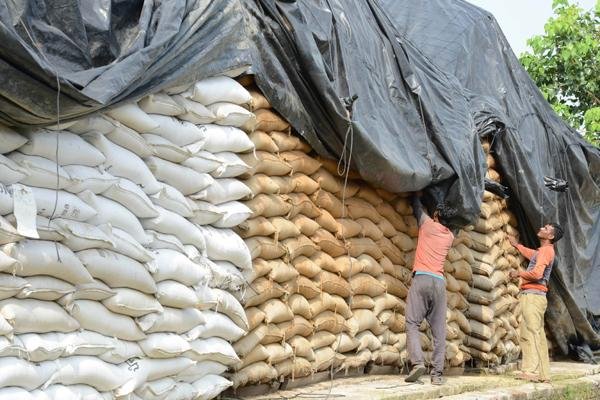
LAHORE, April 20 (Wealth Pakistan): Fresh wheat is arriving in markets across Punjab as harvesting gains momentum. Meanwhile, the Food Department has started registering farmers for bardana (gunny bags) to support procurement.

Punjab expects wheat production to exceed 22.5 million metric tons this year. This comes despite weather disruptions such as rains and hailstorms. To stabilize prices near Rs3,500 per 40kg, the provincial government has launched its procurement drive.

Digital system to streamline procurement

Director General Food Department Punjab Amjad Hafeez said the government has introduced a fully digital procurement system.

“We have fundamentally reformed the wheat procurement framework by introducing a fully digital and streamlined system,” he told Wealth Pakistan.

He said the new system eliminates delays and reduces discretion. It also removes procedural bottlenecks seen in earlier procurement cycles. The government has approved a Rs6 billion bardana subsidy. Authorities are distributing it through a transparent digital mechanism.

Farmers must register through the Bardana App developed by the Punjab Information Technology Board.

Procurement centers and farmer support

Officials have set up 233 procurement centers across Punjab. These centers will buy wheat at the support price of Rs3,500 per 40kg.

The policy prioritizes small farmers. It sets an eligibility cap of 12 acres per farmer. It also fixes a procurement benchmark of 25 maunds per acre.

“Small farmers make up over 90 per cent of Punjab’s farming community. The framework ensures inclusive access and fair participation,” Hafeez said.

The policy also reduces the role of middlemen. Authorities will transfer payments directly into farmers’ bank accounts. This ensures transparency and faster payments.

The government plans to procure up to 3 million metric tons through aggregators. This move will help set a benchmark price in the market, including for flour mills and private buyers.

Market trends remain firm

Hafeez said the policy does not restrict open market purchases.

“Poultry and feed units can procure wheat from the open market, based on prevailing conditions,” he said.

However, stakeholders say prices remain firm despite fresh arrivals.

“The price of wheat depends on quality. Rain-affected wheat is available at Rs3,300 per 40kg. Good-quality grain is selling at Rs3,500 or higher,” said Iftikhar Ahmad Matto, former chairman of PFMA Punjab.

He said prices may stay at this level during harvesting. They may rise further in the coming months.

Atta chakki owners shared similar concerns.

“Wheat from South Punjab, especially Bahawalnagar, reaches Lahore at about Rs3,600 per 40kg, excluding transport,” said Liaquat Ali Malik, Chairman Atta Chakki Owners Association.

He said prices will likely remain firm throughout the year.

Farmers express concern over slow procurement

Farmers have raised concerns about the pace of government procurement.

“The Food Department has not procured a single grain so far,” Khalid Mahmood Khokhar, Chairman Pakistan Kissan Ittehad told Wealth Pakistan.

He said the procurement target is too low compared to the expected crop. He warned that it may not help stabilize prices.

Karachi $100m water, sewerage project nears completion

0

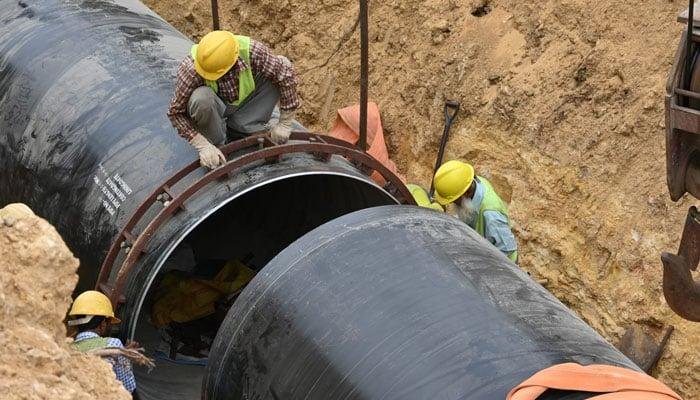
ISLAMABAD, April 19 (Wealth Pakistan): The first phase of the $100 million Karachi Water and Sewerage Services Improvement Project (KWSSIP-I) is nearing completion.

According to documents available with Wealth Pakistan, the broader programme is estimated at $1.6 billion. It will be executed in four overlapping phases over 12 years. Moreover, the project is jointly financed by the World Bank, the Asian Infrastructure Investment Bank, and the Government of Sindh.

Approved in June 2019, the project became effective in February 2020. Phase-I, also called SOP-1, has a duration of five-and-a-half years. It is scheduled for completion by June 30, 2026.

Project progress and contracts

According to official documents, 26 work contracts were awarded under Phase-I. Of these, 17 have been completed. Meanwhile, five are in progress. In addition, four contracts have been shifted to Phase-II.

Similarly, 13 consultancies were awarded. Out of these, five have been completed. Four are ongoing, while four have been moved to the next phase.

In terms of procurement, six goods contracts were awarded. Of these, four have been completed. One is under execution, and one has been transferred to Phase-II.

Infrastructure upgrades across Karachi

A large portion of infrastructure development has been completed. This includes the repair and replacement of old water supply and sewerage lines.

The work covers multiple districts, including Karachi Central, Korangi, Malir, East, West, and Kemari. As a result, the project aims to improve service delivery across the city.

Additional components are also progressing steadily. These include the construction of customer service centres and operational facilities. Several have been completed, while others are underway.

Modernisation and pending components

However, some planned initiatives have been moved to Phase-II. These include the enhancement of geographic information systems (GIS) and the asset management programme.

The project also focuses on modernisation. It includes the installation of consumer and bulk flow meters. Furthermore, SCADA systems are being introduced to improve efficiency and monitoring of water distribution.

Overall, Phase-I is progressing steadily. Therefore, it remains on track for completion by mid-2026.

Pakistan expands hybrid wheat research to boost yields, climate resilience

0

LAHORE, April 19 (Wealth Pakistan): Pakistan has stepped up research to develop high-yield hybrid wheat. The move aligns with global efforts to produce climate-resilient crop varieties.

Leading agricultural institutions in Punjab are collaborating under a unified programme. Moreover, international experts are providing technical support.

“Hybrid wheat research is a joint project launched by various research institutes in Punjab,” said Dr Javed Ahmad, Chief Scientist at the Wheat Research Institute Faisalabad. He said the goal is to develop a variety with strong yield potential.

Talking to Wealth Pakistan, he said the initiative is led by Muhammad Nawaz Sharif University of Agriculture Multan. In addition, the University of Agriculture Faisalabad and WRI Faisalabad are active partners.

He said the collaboration aims to strengthen food security. At the same time, it helps the agriculture sector respond to climate change.

Joint research and global collaboration

Under the project, MNS University is working on hybrid wheat using Australian Blue Aleurone (BLA) technology. This method introduces a gene to control specific breeding traits.

Dr Ahmad said Richard Trethowan of the University of Sydney is providing technical support. He has developed a non-GMO hybrid wheat system after decades of research.

The system prevents self-pollination. As a result, it enables cross-breeding. Consequently, yields can rise by more than 20%. In addition, crops gain better resistance to disease and tolerance to heat and drought.

However, Pakistan’s environmental laws do not permit genetically modified crops. Even so, scientists can develop both GMO and hybrid varieties.

No commercial variety yet

Despite ongoing work, Pakistan has not developed a commercially viable hybrid wheat variety so far.

Dr Ahmad said hybrid wheat could deliver higher yields. Furthermore, it would offer better resistance to pests and diseases.

He added that China leads global research in hybrid wheat. Meanwhile, the United States, Australia and France are also making progress. However, no country has introduced hybrid wheat for large-scale commercial cultivation.

“Several global companies are preparing to introduce hybrid wheat commercially,” he said. Therefore, this could set a precedent for others.

Need for continuous innovation

Dr Ahmad stressed the need for continuous innovation in crop development. He said crop varieties lose yield potential over time. In addition, they become more vulnerable to pests and diseases.

“Agriculture is a constant contest between scientists and evolving pests,” he said.

Biotechnologists have welcomed the initiative. They are optimistic about its impact.

“The development of crops like rice, cotton and maize has already supported farmers,” said Dr Kausar Abdullah Malik, a former interim federal minister for food security.

He said researchers worldwide are working on hybrid wheat. However, no commercial variety has been launched yet.

He added that once commercialised, hybrid wheat could mark a major breakthrough. It could be comparable to the introduction of high-yielding varieties in the 1960s.

PVARA, Huawei discuss cybersecurity, digital exchange infrastructure

0

ISLAMABAD, April 19 (ABC): A senior delegation from Huawei Technologies met Bilal Bin Saqib, Minister of State and Chairman of the Pakistan Virtual Assets Regulatory Authority (PVARA), to discuss cooperation on cybersecurity and digital exchange infrastructure.

According to official details, the meeting reflected a shared recognition that robust security architecture is essential for the credible and sustainable growth of Pakistan’s virtual asset sector.

During the meeting, both sides discussed Pakistan’s cybersecurity infrastructure requirements for its emerging digital asset ecosystem. They also reviewed Huawei’s international experience in cybersecurity assurance, cryptographic technologies, and compliance frameworks aligned with global standards.

Furthermore, the discussions covered the role of advanced cloud computing, artificial intelligence, and data infrastructure in supporting a secure digital exchange environment in Pakistan.

Speaking on the occasion, Chairman Bilal Bin Saqib said Pakistan’s digital exchange infrastructure must be built on strong foundations of cyber resilience, consumer protection, and regulatory integrity. He noted that PVARA’s framework aims to position Pakistan among the most secure and innovation-driven virtual asset jurisdictions in the region.

The Huawei delegation, led by Ahmed Bilal Masud, expressed commitment to supporting this agenda as an industry collaborator.

The meeting concluded with an agreement to continue technical discussions and explore structured cooperation mechanisms in the coming months.

The Huawei delegation also included Corey Deng, Chief Cybersecurity and Privacy Protection Officer for the Middle East and Central Asia region, along with Adnan Adhami, Saad Saeed Talha, and Lydia Zhang.