

Home Blog Page 6

Aga Khan begins first official Canada visit, marking 50-year partnership milestone

0

OTTAWA, Mar 28 (ABC): His Highness the Aga Khan, 50th hereditary Imam of the Shia Ismaili Muslim community and chair of the Aga Khan Development Network (AKDN), has begun his first official visit to Canada, marking a milestone in a relationship spanning more than five decades.

During the visit, His Highness met with Canadian Prime Minister Mark Carney and attended a dinner hosted by Governor General Mary Simon and His Excellency Whit Fraser. He also held discussions with senators and members of parliament at the Delegation of the Ismaili Imamat.

Reflecting on the partnership, the Aga Khan said he believes in Canada’s values, principles and its willingness to act on them, noting that these qualities have made the relationship enduring.

The visit builds on a longstanding partnership between Canada and the Ismaili Imamat, which has produced outcomes in capacity building, economic development and civil society strengthening across multiple regions over the past 50 years. Prime Minister Carney and the Aga Khan issued a joint declaration outlining new areas of collaboration, including housing and economic development, setting the stage for renewed engagement.

During discussions, both sides agreed to deepen cooperation in three key areas. On affordable housing, the Canadian prime minister welcomed investments by the Ismaili Imamat in multi-generational, not-for-profit housing projects aimed at increasing supply. The government also plans to establish a long-term partnership through Build Canada Homes to develop housing projects for low- and middle-income groups.

On development collaboration, the two sides announced the creation of an Economic Partnership Platform to strengthen development financing. FinDev Canada and the Aga Khan Fund for Economic Development will combine public and private capital to invest in infrastructure, renewable energy and agriculture across Africa and Asia. The collaboration will also support programmes in economic opportunity, health, education and pluralism, including in regions such as Syria. Both sides identified opportunities in skills development, energy initiatives and the use of Canadian innovation and technology in sectors like agriculture and climate.

On global diplomacy, Canada and the Ismaili Imamat reaffirmed their commitment to work together on efforts aimed at saving lives, ending conflict and preserving human dignity.

Prime Minister Carney also announced that the Honourable David Lametti, currently Canada’s permanent representative to the United Nations, will also serve as Canada’s new representative to the Ismaili Imamat to help advance the renewed partnership.

Speaking at a parliamentary reception attended by senators and ministers, the Aga Khan noted that traditional aid models are becoming harder to sustain in an increasingly complex world. He emphasised the need for new forms of partnership capable of delivering sustainable prosperity in challenging regions.

He expressed his intention to make this the first of many visits to Canada and reaffirmed the readiness of the Imamat, the AKDN and the Canadian Ismaili community to act as partners in building a safer, more prosperous and more pluralist world.
Punjab launches Rs20bn plan to boost indigenous livestock breeds

0

By Muhammad Luqman

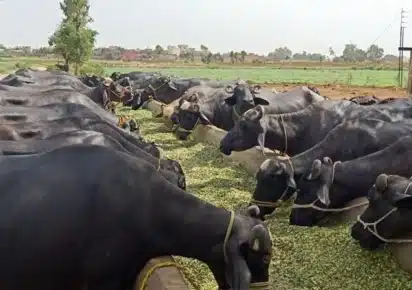
LAHORE, March 25 (Wealth Pakistan): The Punjab government has launched an initiative to preserve and promote indigenous livestock breeds, including the Sahiwal cow and the Nili Ravi buffalo.

The initiative forms part of the Rs20 billion Punjab Herd Transformation to Enhance Livestock Productivity programme. Under this programme, the government has earmarked Rs4 billion for the Progeny Testing Programme (PTP) to improve genetic potential and breed quality.

Focus on genetic improvement and breed conservation

Dr Khaliq Shafee, Director of the Punjab Livestock Department, said schemes for producing sex-sorted semen of indigenous breeds are underway. These include Nili Ravi buffalo, Sahiwal, and Cholistani cattle registered under the PTP.

Talking to Wealth Pakistan, he said unchecked crossbreeding with exotic breeds has weakened indigenous livestock. It has led to unpredictable genetic traits and weaker physical characteristics.

Punjab has around 500,000 Sahiwal cattle and 2 to 2.5 million Cholistani cattle. The Nili Ravi buffalo population ranges between 13 and 15 million.

Institutional support and breeding programmes

The government is implementing the programme with the Sahiwal Cattle Breeders Society and the Buffalo Breeders Association. Key measures include setting up breed conservation units and expanding the PTP.

Authorities are also introducing a Bull Dam (bull mother) scheme. In addition, they are strengthening structured breeding and bull selection based on lactation performance exceeding 3,000 litres.

Several institutions are executing the project. These include the Buffalo Research Institute Pattoki, the Livestock Production Research Institute Bahadurnagar (Okara), and the Research Centre for Conservation of Indigenous Breeds in Jhang.

Industry welcomes initiative

Breeders have welcomed the initiative and called it a positive step for the livestock sector.

Dr Muhammad Imran Basharat, Director Technical at the Sahiwal Cow Breeders Society, said the project comes at a crucial stage. Talking to Wealth Pakistan, he said it offers opportunities to harness the strength of indigenous breeds.

He said Pakistan can improve breed quality and productivity with better use of genetic resources. He also highlighted the need to refine breeding systems and improve identification of superior bull dams.

Focus on productivity, markets and exports

Dr Basharat said cooperative livestock and dairy farming models can support sustainable sector growth. He added that recent market fluctuations linked to trade dynamics with Afghanistan show the need for stronger market structures.

He said Pakistan has high-yielding animals, including Nili Ravi buffalo producing around 4,000 litres annually and Sahiwal cows about 3,500 litres. These provide a strong base for future growth.

He stressed the importance of best practices in livestock management. He said better regulatory oversight can protect animal health, fertility and long-term productivity.

He added that indigenous breeds are cost-effective and well-suited to Pakistan’s climate. Their natural resilience supports sustainable dairy production.

He also noted growing international demand for Sahiwal breed semen and embryos in Bangladesh, Kenya and Sri Lanka. He said developing export systems can open new revenue streams for Pakistan’s livestock sector.

Rs990m project to boost local agricultural equipment production

0

By Azeem Ahmed Khan

ISLAMABAD, March 24 (Wealth Pakistan): The Ministry of National Food Security and Research has proposed a Rs990 million project to promote smart farming technologies and strengthen local agricultural machinery production.

The ministry plans to launch the project titled “Establishment of Digital and Precision Agriculture Mechanisation Facility at National Agricultural Research Centre (NARC).” The Agricultural Engineering Institute (AEI), NARC, Islamabad, will execute the project, according to official documents available with Wealth Pakistan.

The project will run for five years, from July 2026 to June 2031. It aims to expand agricultural mechanisation and promote precision farming.

Alignment with national priorities

The project supports key national frameworks. These include the 5Es Framework, the 13th Five-Year Plan, the UN Sustainable Development Goals, and the National Agriculture Innovation and Growth Programme (NAIGP).

It aims to promote efficient use of resources. It will support smallholder mechanisation and strengthen the National Agricultural Research System. The project will also encourage import substitution and support agri-SMEs and local manufacturers.

Facility upgrades

The project will upgrade three facilities: a design lab, a prototype workshop, and a testing lab.

Engineers will equip the design lab with 3D scanning, computer-aided design (CAD), and simulation tools. These tools will improve product design and testing.

The team will modernise the prototype workshop with Computer Numerical Control (CNC), Computer-Aided Manufacturing (CAM), and laser-cutting systems. These upgrades will improve machinery development and evaluation.

Advanced technologies focus

The project will promote the use of artificial intelligence, the Internet of Things, unmanned aerial vehicles (UAVs), and robotics in agriculture.

The team will establish a dedicated UAV and agricultural robotics facility. This facility will support manufacturing and system integration.

Researchers will design and test at least five agricultural machine prototypes under the project.

Capacity building and impact

The project will focus on capacity building. Organisers will conduct at least 10 training activities, including workshops, training sessions, and farmer field days.

These activities will help farmers, manufacturers, and researchers improve their skills.

The project will support value-added production and create technical jobs. It will also strengthen local manufacturing capacity.

More than 500 stakeholders will benefit from training and knowledge-sharing activities. These include farmers, manufacturers, and researchers.

Rs490m lab project planned to boost food safety monitoring

0

ISLAMABAD, March 18 (Wealth Pakistan): The Ministry of National Food Security and Research plans a Rs490 million project to strengthen food safety monitoring in Pakistan. As a result, it will improve compliance with international trade standards and support exports of livestock products.

The project aims to enhance the capacity of the National Veterinary Laboratory (NVL) for antimicrobial residue analysis. Therefore, it will help meet both national and international standards. It will also support the export of livestock and livestock-derived products.

The project, titled “National Agri Food Laboratory Standards, Accreditation and Reference Network,” will run for three years from July 2026 to June 2029. It will be implemented by the National Veterinary Laboratory, Islamabad.

According to documents available with Wealth Pakistan, the project focuses on improving laboratory standards for livestock and agri-food safety. It targets antimicrobial residue monitoring, public health protection, regulatory effectiveness, and compliance with global food safety standards.

Strengthening laboratory capacity

The initiative will strengthen laboratory capacity and veterinary diagnostic systems. As a result, it will support value chain modernisation and improve the competitiveness of Pakistan’s livestock products in global markets.

In addition, the project will establish a National Antimicrobial Drug Residue Monitoring Plan. This plan will cover livestock and livestock-derived products across the country.

Training and accreditation measures

The project also includes training and certification of laboratory personnel. These efforts will improve their technical and regulatory skills. Moreover, the laboratory will work toward ISO/IEC 17025 accreditation to meet international quality standards.

Alignment with national priorities

The initiative aligns with the 5Es Framework, the 13th Five-Year Plan, the United Nations Sustainable Development Goals (SDGs), and the National Agriculture Innovation Growth Programme (NAIGP).

Furthermore, it will support regulatory digitalisation under the E-Pakistan initiative. It will also strengthen export certification systems by improving food safety compliance and veterinary diagnostic standards.

Expected impact on trade and safety

The project is expected to produce reliable and timely residue testing reports. These reports will support regulatory oversight and facilitate trade in livestock and livestock-derived products.

Overall, the initiative will enhance food safety monitoring, strengthen institutional capacity, and improve Pakistan’s position in international livestock markets.

Rs300m livestock fibre project to drive rural industrialisation in GB, AJK

0

ISLAMABAD, March 18 (Wealth Pakistan): A major initiative aims to transform livestock fibre into high-value products. As a result, it will accelerate rural industrialisation in Gilgit-Baltistan (GB) and Azad Jammu & Kashmir (AJK). It will also open new income streams for farmers and artisans.

The project, titled “Value Added Livestock Products (Wool, Hair and Mohair) for Rural Industrialisation of Pakistan (GB and AJK),” carries a total cost of Rs300 million. It will run for three years from July 2026 to June 2029. It will cover all districts of Gilgit-Baltistan and the Neelum Valley in Azad Jammu & Kashmir.

According to documents available with Wealth Pakistan, the project focuses on value addition, productivity enhancement and modernisation of the fibre value chain. It will organise the entire chain from raw material collection to finished products. Therefore, it aims to increase farmers’ incomes by 15-20% through better processing and improved market access.

Infrastructure development and processing units

Under the initiative, authorities will establish 35 raw material collection units, including 30 in GB and five in AJK. In addition, cleaning and spinning units will be set up. Each GB district will get one unit, while Neelum Valley will also have one.

Moreover, four weaving and four stitching centres will be developed in GB and AJK. These centres will promote local craftsmanship and improve product finishing.

Institutional support and community role

The project also plans to register and operationalise the Yak Dwellers Association. This step will strengthen institutional capacity and improve linkages with international yak networks. At the same time, community ownership of units will ensure sustainability and inclusive growth.

Furthermore, tourism-oriented display and marketing centres will be created. These centres will enhance product visibility and boost sales. Linkages with tourism markets and private-sector buyers will also generate revenue.

Capacity building and livestock health

Capacity-building programmes will train farmers, artisans and entrepreneurs. These programmes will improve production techniques and business skills. In addition, authorities plan vaccination and deworming of 25,000 animals to enhance fibre quality.

Alignment with national priorities

The project aligns with the 5Es Framework, the 13th Five-Year Plan and the National Agriculture Innovation and Growth Project (NAIGP). It supports livestock value addition, rural enterprise development and sustainable livestock management.

By promoting niche fibre products and small-scale industry, the initiative will utilise underused livestock resources. Consequently, it will help build a structured rural industrial value chain in GB and AJK.

With modest federal investment, the project is expected to create jobs, strengthen local enterprises and support sustainable rural industrialisation.

Pakistan plans Rs1.65bn programme to cut edible oil imports

0

ISLAMABAD, March 17 (Wealth Pakistan): The Pakistan Agricultural Research Council (PARC) has proposed a Rs1.65 billion project to promote oilseed cultivation and reduce reliance on imported edible oil.

The five-year project, titled “The National Crop Diversification and Import Substitution Program (Oilseeds),” will run from July 2026 to June 2031 across the country, according to official documents available with Wealth Pakistan.

Boosting domestic oilseed production

The initiative aims to increase domestic oilseed production through climate-smart agriculture, modern seed systems, farmer training, and improved value chains.

In addition, the programme will introduce cluster-based crop diversification. It will also establish farmer field demonstration hubs and digital advisory systems to help growers adopt modern farming practices.

Strengthening seed systems and productivity

The plan focuses on strengthening the national seed system by expanding breeder, foundation, and certified seed production. This approach is expected to improve both yields and profitability of priority oilseed crops.

At the same time, the initiative supports agricultural innovation and growth. It aims to reduce edible oil imports by 10 to 20 percent through local production.

Cluster development and farmer support

Under the proposed plan, authorities will carry out national zoning for six oilseed crops and develop 10 to 15 production clusters across Pakistan.

The project will also establish 20 to 50 operational model farms. Moreover, cluster expansion will shift around 100,000 acres towards oilseed cultivation.

In addition, 50 to 100 demonstration hubs will be set up, each covering two to five hectares. Training programmes will benefit 2,000 to 5,000 farmers and extension workers.

Research, seed production and partnerships

The proposal includes evaluation of around 6,000 germplasm accessions. It also aims to scale up certified seed production to between 2,000 and 5,000 tons.

Furthermore, the project will establish 10 to 15 seed multiplication farms. Authorities also plan five to seven public-private partnership agreements to strengthen certified seed supply and industry linkages.

Overall, the initiative is expected to improve domestic oilseed productivity and help reduce Pakistan’s edible oil import bill through locally produced alternatives.

$200m KP human capital project nears completion

0

ISLAMABAD, March 17 (Wealth Pakistan): The Khyber Pakhtunkhwa government is implementing a major project to strengthen human capital by improving health and social services across the province.

The $200-million Khyber Pakhtunkhwa Human Capital Investment Project (KPHCIP) is scheduled for completion by December 31, 2026. The project has achieved strong financial progress, as 95.1% of total funds have already been disbursed, according to official documents available with Wealth Pakistan.

The Planning and Development Department is executing the project, which was signed on March 30, 2021.

Improving access to essential services

The initiative aims to expand access to essential services, especially for vulnerable and low-income populations. At the same time, it supports institutional improvements in the province’s health sector.

By focusing on service delivery, the project seeks to improve both the quality and accessibility of public services across Khyber Pakhtunkhwa.

Overcoming delays and restoring momentum

Initially, the project faced delays due to issues related to the Project Management Unit and disruptions caused by the 2022 floods. However, authorities introduced a two-step restructuring plan to address these challenges.

As a result, the restructuring helped remove implementation bottlenecks and improve operational efficiency. Consequently, the project regained momentum and is now progressing steadily toward completion.

The high level of financial utilisation reflects consistent progress and effective execution.

Part of broader World Bank support

KPHCIP forms part of broader efforts supported by the World Bank to strengthen human capital development in the province. These efforts focus on improving the quality and accessibility of essential public services.

Govt plans use of AI to develop improved crop varieties

0

By Azeem Ahmed Khan

ISLAMABAD, March 16 (Wealth Pakistan): The government plans to strengthen Pakistan’s agricultural research by building reference genomes of indigenous crops and using artificial intelligence-based models to develop improved crop varieties faster.

The initiative aims to raise agricultural productivity, improve export competitiveness and support better livelihoods for resource-poor farmers. Farmers living in marginal and climate-vulnerable regions are expected to benefit the most.

According to official documents available with Wealth Pakistan, authorities have proposed a project titled “Building Reference Genomes and Leveraging AI-driven Models for Improvement of Indigenous Crops.”

Project timeline and cost

The four-year project will run from July 2026 to June 2030. The National Agricultural Research Centre (NARC) in Islamabad will host the project.

The initiative carries an estimated cost of Rs786.816 million. The Pakistan Agricultural Research Council (PARC) will execute the project through the National Institute for Genomics and Advanced Biotechnology (NIGAB).

The document says the initiative will reduce the time required to develop new crop varieties. At the same time, it will strengthen Pakistan’s capacity in modern plant breeding and agricultural biotechnology.

Development of elite crop varieties

Researchers expect the project to produce 10 elite crop varieties.

These include resistant-starch rice and wheat, sugarcane with at least 13.3 percent sugar recovery, and shattering-resistant canola.

To achieve these goals, scientists will use the existing genomics, biotechnology, intelligent glasshouse and speed-breeding facilities at NIGAB.

These facilities will help researchers produce high-quality reference genome sequences for 62 indigenous crop varieties. These varieties belong to 17 major crop species grown in Pakistan.

AI-powered genomic research

The genomic resources will support several advanced agricultural applications.

Researchers will develop 10 cost-effective DNA-SNP (Deoxyribonucleic Acid–Single Nucleotide Polymorphism) genotyping platforms. These platforms will work with AI-enabled genomic selection and speed-breeding systems.

Another component of the project focuses on developing 10 cost-effective 30K SNP genotyping platforms, also known as DNA chips.

Scientists will integrate these platforms into AI-driven genomic selection and speed-breeding pipelines to speed up crop improvement.

National DNA fingerprinting repository

The project will also establish a national DNA fingerprinting repository. Researchers will create DNA fingerprints for 848 crop varieties.

This database will support plant breeders’ rights, varietal certification and crop traceability systems.

In addition, the initiative plans to commercialise next-generation sequencing (NGS), SNP genotyping and bioinformatics services in Pakistan. These services will support breeding programmes in both the public and private sectors.

According to the document, the project aligns with Pakistan Vision 2026 and the Uraan Pakistan Framework under the 13th Five-Year Plan. It also supports national policies on food security, biotechnology and climate resilience, as well as the United Nations Sustainable Development Goals.

Sindh trains 21,500 teachers to improve early-grade learning

0

ISLAMABAD, March 16 (Wealth Pakistan): The Sindh government has trained 21,500 teachers under its flagship education reform programme to improve the quality of teaching at the primary school level.

The initiative is part of the Sindh Early Learning Enhancement through Classroom Transformation (SELECT) project. The programme aims to strengthen foundational literacy and numeracy among primary school students across the province.

According to official documents available with Wealth Pakistan, the project has a total cost of $167.21 million. It is scheduled for completion in April 2026. However, authorities have already requested an extension until April 2027 to continue the programme’s activities.

Under the initiative, teachers have completed several Continuous Professional Development (CPD) cycles. These training sessions focus on modern teaching techniques, better classroom engagement, and improved learning outcomes for young students.

Experts consider teacher training a key component of the project. Early-grade instruction plays a crucial role in shaping students’ long-term academic performance. Therefore, improving teaching practices at the primary level can significantly strengthen the overall education system.

The programme is currently being implemented in 12 districts of Sindh. It covers schools in both rural and urban areas so that children from diverse socioeconomic backgrounds can benefit from improved teaching methods.

In addition to teacher training, the project has distributed 467,385 sets of teaching and learning materials (TLMs) among Grade 1 to Grade 5 students and teachers. These materials are designed to make classroom learning more interactive and effective.

According to the project document, the SELECT programme has so far reached 10,993 schools and benefited around 741,591 students across the targeted districts.

Moreover, the initiative includes infrastructure improvements. Under this component, 295 primary schools are being upgraded to elementary and secondary levels. Construction work has already started in these institutions.

Of these facilities, 190 schools are expected to be ready for handover by April 2026. The remaining 105 schools are scheduled for completion by October 2026.

Furthermore, the programme includes baseline assessments through the Early Grade Reading Assessment (EGRA) and the Early Grade Mathematics Assessment (EGMA). These evaluations help measure students’ learning levels and monitor progress during the project period.

Overall, the initiative is expected to strengthen primary education in Sindh and help reduce dropout rates in later stages of schooling as the programme moves toward completion in April 2026.

Trial pistachio cultivation begins in Punjab

0

By Muhammad Luqman

LAHORE, March 13 (Wealth Pakistan): Cultivation of pistachio on a trial basis has started in Punjab’s Potohar region as researchers test whether the area’s climate suits this high-value nut crop.

“We have successfully grown pistachio plants, but the fruiting process is taking longer than expected,” Aqeel Feroz, Senior Scientist at the Barani Agricultural Research Institute (BARI), Chakwal, told Wealth Pakistan.

Experimental cultivation under way

Feroz said BARI has imported six pistachio varieties from California, one of the world’s major producers of this widely consumed nut.

He explained that pistachio cultivation remains at an experimental stage because the plants take several years to start bearing fruit.

The varieties currently under experimental cultivation at BARI include Napolitano, Larnaka, Sirora, 3C and Golden Hills.

“We have harvested only a few bunches of fruit so far. However, we want to see the plants fully laden before recommending commercial cultivation so that the crop becomes economically viable for growers,” Feroz said.

Research to identify suitable varieties

BARI scientists are conducting research to identify pistachio varieties that suit the agro-climatic conditions of northern Punjab.

“Pistachios traditionally grow in cooler and arid regions such as Balochistan. However, experimental cultivation is showing promise in the drier parts of Punjab,” he said.

According to him, a mature pistachio plant can produce around 15 to 20 kilograms of fruit. This yield could provide attractive returns for farmers.

Experts believe pistachio farming could become a valuable option for growers once commercial cultivation begins.

Growing demand and heavy imports

Pistachio consumption in Pakistan continues to rise because people widely use it as a premium dry fruit. It is commonly used in snacks, traditional desserts such as kheer and barfi, and bakery products.

Although pistachios grow in some parts of Balochistan, the country still relies heavily on imports.

Pakistan imported about 6.86 million kilograms of pistachios worth $8.96 million in 2024. Most imports came from Iran ($8.87 million) and the United States.

Local production could reduce import dependence

“With the changing geopolitical situation, importing pistachios from regional countries such as Iran and Afghanistan is becoming both difficult and expensive,” Muhammad Zeeshan, a dry fruit importer at Lahore’s Akbari Mandi, told Wealth Pakistan.

He said promoting local pistachio production would benefit the national economy.

Success stories from Balochistan

Horticulture experts say Balochistan and Upper Chitral in Khyber Pakhtunkhwa already offer encouraging examples of pistachio cultivation.

“About 12,000 hectares (30,000 acres) of land in Balochistan is under pistachio cultivation in upland areas stretching from Kalat to Quetta and Loralai divisions,” Prof Dr Shahjahan Shabbir Rana, a horticulture expert at the Balochistan University of Information Technology, Engineering and Management Sciences (BUITEMS), told Wealth Pakistan.

He said the Pakistan Agricultural Research Council (PARC) and the Balochistan Agricultural Research and Development Center (BARDC) jointly developed four pistachio varieties.

“Three new pistachio varieties have recently been registered,” Dr Rana said.

New varieties under research

Researchers have also introduced the UCB-1 hybrid cultivar from the United States to strengthen research and development efforts.

Dr Rana said wild varieties such as Pistacia Khinjuk are also under experimental cultivation.

Currently, pistachio production in Balochistan meets only a small portion of the country’s demand.

“Nevertheless, it remains promising in every respect, especially as imports from Iran and Afghanistan are becoming more expensive due to changing geopolitical dynamics,” he said.