


By Abdul Ghani
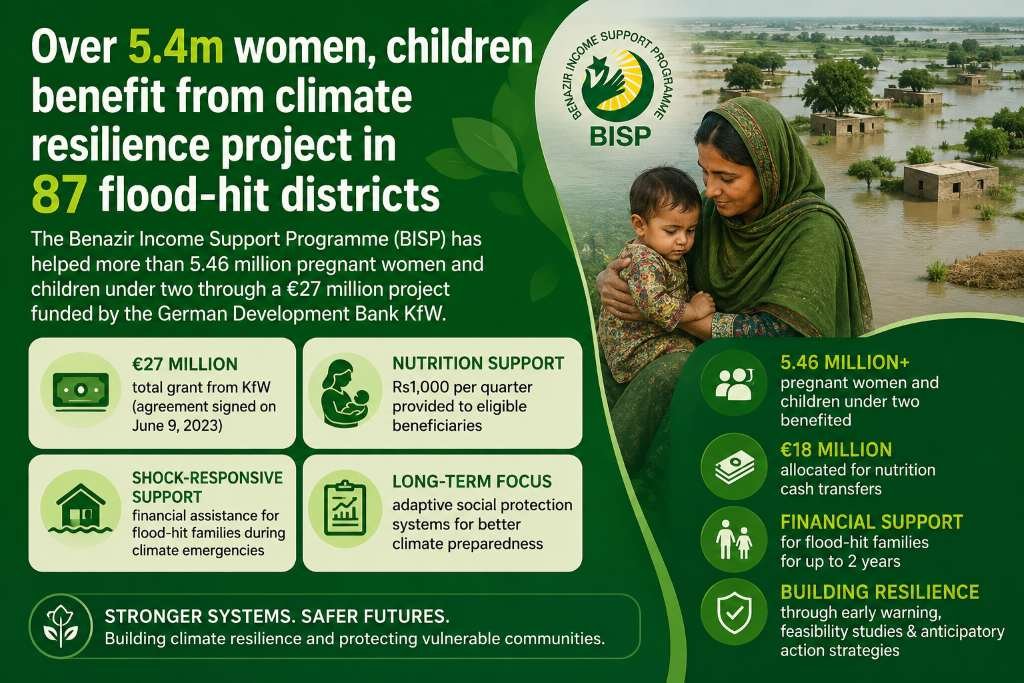
ISLAMABAD, May 07 (Wealth Pakistan): More than 5.46 million pregnant women and children under the age of two have benefited from the Social Protection for Health and Climate Resilience project launched in 87 flood-affected districts, according to a document available with Wealth Pakistan.
The Benazir Income Support Programme (BISP) implemented the project with financial support from the German Development Bank KfW. The initiative received a total grant of €27 million under an agreement signed on June 9, 2023.
The project aimed to strengthen Pakistan’s social protection system while improving health and nutrition support for climate-vulnerable families living in flood-hit areas.
Nutrition support for mothers and children
A major share of the funding, amounting to €18 million, was allocated to nutrition-related conditional cash transfers in the affected districts.
Under this component, eligible beneficiaries received Rs1,000 per quarter to help improve nutrition for pregnant women and children under the age of two. The financial support helped vulnerable families meet basic nutritional needs during difficult economic conditions.
The document stated that the initiative mainly targeted communities severely affected by floods and climate-related disasters.
Financial assistance during climate emergencies
The project also introduced a shock-responsive social protection mechanism to support flood-hit families during emergencies.
Under this system, affected households received financial assistance for up to two years. The mechanism ensured timely support during climate-related shocks and helped families recover from disaster-related losses.
The initiative aimed to improve the government’s ability to respond quickly to future climate emergencies through a more coordinated social protection framework.
Focus on long-term climate resilience
Besides immediate relief, the project also focused on developing adaptive social protection systems for the future.
The programme included feasibility studies, early warning mechanisms, and anticipatory action strategies to improve preparedness for climate-related disasters.
According to the document, the initiative reflected Pakistan’s growing focus on linking social protection with climate resilience. It combined emergency assistance with long-term planning to provide stronger and more sustainable support for vulnerable populations.