

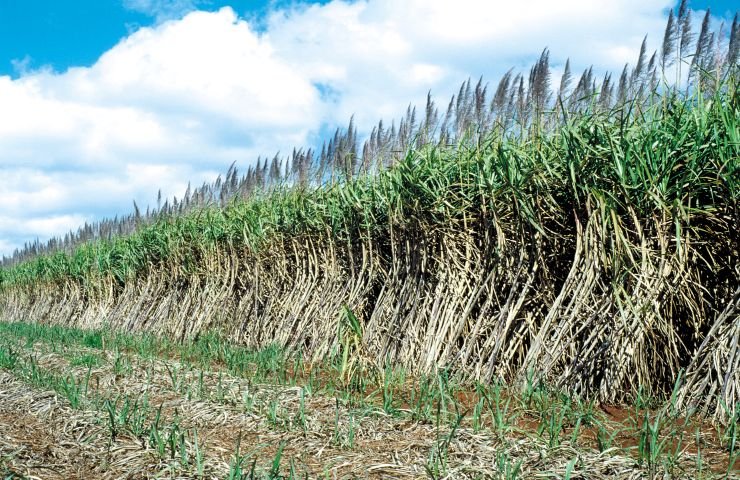

Pakistan’s sugarcane production recorded a modest increase during 2025–26, driven by a higher cultivated area that offset yield declines and production shortfalls in key regions, according to an official document available with Wealth Pakistan.
The document shows that the total area under sugarcane cultivation reached 1.21 million hectares — up 1.7 percent from 1.19 million hectares in the previous year. Overall production was provisionally estimated at 84.74 million tons compared to 84.24 million tons in 2024–25, reflecting a slight increase of 0.6 percent.
However, the average yield fell by 1.1 percent to 69.81 tons per hectare from last year’s 70.61 tons, underscoring persistent productivity challenges despite the area expansion.
Sugarcane remains key cash crop
Sugarcane continues to be a high-value cash crop for Pakistan and a critical raw material for the sugar and allied industries — the country’s second-largest agro-based sector after textiles. The crop plays a major role in rural employment and in supplying feedstock for sugar, ethanol, and other by-products vital to the economy.
Punjab drives modest national growth
Punjab, the country’s largest sugarcane-producing province, expanded its cultivation area by 4.8 percent to 856,000 hectares in 2025–26. As a result, sugarcane production in Punjab increased 2.7 percent to 61.73 million tons from 60.11 million tons a year earlier.
Despite the production gain, Punjab’s yield declined by 2.0 percent, dropping from 73.6 to 72.1 tons per hectare. Officials attribute the fall to uneven rainfall patterns and rising input costs affecting farm productivity.
Sindh records decline despite better yields
Sindh, the second-largest producer, saw a contraction in both cultivated area and output. The province’s sugarcane area decreased by 6.2 percent to 267,700 hectares, while production dropped 5.6 percent to 18.13 million tons from 19.21 million tons.
Interestingly, Sindh’s yield improved slightly by 0.6 percent to 67.7 tons per hectare, suggesting improved farm efficiency and irrigation management despite reduced acreage.
Mixed performance in other provinces
Khyber Pakhtunkhwa reported a marginal 0.8 percent reduction in the area under cultivation to 89,300 hectares from 90,000 last year. However, production held steady at around 4.8 million tons, with the yield remaining unchanged at 54.1 tons per hectare.
Balochistan, though a minor contributor to the national total, showed encouraging signs. Its cultivated area rose 14.3 percent to 800 hectares, while production increased by 6.9 percent to 38,900 tons from 36,400 tons a year earlier.
Targets exceeded at national level
The Federal Committee on Agriculture (FCA) had set a national sugarcane cultivation target of 1.146 million hectares for 2025–26. According to provisional data, the actual area reached 1.213 million hectares — 5.9 percent higher than the target.
Production also exceeded expectations, reaching 84.74 million tons against the target of 80.32 million tons — a surplus of 5.5 percent. The national output thus rose by 0.6 percent compared to the previous year.
Punjab significantly outperformed its provincial targets, recording 12.5 percent growth in area and a corresponding rise in output. In contrast, Sindh and Khyber Pakhtunkhwa failed to meet their cultivation and production goals. Sindh lagged by 7.7 percent in area and 9.1 percent in production, while KP recorded shortfalls of 6.0 and 7.0 percent, respectively.
Balochistan exceeded its area target by 14.3 percent but fell short of its production goal by 13.6 percent.
Yields below expectations
During the previous season (2024–25), Pakistan’s national sugarcane yield stood at 69.8 tons per hectare — slightly below the FCA target of 70 tons per hectare. The trend continued this year, indicating that while area expansion supports output stability, productivity remains a pressing concern.
Experts note that improved access to high-yield seed varieties, better irrigation efficiency, and modern farming techniques are essential to reverse the decline in per-hectare productivity and ensure sustainable growth in the sugar sector.